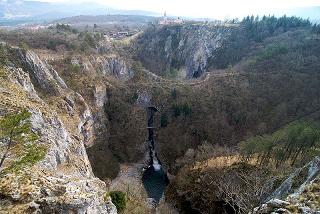
The Škocjan Caves in Slovenia are one of the most extraordinary underground wonders on Earth, a UNESCO World heritage site where the Reka River thunders through a massive subterranean canyon 146 metres deep. Forget tiny stalactite-filled passages; Škocjan delivers an underground spectacle on a truly colossal scale, with chambers so vast they could swallow entire cathedrals.
In This Article
Quick Facts
- Best time to visit: April-October (winter tours are available but limited); book online in advance for peak summer months
- Top attraction: The Great Hall, 120m wide and 100m high, and the underground Reka River canyon
- How to get there: ~1 hour from Ljubljana by car; train connection to Divača station (10 min walk to cave entrance)
- Tour duration: ~2 hours (3km walking route)
- Photography: Not permitted inside the caves, you will have to rely on memory!
The Underground Canyon Experience
The tour of Škocjan is unlike any other cave visit in Europe. After passing through initial chambers decorated with stalactites and stalagmites, you emerge onto the Cerkvenik Bridge, suspended 45 metres above the roaring Reka River as it crashes through a pitch-black subterranean canyon. The sound is overwhelming, a deep rumble that reverberates off the limestone walls and fills the immense space with an almost physical presence. The canyon is 146 metres deep at its lowest point and stretches for several kilometres underground, making it one of the largest subterranean canyons ever discovered. The walkway continues along the canyon edge, offering vertigo-inducing views into the abyss below, before descending to river level where you can feel the spray of the water and see the smooth, sculpted rock formations carved by millennia of flow. The contrast between the silent, decorated chambers and the thunderous canyon is one of the most dramatic experiences in European cave tourism.
Archaeological and Natural Significance
Škocjan is not only a geological wonder but also an important archaeological site. Evidence of human habitation dates back over 10,000 years, with significant Bronze Age settlements and an Iron Age necropolis discovered within the cave system. These finds are among the most important in southeastern Europe and provide valuable insight into the prehistoric communities that sought shelter in these vast underground spaces. The cave is also home to a unique ecosystem, including the endemic olm, a blind aquatic salamander known locally as the human fish due to its pale, skin-like appearance. The surrounding karst landscape is dotted with sinkholes, disappearing rivers, and other surface features that hint at the vast cave network beneath. The nearby Škocjan Regional Park offers excellent hiking trails through this remarkable terrain, allowing visitors to explore the surface expression of the limestone geology that created these extraordinary caves.
Planning Your Visit to Škocjan
Beyond the caves themselves, the surrounding Karst region offers a wealth of other attractions. The Lipica Stud Farm, home to the famous Lipizzaner horses, is a short drive away and offers guided tours and riding demonstrations. The historic coastal town of Piran on the Slovenian coast is also within easy reach for a day trip. The combination of underground wonders, cultural heritage, and coastal beauty makes the Karst region one of Slovenia’s most diverse and rewarding travel destinations. weather you are a nature enthusiast, a history buff, or simply looking for an unforgettable underground experience, Škocjan delivers on every level.
The caves are located near the village of Divača, approximately one hour from Ljubljana by car. A train connection from Ljubljana to Divača station is also available, with the cave entrance just a ten-minute walk from the station. Tours run regularly from April through October, with reduced schedules during the winter months. Advance booking is strongly recommended, especially during July and August when the caves can attract large crowds. The two-hour tour covers approximately three kilometres of walkways, including several hundred steps, so a reasonable level of fitness is required. Comfortable footwear with good grip is essential, as the paths can be damp in places. Photography is not permitted inside the caves, so you will need to rely on your memory and the excellent postcards available in the gift shop. The caves are also close to the famous Lipica Stud Farm, making it easy to combine two of Slovenia’s top attractions in a single day.
Have you visited Škocjan Caves in Slovenia – one of the largest known underground canyon in the world? I’d love to hear about your experience and any travel tips in the comments below!
Discover more destinations in our sitemap or explore by destination.
Explore all our Slovenia travel guides, from Lake Bled to the Julian Alps.
Explore More
If you enjoyed this article, you might also like:
- Lake Bled – the symbol of Slovenia – Slovenia
- Triglav Mountain & The Julian Alps in Slovenia – Slovenia
- Piran – charming port city on the Adriatic shore of Slovenia – Slovenia

Fantastic recommendations for Skocjan Caves. We followed this advice on our last trip and it transformed our experience — we saw sides of the destination we would have completely missed otherwise. Can not recommend this guide enough.