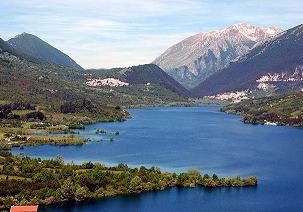
Abruzzo National Park is one of Italy’s oldest and most important protected areas, a 500 km² wilderness of pristine beech forests, alpine meadows, and limestone peaks in the Apennine Mountains of central Italy that is home to the critically endangered Marsican brown bear, the Apennine wolf, and the Abruzzo chamois, a goat-antelope found nowhere else on Earth. Often called the “green heart of Europe,” Abruzzo is Italy’s wildest region, and the national park at its centre is the country’s greatest wildlife sanctuary, a place where Europe’s natural heritage feels genuinely intact.
In This Article
Quick Facts: Abruzzo National Park
- Best time to visit: May-October for hiking; June for wildflowers; autumn for the spectacular beech forest colours and the deer rutting season
- How to get there: ~2 hours from Rome by car; the main gateway town is Pescasseroli; ~1.5 hours from Pescara
- Wildlife: Marsican brown bear (one of the rarest mammals in Europe, fewer than 60 individuals remain), Apennine wolf, golden eagle, griffon vulture
Wildlife Watching in the Park
The Abruzzo National Park is Italy’s premier destination for wildlife watching. The Marsican brown bear, a subspecies found only in this region, is the park’s most famous resident, though sightings require patience and a bit of luck. Early morning and late evening are the best times to spot wildlife, and the area around the visitor centre in Pescasseroli offers the highest chances. The Apennine wolf, which has made a remarkable recovery in recent decades, is more often heard than seen, with its haunting howls echoing through the valleys at dusk. The Abruzzo chamois, or camoscio d’Abruzzo, is easier to spot, particularly on the rocky slopes above the treeline. Golden eagles and griffon vultures circle overhead, and the park’s beech forests are home to wild boar, red deer, and the elusive wildcat. Guided wildlife tours are available through the park’s information centres and offer the best chance of seeing the more elusive species.
Best Hiking Trails and Routes
The park offers a network of well-marked hiking trails suitable for all levels of experience. Route number 11, leading to the Valle delle Rose, is one of the most popular and rewarding walks, taking less than five hours and passing through diverse landscapes of forest, meadow, and rocky outcrops. Along this trail, you are almost guaranteed to spot chamois and deer grazing in the alpine meadows. The BN1 trail offers a shorter option, a 50-minute walk from the town of Pescasseroli to a panoramic viewpoint overlooking the Pescasseroli Valley. For more experienced hikers, the trail to Monte Amaro, the highest peak in the park at 2,793 metres, provides a full-day challenge with spectacular summit views. The park’s information centres provide detailed maps and current trail conditions, and it is advisable to set out early to avoid afternoon thunderstorms in summer. The trails are generally well maintained and clearly signposted, making navigation straightforward.
Exploring the Park’s Villages and Attractions
The park’s visitor centres in Pescasseroli and other gateway towns provide maps, guided tour bookings, and exhibits about the park’s natural and cultural history. The multimedia presentation at the main centre offers an excellent introduction to the park’s geology, wildlife, and conservation efforts. The park is divided into different zones with varying levels of protection, and the information centres can advise on which areas are open and which trails are most suitable for your interests and fitness level. Rangers also lead educational walks during the peak season, offering deeper insight into the park’s ecology and the ongoing efforts to protect its endangered species.
Beyond the wilderness, the park encompasses several charming villages that offer a glimpse into traditional Apennine life. Barrea, situated on the shores of Lake Barrea, is a particular highlight with its historic churches, narrow streets, and the nearby Nature Reserve Lago di Pantaniello. The lake itself is a haven for water birds and offers excellent opportunities for photography. The town of Pescasseroli, the park’s main gateway, has a range of accommodation options, restaurants serving local cuisine, and the park’s main visitor centre with a multimedia presentation covering the geology, flora, and fauna of the area. Founded in September 1923, Abruzzo National Park was the first national park in Italy and originally served as a last refuge for brown bears, chamois, and wolves. The local cuisine features hearty mountain dishes such as lamb roasts, wild mushroom pastas, and pecorino cheese produced from sheep grazing on the alpine pastures. Autumn is an especially magical time to visit, when the beech forests turn brilliant shades of gold and amber.
Have you hiked Abruzzo or spotted the Marsican bear in Italy’s wild heart? Share your Italian wildlife encounters in the comments! 🐻
Explore all our Italy travel guides, from the Dolomites to Sicily.
Explore More
If you enjoyed this article, you might also like:
