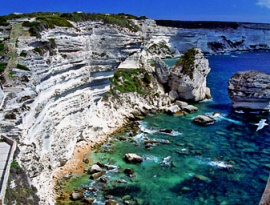
The turquoise waters lapping against the granite cliffs of Corsica are so clear that you can see the seabed 15 metres below. This island, known as the Isle of Beauty, rises from the Mediterranean like a mountain range submerged by the sea, its rugged peaks, dense maquis forests, and pristine coastline creating one of the most diverse landscapes in Europe. Corsica has been shaped by a long and turbulent history, from Roman occupation through Genoese rule to its current status as a French territorial collectivity, but through it all, the island has maintained a fiercely independent spirit and a culture that blends French and Italian influences with its own unique traditions.
In This Article
The GR20: Europe’s Most Challenging Trail
The GR20 is widely regarded as one of the most difficult long-distance hiking trails in Europe. Running 180 kilometres from Calenzana in the north to Conca in the south, the trail crosses the island’s mountainous spine, climbing over granite ridges, traversing scree slopes, and descending through forested valleys. The trail typically takes 15 days to complete and requires a good level of fitness, proper equipment, and careful planning. The rewards are immense: panoramic views from the highest peaks, crystal-clear mountain pools for swimming, and the unique experience of spending days in the wild heart of the island. For those who prefer shorter walks, numerous day hikes in the regional natural park offer access to the most spectacular scenery without the commitment of the full trail.
The Coastal Treasures
Corsica’s coastline is as dramatic as its interior, with over 1,000 kilometres of shoreline ranging from white sand beaches to rugged cliffs and hidden coves. The Calanques de Piana, a series of red granite cliffs that plunge into the sea near Porto, are a UNESCO World heritage Site and one of the most photographed landscapes on the island. The beaches of Palombaggia and Santa Giulia near Porto-Vecchio are among the finest in the Mediterranean, with fine white sand, shallow turquoise waters, and the scent of Corsican maquis, the aromatic scrubland that covers much of the island, drifting from the hills behind. The Lavezzi Islands, a protected nature reserve accessible by boat from Bonifacio, offer some of the best snorkelling and diving in the Mediterranean, with pristine waters and abundant marine life.
Culture, Cuisine, and Practical Tips
Corsican cuisine reflects the island’s mountainous geography and Mediterranean climate. Local specialities include charcuterie such as figatellu, a liver sausage, and lonzu, cured pork loin. The island’s cheeses, particularly brocciu, a soft sheep’s milk cheese, are renowned throughout France. The cuisine is rustic and flavourful, often featuring chestnuts, wild mushrooms, and the herbs of the maquis. The best way to explore Corsica is by car, as public transport is limited outside the main towns. The island has two airports, at Ajaccio and Bastia, with frequent flights from mainland France and other European cities. Ferry services from Marseille, Toulon, and Nice operate year-round. The best time to visit is May through September, with July and August being the busiest and most expensive months.
Have you explored the rugged interior or the dazzling coastline of Corsica? What part of the Isle of Beauty captured your heart?

Corsica is an island located in the western part of Mediterranean Sea and belongs to France. With its area of 8680 km² is the 4th largest island in Mediterranean Sea. There are more than 250 thousand inhabitants currently living on the island of Corsica.
The first records of settlements in the island of Corsica comes from the times of ancient Greece, when the island was inhabited by Greeks, Etruscans and Carthaginians. The entire island of Corsica contains of a huge mountain massif, which dominates the hill of Monte Cinto, which is with his elevation of 2706 m the highest mountain on the island of Corsica. The administrative center is the city of Ajaccio. The biggest and most important port is Bastia.
Corsica is the pearl of the Mediterranean Sea. It offers a beautiful diverse nature. There you will find high mountains with lakes and meadows with streams and creeks, as well as beautiful white beaches and clear sea. Parts of the island are registered on the UNESCO World heritage Site. The best known is the Gulf Port, where is the Gulf Girolata, Cape Porto, and Scandola Nature Reserve. These sites provide habitat for protected plants and animals such as gulls, cormorants and sea eagles. Gulf Port is therefore registered on UNESCO World heritage List since 1983.
Among the most important monuments on the island of Corsica is a prehistoric menhirs and dolomens, mountain cascades, and the historic city of Bonifacio.
View Corsica – the pearl of Mediterranean Sea France in a larger map
Have you explored the natural wonders and historic treasures described here? Share your favourite European travel memory in the comments below!
Explore all our France travel guides, from Parisian boulevards to Provence lavender.
Explore More
If you enjoyed this article, you might also like:
