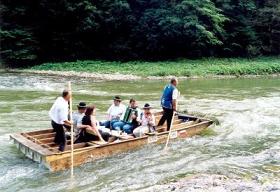
Dunajec River Canyon is a gorge and famous tourist attraction on the border between Poland and Slovakia. Due to its beauty and uniqueness it is on the UNESCO World heritage list. The canyon separates the Małopolska Voivodship (Poland) and Prešov Region (Slovakia). It is a natural phenomenon where the Dunajec River breaks through the Pieniny mountain range, creating a narrow valley and a romantic ravine in limestone reefs. The area is home to rare plants and animal species. Dunajec is the only river that carries water from Slovak territory to the Baltic Sea.
In This Article
The Flatboat Tradition and River Rafting Experience
The traditional flatboat ride through the canyon is the most popular way to experience this natural wonder, a tradition dating from the early 19th century. Local highlanders known as Górale guide wooden rafts using long poles, a skill passed down through generations of river navigators. Each raft carries 10 to 12 passengers steered by two or three raftsmen in traditional Gorali costumes with embroidered trousers and feathered hats. The journey covers about 18 kilometers and takes two to three hours, floating peacefully through the canyon as limestone cliffs rise up to 300 meters on either side. The raftsmen provide lively commentary on the history and geology of the canyon and often sing traditional folk songs that echo off the cliff walls, creating an acoustic effect that amplifies their voices across the water. The rafting season runs from April to October, with May and June offering the most dramatic water levels fed by melting snow from the nearby Tatra Mountains.
Visitors can choose between two starting points: the Slovak side at Červený Kláštor or the Polish side at Sromowce Niżne. The canyon has created seven dramatic turns as the river carves through the limestone, each offering a new and surprising perspective of the rock formations. The Tresno cliff, the highest in the canyon, towers 304 meters above the water surface. The walls are riddled with caves and crevices that shelter peregrine falcons and eagle owls, which can often be seen soaring overhead or perched on ledges watching the rafts pass below. The traditional rafting experience has remained largely unchanged for over 150 years, making it a living cultural heritage experience as much as a natural attraction.
The Pieniny National Park and Its Biodiversity
The Pieniny National Park protects over 1,100 species of vascular plants, including many endemic species unique to this limestone environment. The park is famous for its butterfly population with over 900 species recorded, including the protected Apollo butterfly that has become a symbol of the region. The limestone bedrock supports a unique alpine flora with colorful blooms on the cliff faces from spring through early autumn. The forests are home to brown bears, lynx, wild boar, and red deer, particularly in the more remote sections of the park away from the river corridor. The park maintains marked hiking trails ranging from easy riverside walks suitable for families to challenging climbs up to the Three Crowns massif at 982 meters, which offers panoramic views of the entire Dunajec gorge and the surrounding Pieniny and Tatra mountain ranges.
Architectural attractions on the canyon’s edges include Castle Niedzica, a medieval fortress perched on a hill above the Dunajec river, and the ruins of Castle Czorsztyn on the opposite bank, creating a dramatic historic frame for the natural scenery. The Slovak village Červený Kláštor is an excellent starting point for walking or cycling along the canyon, with rental facilities and marked routes that follow the river. The Pieniny region is also known for its traditional wooden architecture and local cheese-making traditions.
Planning Your Dunajec Canyon Visit
Dunajec River Canyon is very popular among tourists. Visitors can float down the river on a flatboat and enjoy an unforgettable adventure. Towering cliffs reach an average height of 300 meters. The canyon is a narrow gap where the river has created seven turns. Most of the Pieniny national park is forested with conical peaks that create a distinctive silhouette against the sky. The best time to visit is between May and September. Spring offers the most dramatic water levels from Tatra snowmelt, while autumn provides colorful foliage and fewer crowds, with September being particularly beautiful as the beech forests turn gold.
Advance booking is recommended during July and August when the canyon can receive over 3,000 visitors per day. Nearby Szczawnica on the Polish side offers accommodation ranging from guesthouses to spa hotels, and is itself a historic resort town with a promenade and mineral water springs. The area is famous for oscypek smoked cheese made from sheep’s milk, grilled trout fresh from mountain streams, and pierogi dumplings served with bacon and sour cream. The raft ride costs approximately 60 PLN per person on the Polish side, and combined tickets including a return bus transfer from the endpoint back to the starting village offer the most convenient arrangement.
View Dunajec River Canyon in Pieniny national park in Slovakia in a larger map
Have you floated through the Dunajec Canyon on a traditional wooden raft or explored the Pieniny mountains? Share your experience! 🛶
Explore all our Slovakia travel guides, from the High Tatras to Bratislava charm.
Explore More
If you enjoyed this article, you might also like:
