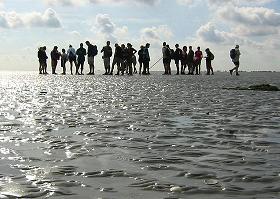
The Wadden Sea (Waddenzee) is one of the world’s most extraordinary and productive coastal ecosystems, a UNESCO World heritage tidal flat system stretching 500 kilometres along the coasts of the Netherlands, Germany, and Denmark, where 10-12 million migratory birds stop each year to refuel on one of the planet’s greatest avian migration highways. This vast intertidal zone of mudflats, sandbanks, salt marshes, and barrier islands is the largest unbroken system of tidal wetlands on Earth and offers a unique visitor experience: walking on the sea floor itself during low tide, an activity known as wadlopen (mudflat hiking), is one of the most memorable nature experiences in the Netherlands.
In This Article
Quick Facts: The Wadden Sea, Netherlands
- Best time to visit: Spring (April-May) and autumn (September-October) for peak bird migration; summer for mudflat hiking (wadlopen) excursions; the Frisian Islands are a popular summer beach destination for Dutch and German holidaymakers
- Top activity: Wadlopen, guided mudflat walks from the mainland to one of the Wadden Islands, typically 3-4 hours walking across the exposed sea floor at low tide. This is strictly a guided activity, the tides are dangerous and the mud can be treacherous if you don’t know the routes
- How to get there: The Wadden Sea coast is accessible from numerous points in the northern Netherlands (provinces of Friesland and Groningen); ferries connect to the Wadden Islands (Texel, Vlieland, Terschelling, Ameland, and Schiermonnikoog)
- UNESCO status: Inscribed in 2009 (Netherlands and Germany) and extended in 2014 to include the Danish section, one of the largest UNESCO natural World heritage sites
The Magic of Wadlopen: Mudflat Hiking
Wadlopen, or mudflat hiking, is the most iconic activity in the Wadden Sea region. Twice every 24 hours, the North Sea retreats to expose vast areas of the sea floor, creating a temporary landscape of mudflats, sandbars, and shallow channels that connect the mainland to the Frisian Islands. Guided wadlopen excursions take small groups across this exposed seabed, walking for three to four hours through an environment that is both beautiful and challenging. The mud can be surprisingly deep and sticky in places, and the route requires expert knowledge of the tides to avoid being caught by the incoming water. Participants are provided with special shoes or are advised to go barefoot, as regular footwear quickly becomes clogged with thick, heavy mud. The experience is deeply immersive, allowing you to see crabs, starfish, and molluscs in their natural habitat, and to appreciate the immense scale of the tidal system. It is strictly a guided activity, as the tides are dangerous and the terrain can be treacherous without local knowledge. The Waddenzee covers an area of approximately 2,500 square kilometres.
Bird Migration and Wildlife in the Wadden Sea
The Wadden Sea is one of the most important bird habitats on the planet, serving as a critical stopover point on the East Atlantic Flyway migration route. Between 10 and 12 million migratory birds pass through the region each year, feeding on the rich invertebrate life buried in the mudflats. Spring and autumn are the peak seasons for birdwatching, with vast flocks of knots, dunlins, bar-tailed godwits, and oystercatchers covering the mudflats like a living carpet. The Wadden Islands provide important breeding grounds for terns, gulls, and eiders, while the salt marshes support a unique plant community adapted to the harsh conditions of regular tidal flooding. Seals are common in the Wadden Sea, with large colonies of both harbour seals and grey seals hauling out on sandbanks at low tide. Boat trips from several harbour towns offer seal-watching excursions that get you close to these charismatic marine mammals without disturbing them. The variety of species living here, from mussels and snails to starfish and the many bird species, creates one of the most diverse ecosystems on Earth.
Exploring the Frisian Islands
The chain of five inhabited Frisian Islands extends along the Dutch coast, each with its own distinct character. Texel, the largest and most accessible, offers excellent cycling routes, birdwatching reserves, and sandy beaches that stretch for kilometres. Vlieland is car-free and retains a wild, windswept atmosphere that feels a world away from the mainland. Terschelling is known for its vibrant village life and the annual Oerol Festival, a performing arts event that takes over the entire island each summer. Ameland offers traditional Frisian villages and a lighthouse with panoramic views, while Schiermonnikoog, the smallest and most easterly, is a national park in its own right, with pristine dunes and beaches that are strictly protected. Ferries connect each island to the mainland, and cycling is the preferred mode of transport on all of them. Accommodation ranges from campsites and hostels to luxury hotels, and the local cuisine features fresh seafood, particularly mussels, shrimp, and oysters harvested from the Wadden Sea. The islands are bounded on the northwest by barriers that protect the Dutch coast from North Sea storm surges.
Have you walked the Wadden Sea mudflats or visited the Dutch Wadden Islands? Share your wadlopen and Dutch coastal experiences in the comments! 🦅
Explore all our Netherlands travel guides, from Amsterdam canals to tulip fields.
Explore More
If you enjoyed this article, you might also like:
- Explore The Top 5 Sights Of The Netherlands – Netherlands
- Port of Rotterdam – the biggest port in Europe | Netherlands – Netherlands
- Top Seven Things to Do in Amsterdam | Netherlands – Netherlands
