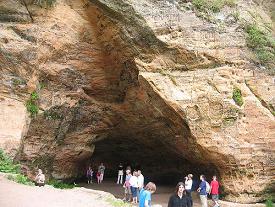
Gutmana Ala (Gutman’s Cave) is the largest and most visited cave in Latvia, a striking sandstone grotto hidden in the ancient Gauja River Valley within Sigulda’s storybook landscape. More than just a geological wonder, Gutmana Ala is steeped in Baltic legend, ancient inscriptions, and a tragic love story that has made it one of Latvia’s most romantic yet haunting destinations.
In This Article
Quick Facts: Gutmana Ala, Latvia
- Best time to visit Gutmana Ala: Late spring through early autumn (May–September); the surrounding Gauja National Park is particularly beautiful during autumn colours
- Top attraction: The cave itself, 18.8 metres deep, 12 metres wide, and 10 metres high, the largest internal erosion cave in the Baltic states
- How to get to Gutmana Ala: ~1 hour from Riga by car or train to Sigulda, then a 2km walk through Gauja National Park; well-signposted trails from Sigulda town centre
- Entry fee: Free
- Best for: Nature lovers, hikers, and those interested in Baltic folklore and legends
The Legend of the Rose of Turaida
Gutmana Ala is inseparable from one of Latvia’s most famous folk legends, the story of the Rose of Turaida. In the early 17th century, a beautiful young woman named Maija, known as the Rose of Turaida, chose death over dishonour when a Polish soldier attempted to assault her at this very cave. Her tragic story has been immortalised in Latvian literature, opera, and film, and the cave entrance bears a plaque commemorating her sacrifice. According to local tradition, Maija was a foundling who was raised by the castle steward at Turaida Castle and grew up to be renowned for her beauty and virtue. Her grave can be visited at the nearby Turaida Church, where a stone marker inscribed with a poetic epitaph draws visitors who wish to pay their respects to this enduring symbol of Latvian national identity.
The legend of the Rose of Turaida has inspired generations of Latvian artists, writers, and musicians. The story has been the subject of operas, plays, and films, and the cave remains a site of pilgrimage for those who are moved by Maija’s tragic fate. The carved inscriptions on the cave walls, some of which date back to the 17th century, include not only the names of visitors from centuries past but also references to Maija and her story. The spring that flows from the cave is also part of the legend; local tradition holds that the water has healing properties and is said to reduce wrinkles and bring good luck to those who drink from it or wash their faces in its cool, clear waters.
Geology and the Formation of Gutmana Ala
Geologically, Gutmana Ala is a remarkable example of a river erosion cave formed over thousands of years by the action of the Gauja River cutting through soft Devonian sandstone. The cave measures 18.8 metres in depth, 12 metres in width, and 10 metres in height, making it the largest internal erosion cave in the Baltic states. The surrounding sandstone cliffs of the Gauja Valley are among the oldest exposed rock formations in Latvia, dating back approximately 370 million years to the Devonian period, when much of the region was submerged beneath a warm, shallow sea. The reddish and yellowish hues of the sandstone, visible in the cave walls, are caused by iron oxide deposits that accumulated during the geological formation of the rock layers.
The cave is part of a larger system of sandstone caves and overhangs that line the Gauja River valley in the vicinity of Sigulda. Over the centuries, the river has carved a deep, picturesque gorge through the soft sandstone, creating a landscape that has been compared to the Swiss Alps, earning the area the nickname “Latvian Switzerland.” The sandstone cliffs in this section of the valley reach heights of up to 40 metres in places, and the entire Gauja National Park is a haven for geologists and nature lovers alike. The cave continues to evolve slowly as freeze-thaw cycles, water seepage, and wind erosion gradually reshape its contours, a reminder that even ancient landscapes are never truly static.
Exploring Gauja National Park Around Gutmana Ala
A visit to Gutmana Ala is best combined with a wider exploration of the Gauja National Park, which surrounds the cave with a wealth of natural and historical attractions. The park’s main hub, Sigulda, is just a short walk from the cave and offers three magnificent medieval castles: the ruins of Sigulda Medieval Castle (a 13th-century Livonian Order fortress), the neo-Gothic Sigulda New Castle, and the beautifully restored Turaida Castle with its museum and sculpture park. The Sigulda cable car, which crosses the Gauja Valley, provides spectacular aerial views and is also the site of Northern Europe’s highest bungee jump for those seeking an extra thrill.
The walking trail from Sigulda to Gutmana Ala is a delightful 2-kilometre route that follows the Gauja River through ancient forest, passing other smaller caves and sandstone formations along the way. The trail is well-signposted and suitable for all fitness levels, making it an accessible addition to any visit to the Gauja National Park. After exploring the cave, many visitors continue along the river trail to the Turaida Museum Reserve, completing a full loop that combines natural wonders with Latvia’s rich medieval history. The park’s autumn colours, which peak in late September and early October, are particularly spectacular along this stretch of the Gauja Valley, making it one of the most photogenic walks in the Baltic region.
View Gutmana Ala – biggest cave in Latvia in a larger map
Have you visited Gutmana Ala or explored Gauja National Park in Latvia? Share your favourite Sigulda experiences and any hidden Baltic gems in the comments! 🏰
Explore all our Latvia travel guides, from Riga Art Nouveau to Baltic beaches.
Explore More
If you enjoyed this article, you might also like:
