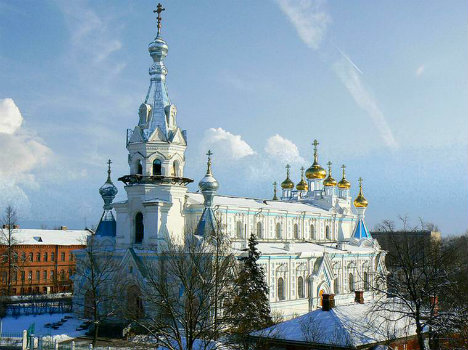
Daugavpils, Latvia’s second-largest city, is a place of surprising contrasts. Located in the south-eastern corner of the country, near the borders with Lithuania and Belarus, the city has a population of around 80,000 and a history shaped by the many empires that have ruled over this strategic territory. Daugavpils has been part of Poland, Sweden, Russia, and the Soviet Union, and each period has left its mark on the city’s architecture, culture, and character. Today, the city is a vibrant cultural centre, known for its impressive fortress, its Art Nouveau architecture, and its rich multicultural heritage that blends Latvian, Russian, Polish, and Jewish traditions.
In This Article
The Daugavpils Fortress
The city’s most significant landmark is the Daugavpils Fortress, a massive 19th-century fortification complex that is the only early 19th-century fortress in northern Europe that has survived largely intact. Construction began in 1810 under Tsar Alexander I, and the fortress was designed to protect the Russian Empire’s western border. The complex covers over 150 hectares and includes eight bastions, a system of moats and ramparts, and a series of military and administrative buildings. The fortress was never besieged in combat, but it served as an important military base through both World Wars. Today, the fortress is being slowly restored, with several buildings housing museums, galleries, and cultural institutions. The Mark Rothko Art Centre, dedicated to the abstract expressionist painter who was born in Daugavpils in 1903, is the main cultural attraction within the fortress walls.
The City’s Architecture and Culture
Daugavpils’ historic centre, centred on the pedestrianised Rigas Street, is lined with buildings in the Art Nouveau, Neoclassical, and Eclectic styles that reflect the city’s prosperity in the late 19th and early 20th centuries. The Church of the Immaculate Conception, a striking neo-Gothic Catholic church built of red brick, is one of the city’s most recognisable landmarks. The city is home to a large Russian-speaking community, and the Russian Orthodox Cathedral of Saints Boris and Gleb, with its distinctive blue domes and gold crosses, is a prominent feature of the skyline. The Daugavpils Local History and Art Museum, housed in a former art school building, offers a comprehensive overview of the city’s history, from its foundation in 1275 to the present day.
Practical Information
Daugavpils is located approximately 230 kilometres south-east of Riga, the Latvian capital. Train services from Riga take about two and a half hours, making the city an easy day trip or weekend destination. The city is also accessible by car via the A6 highway, and the nearby border crossings provide access to Lithuania and Belarus. The best time to visit is from May to September, when the weather is warm and the city’s parks and gardens are at their best. Accommodation options include the Park Hotel Latgola, the largest hotel in the city, and several smaller guesthouses and hostels. The city’s restaurants serve a mix of Latvian, Russian, and international cuisine, with local specialities including pīrāgi, bacon-filled pastries, and sklandrausis, a traditional carrot and potato pie. Allow at least a full day to explore the fortress and the historic centre.
Have you explored the massive Daugavpils Fortress and discovered the multicultural heritage of Latvia’s second city? What part of the city’s architecture impressed you most?
>
Latvia Second City
Daugavpils, with a population of around 80,000, is the second largest city in Latvia after Riga. Located in the southeastern corner of the country, less than 30 kilometres from the Belarusian border, it has historically been a crossroads of cultures and empires where East meets West. The city has been part of Poland, Sweden, Russia, and the Soviet Union before Latvia regained independence in 1991. Each era has left its mark on the city architecture, cuisine, and character, creating a fascinating palimpsest of European history.
The city name means “Castle on the Daugava,” reflecting its strategic importance as a fortified settlement guarding the river route. Today, Daugavpils is a vibrant industrial and cultural centre, known for its multicultural heritage and growing tourism scene that draws visitors interested in off-the-beaten-path Baltic destinations.
Explore all our Latvia travel guides, from Riga Art Nouveau to Baltic beaches.
Explore More
If you enjoyed this article, you might also like:
