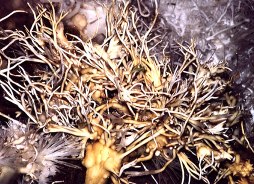
Ochtinská Aragonite Cave is one of the rarest cave systems in the world, one of only three aragonite caves on the planet open to the public, located in the Slovak Karst region of central Slovakia, where delicate needle-like crystals of aragonite (a rare polymorph of calcium carbonate) create surreal, star-like formations on the cave walls in a geological phenomenon so unusual that UNESCO included it in the Caves of Aggtelek Karst and Slovak Karst World heritage site. Discovered by accident in 1954 during geological prospecting, Ochtinská Aragonite Cave remains one of Slovakia’s most extraordinary natural treasures, and a reminder that some of Europe’s greatest wonders lie hidden underground.
In This Article
Quick Facts: Ochtinská Aragonite Cave
- Best time to visit: May, September (the cave is open to the public seasonally); advance booking recommended due to limited daily capacity
- Tour length: ~30 minutes; 230 metres of accessible passageway
- How to get there: ~2.5 hours from Košice by car; the cave is located near the village of Ochtiná, between Rožňava and Jelšava; accessible by bus from Rožňava
- Entry fee: ~€8, 10 (adult)
- UNESCO status: Part of the “Caves of Aggtelek Karst and Slovak Karst” World heritage site (inscribed 1995)
- Unique feature: Only 3 aragonite caves in the world are open to the public, Ochtiná (Slovakia), plus caves in Argentina and Mexico
The Science Behind the Aragonite Formations
Aragonite is a rare polymorph of calcium carbonate, meaning it has the same chemical composition as calcite (the mineral that forms most cave stalactites and stalagmites) but a different crystal structure. While calcite forms blocky, rhombic crystals, aragonite forms delicate needle-like crystals that grow in clusters, fans, and star-like patterns. The conditions required for aragonite formation are very specific, the water must be rich in iron and magnesium, and the temperature and pressure must be carefully balanced. Ochtinská Aragonite Cave developed when iron-rich thermal waters rose through fractures in the limestone, depositing aragonite crystals as they cooled and reacted with the surrounding rock. The result is a cave decorated with formations that look more like frozen star fields or celestial nebulae than typical cave decorations. The most famous chamber is the Milky Way Hall, where the walls are covered with white aragonite clusters that sparkle in the cave lighting, creating the illusion of a night sky filled with stars. This effect is unique to Ochtinská Aragonite Cave and is the reason why it is considered one of the most beautiful caves in Europe despite its relatively small size.
Discovery and History of the Cave
Ochtinská Aragonite Cave was discovered entirely by accident in 1954. A geological survey team led by Ján Bystrický was prospecting for iron ore deposits in the area when they broke through a thin layer of rock and found themselves in a cavity filled with extraordinary crystalline formations. The team immediately recognised the scientific importance of the discovery, and careful exploration began. The cave was mapped over the following years, and in 1972 it was opened to the public after the installation of safe walkways and lighting systems designed to protect the delicate formations. The cave extends for approximately 300 metres in total, of which 230 metres are accessible to visitors on a guided tour that lasts about 30 minutes. The limited size is part of what makes the cave so special, every chamber is densely decorated, and the close proximity to the formations allows visitors to appreciate the intricate detail of the aragonite crystals. In 1995, Ochtinská Aragonite Cave was inscribed on the UNESCO World heritage List as part of the Caves of Aggtelek Karst and Slovak Karst site, alongside other exceptional caves in the region such as Domica Cave and Gombasecká Cave.
Visitor Information and Nearby Attractions
The cave is open to the public from April to October, with tours available daily except Mondays. Due to the fragile nature of the aragonite formations and the limited capacity of the cave, advance booking is strongly recommended, especially during the summer months and on weekends. The temperature inside the cave is a constant 7.2 degrees Celsius, so warm clothing is essential even on the hottest summer day. The tour is guided and takes approximately 30 minutes, covering the 230-metre accessible route through the main chambers, including the stunning Milky Way Hall. The entrance fee is approximately 6 to 8 euros for adults, with reduced rates for children and students. The cave is located near the village of Ochtiná, about halfway between the towns of Rožňava and Jelšava in the Košice Region of eastern Slovakia. The surrounding area is rich in attractions, including other caves of the Slovak Karst, the medieval town of Rožňava with its beautiful cathedral and town square, and the spectacular Dobšinská Ice Cave, another UNESCO-listed cave famous for its permanent ice formations. The region is also known for its traditional Slovak cuisine, with local restaurants offering bryndzové halušky, hearty soups, and grilled meats.
Have you visited Ochtinská Aragonite Cave or explored Slovakia’s UNESCO caves? Share your underground Slovak discoveries in the comments! 🕳️
Explore all our Slovakia travel guides, from the High Tatras to Bratislava charm.
Explore More
If you enjoyed this article, you might also like:
