
Kuršių Nerija (Curonian Spit) National Park is one of Europe’s most unique landscapes, a 98-kilometre-long, narrow sand dune peninsula shared between Lithuania and Russia’s Kaliningrad region, where massive shifting dunes (some up to 60 metres high), ancient pine forests, and traditional fishing villages create a UNESCO World heritage landscape that is often called the Baltic Sahara. This fragile finger of sand, in places just 400 metres wide, separates the freshwater Curonian Lagoon from the Baltic Sea and has been shaped over millennia by wind, waves, and the determined human effort to stabilise the wandering dunes that once swallowed entire villages.
In This Article
Quick Facts: Curonian Spit, Lithuania
- Best time to visit: June–August for beach weather and the warmest sea; May and September for bird migration (the spit is a critical flyway); the dunes are most atmospheric in the golden light of early morning or late afternoon
- How to get there: ~30 minutes from Klaipėda by ferry + bus or car to Nida (the main settlement on the Lithuanian side); ~4.5 hours from Vilnius by car; car entry requires a small ecological fee
- Top attraction: The Parnidis Dune and its sundial near Nida, the Hill of Witches sculpture trail at Juodkrantė, and the Thomas Mann summer house (the German Nobel laureate spent three summers here)
Between Russia and Lithuania you can find peninsula called Curonian Spit (Kuršių nerija), where is situated a unique national park with sand dunes – Kuršių Nerija National Park. This sand bridge is 180 km long and it is very interesting geomorphological formation bordering the Baltic Sea. It separates the Curonian Lagoon from the Baltic Sea coast.
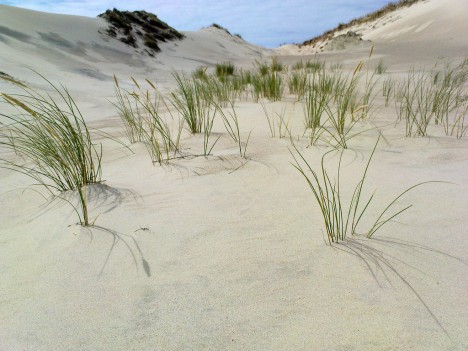
Kuršių Nerija National Park, Lithuania by fintlandia
Kuršių Nerija National Park has now become a popular tourist site and holiday resort, which is also one of the largest deposits of amber in the world.
Kuršių Nerija National Park contains of a range of pine forests and sand dunes, through which is sometimes referred to as the Baltic Sahara. The unique character of the landscape brought Curonian Spit to the UNESCO World heritage Site. The larger part of the Curonian Spit in Lithuania is a part of Kuršių Nerija National Park covering an area of 265 km2 (98km2 are covered by land, and 167km2 by water). The park has been established in 1991 but the first steps to protect this area were undertaken already in 1960, when Curonian Spit became a Nature Reserve.
The Shifting Dunes and the Hill of Witches
The Curonian Spit is defined by its massive shifting sand dunes, the largest in Europe, which have been moving eastward at up to 10 metres per year over the past two centuries. The most accessible is the Parnidis Dune near Nida, rising 52 metres above the lagoon. A stone sundial at its summit accurately tells the time using the shadow cast by its central pillar. At Juodkrante, the Hill of Witches offers a completely different experience: an open-air sculpture trail winding through a pine forest with more than 80 wooden carvings depicting characters from Lithuanian folklore, including witches, devils, dragons, and mythical heroes. The two-kilometre trail takes about an hour to walk and is free to enter, making it especially atmospheric on misty autumn mornings when the carved figures seem to come alive among the trees.
Birdwatching and Wildlife on the Curonian Spit
The Curonian Spit lies along the East Atlantic Flyway, one of the most important bird migration corridors in Europe. During spring and autumn migration, hundreds of thousands of birds pass through the spit. On the Lithuanian side, the Juodkrante ornithological station conducts bird ringing research that visitors can observe in May and September. The spit’s varied habitats support an impressive diversity of species: the lagoon side attracts mute swans, great crested grebes, and several duck species; the pine forests host woodpeckers and the elusive Eurasian pygmy owl; and the dunes themselves provide nesting sites for ringed plovers. Beyond birds, the forests support roe deer, wild boar, and the occasional moose. A raised boardwalk at the Nagliai Nature Reserve offers access to the most pristine dune and forest habitats, with interpretive signs explaining the ecology of this narrow but extraordinarily biodiverse landscape.
Have you walked the dunes of the Curonian Spit or discovered Lithuania’s Baltic coastline? Share your sand dune adventures in the comments! 🏜️
Explore all our Lithuania travel guides, from Vilnius baroque to the Curonian Spit.
Explore More
If you enjoyed this article, you might also like:
- Vilnius – Baroque city and the capital of Lithuania – Lithuania
- City of Kaunas – heart of Lithuanian culture, tradition and history – Lithuania
- Lithuania – country of amber – Lithuania
