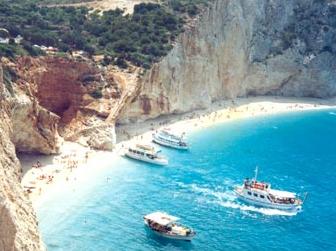
Porto Katsiki Beach is one of the most beautiful beaches in Greece, a spectacular strip of white pebbles and impossibly turquoise water on the Ionian island of Lefkada, backed by dramatic white limestone cliffs that plunge vertically into the sea and are accessible by a steep staircase that descends from the cliff-top car park to one of the most photographed shorelines in the Mediterranean. The name Porto Katsiki means “Goat Port” in Greek, supposedly goats were once the only creatures agile enough to reach this isolated cove, and while it is no longer a secret (the staircase brings thousands of visitors each day in summer), the sheer physical beauty of the place, especially in the golden light of late afternoon, makes it worth the crowds.
In This Article
The Unique Landscape and Geology of Porto Katsiki
Porto Katsiki owes its stunning appearance to the unique geology of Lefkada’s western coast, where ancient limestone deposits have been uplifted and eroded into dramatic white cliffs that plunge vertically into the Ionian Sea. The pebbles on the beach are not ordinary stones but fragments of this same white limestone, worn smooth by the constant action of the waves, creating a surface that is surprisingly comfortable to walk on compared to sharper gravel beaches. The water derives its famous turquoise colour from the combination of white seabed and pure, sediment-free Ionian seawater, which allows light to penetrate deeply and scatter in the blue-green spectrum. On calm days, visibility underwater can exceed 20 metres, making the beach a popular spot for snorkelling even though there is no significant reef or marine park in the immediate area.
The cliffs surrounding the beach are stratified with horizontal bands of different-coloured limestone, recording millions of years of geological history. At certain angles and times of day, the cliff faces reveal fossilised shells and marine organisms embedded in the rock, a reminder that this entire region was once submerged beneath an ancient ocean. The vegetation clinging to the cliff edges consists of drought-resistant Mediterranean species: wild thyme, juniper, and prickly pear cactus, whose roots delve deep into cracks in the limestone to reach moisture trapped below the surface.
When to Visit and How to Beat the Crowds
Porto Katsiki is at its most beautiful in June and September, when the water is warm enough for swimming but the peak summer crowds have not yet arrived or have already left. During July and August, the beach can accommodate over a thousand visitors, and the atmosphere becomes lively rather than serene. The best strategy for a more peaceful experience is to arrive before 9am, when the first sun loungers are being set up and the staircase is quiet. The early morning light illuminates the cliffs with a soft golden glow, and the water is at its calmest. Alternatively, visiting after 5pm offers a different kind of beauty, as the sun sinks behind the cliffs and the water takes on deeper shades of blue and purple.
The staircase itself is a factor to consider. Approximately 100 steep steps descend the cliff face from the car park to the beach, and while they are well-maintained with sturdy handrails, the climb back up in the midday heat can be strenuous. Visitors with mobility issues or a fear of heights should consider taking a boat tour instead, as several operators in the nearby port of Nydri and the town of Vasiliki offer day trips that approach Porto Katsiki from the sea, allowing guests to swim ashore without tackling the staircase. These boat trips typically include stops at other Lefkada beaches, such as the equally spectacular Egremni Beach, and provide a different perspective on the island’s dramatic coastline.
Combining Porto Katsiki with Other Lefkada Highlights
Lefkada is one of the most beautiful islands in the Ionian Sea, and Porto Katsiki is just one of its many attractions. The adjacent Egremni Beach, accessible from the same road but via a longer staircase of 350 steps, offers a much larger stretch of white pebbles and is often less crowded due to the more demanding access. For a completely different experience, the eastern coast of Lefkada offers sandy beaches like Agios Ioannis, where the water is shallower and warmer, and the famous windsurfing conditions at Vassiliki Bay attract windsurfers from around the world.
Inland, the island offers traditional villages like Karya, with its folklore museum and handicraft shops, and the mountain village of Exanthia, where a small castle ruins offer panoramic views across the island and the mainland. The capital, Lefkada Town, is connected to the mainland by a narrow causeway and features a charming old town with colourful Venetian-style houses, a lively marina, and excellent seafood restaurants. A day trip to Porto Katsiki can easily be combined with a visit to the nearby Monastery of Faneromeni, perched on a cliff with breathtaking views, or a stop at the waterfalls of Nydri for a fresh-water swim in a completely different setting.
Have you descended the staircase to Porto Katsiki or discovered Lefkada’s cliff-backed beaches? Share your Ionian island moments in the comments! 🏖️
Explore all our Greece travel guides, from ancient ruins to Aegean beaches.
Explore More
If you enjoyed this article, you might also like:
