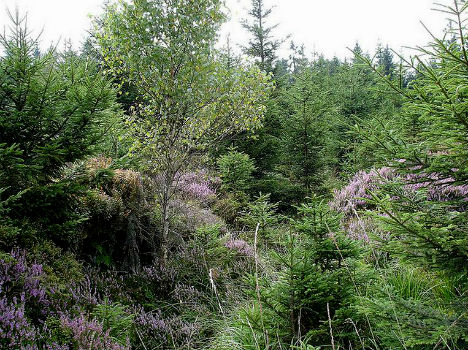
The Hautes Fagnes, or High Fens, is a landscape unlike any other in Belgium. Stretching across the eastern border with Germany, this vast peat bog plateau sits at an altitude of over 600 metres, creating a unique ecosystem of raised bogs, heathland, and stunted birch forests that feel more like Scandinavia than the Low Countries. This is the largest nature reserve in Belgium, a wild and windswept expanse where the sky seems impossibly wide and the silence is broken only by the call of curlews and the whisper of wind through the grass. Designated as a nature reserve in 1957 and later as a Ramsar wetland of international importance, the Hautes Fagnes is a haven for hikers, naturalists, and anyone seeking solitude in the landscape.
In This Article
The Unique Ecosystem of the Fens
The raised bogs of the Hautes Fagnes are among the most southerly examples of this type of ecosystem in Europe. The peat, which can be up to six metres deep in places, has accumulated over the last 10,000 years, preserving a record of the region’s vegetation and climate in its layers. The bog is home to a specialised community of plants adapted to the acidic, waterlogged conditions, including sphagnum mosses, cotton grass, and the carnivorous sundew, which supplements its nutrient intake by trapping insects. The area is also an important breeding ground for black grouse, a species that has become increasingly rare in western Europe. Birdwatchers may also spot hen harriers, short-eared owls, and the elusive woodlark.
Walking and Winter Sports
The Hautes Fagnes is crisscrossed with marked walking trails, many of which follow boardwalks that protect the fragile bog vegetation from trampling. The Signal de Botrange, at 694 metres the highest point in Belgium, is accessible via a gentle walk from the nearby visitors centre. A stone tower at the summit offers panoramic views over the reserve on clear days. The Baraque Michel, an inn dating from the 18th century, is a popular starting point for hikes and offers traditional Belgian fare. In winter, the Hautes Fagnes is one of the few places in Belgium where cross-country skiing is reliably possible, with marked trails groomed for skiing when conditions allow. The Fens are also an excellent destination for snowshoeing, with several routes through the snow-covered landscape.
Practical Information
The Hautes Fagnes Nature Reserve is located in the province of Liège, approximately 30 kilometres east of the city of Verviers. The main visitor centre, the Botrange Nature Park Centre, is located near the Signal de Botrange and offers exhibitions on the region’s geology, flora, and fauna, as well as trail maps and guided walks. Admission to the reserve is free, though there is a parking fee at the main access points. The best time to visit is from May to October for walking, when the heather is in bloom and the bog plants are active. Winter visits require warm, waterproof clothing and sturdy boots, as the weather can change rapidly. The nearest towns with accommodation are Malmédy and Eupen, both of which offer a range of hotels and restaurants.
Have you walked the boardwalks of the Hautes Fagnes and experienced the unique atmosphere of Belgium’s High Fens? What surprised you most about this remarkable landscape?
>
Belgium Best Kept Natural Secret
The Hautes Fagnes, known in Dutch as Hoge Venen and in German as Hohes Venn, forms the largest nature reserve in Belgium. This elevated plateau sits at between 450 and 694 metres above sea level, straddling the border between the Walloon region and the German-speaking community. Its landscape of peat bogs, heathland, and stunted forests is unlike anywhere else in the Low Countries and supports ecosystems found nowhere else in Belgium.
The reserve covers approximately 4,500 hectares of protected moorland. It forms part of the larger Parc Naturel des Hautes Fagnes Eifel, which extends into Germany. The area receives more rainfall than anywhere else in Belgium, contributing to the waterlogged conditions that sustain the peat bogs. Annual precipitation exceeds 1,400 millimetres, creating a unique microclimate that supports specialised plant and animal communities.
Walking Trails Through the Moorland
The reserve features an extensive network of marked walking trails, many of which use wooden boardwalks to protect the fragile peat ecosystem and keep walkers dry. The most popular routes start from the Signal de Botrange, the highest point in Belgium at 694 metres, where a viewing tower provides panoramic views over the plateau stretching all the way to the Ardennes on clear days.
In winter, the trails are popular with cross-country skiers and snowshoers. The flat to gently undulating terrain makes the Hautes Fagnes one of the few places in Belgium where you can reliably enjoy snow sports. Equipment rental is available in nearby towns such as Robertville and Sourbrodt. The marked ski trails cover over 30 kilometres of groomed tracks when conditions permit.
Mountain Biking in the Fagnes
The reserve also includes dedicated mountain bike routes of varying difficulty. The signposted trails wind through forests and across open moorland, offering challenging climbs and fast descents. Bikes can be rented in the surrounding villages, and several marked circuits range from 15 to 50 kilometres, suitable for both casual riders and experienced mountain bikers seeking an adrenaline fix in a unique natural setting.
Flora and Fauna of the High Fens
The unique environment supports specialised plant species including the round-leaved sundew, a carnivorous plant that traps insects on its sticky leaves. In late summer the heather blooms, turning the plateau shades of purple and pink that create a breathtaking natural spectacle. Birdlife includes black grouse, meadow pipits, and the occasional golden plover. If you visit at dawn or dusk, you might spot wild boar or red deer moving across the open ground in search of food.
How to Reach the Hautes Fagnes
The reserve is located about a 30-minute drive southeast of Liege and roughly two hours from Brussels by car. The nearest major town is Eupen, the capital of Belgium German-speaking community. Public transport options are limited, so a car is the most practical way to visit. Car parks are available at the main trailheads, including Signal de Botrange, Baraque Michel, and the Mont Rigi information centre, which houses exhibits about the park ecology and history.
Are you ready to discover Belgium wildest landscape, where peat bogs stretch to the horizon and the air smells of damp earth and heather?
Explore all our Belgium travel guides, from Bruges canals to Brussels Grand Place.
Explore More
If you enjoyed this article, you might also like:
