Aquileia was once one of the largest cities in the Roman Empire, a bustling port and trading hub at the head of the Adriatic. Today it is a quiet town, but its ancient past lies open for visitors to explore. The archaeological area contains the remains of Roman houses, baths, and the forum. The basilica floor is covered in one of the largest and finest early Christian mosaic pavements in the Western world. Scenes of fish, birds, and biblical stories stretch across the nave. The National Archaeological Museum holds artefacts from the city’s long history. Aquileia is a UNESCO World heritage site and a must for anyone interested in Roman history. It feels undiscovered.
In the northern part of Italy you will find the ancient archaeological site known today as Aquileia. During the Roman era, the town of Aquileia was considered to be one of the wealthiest in the entire empire. It was originally settled back in 180 B.C. and grew in popularity shortly after the construction of Via Popilia was completed back in 132 B.C.
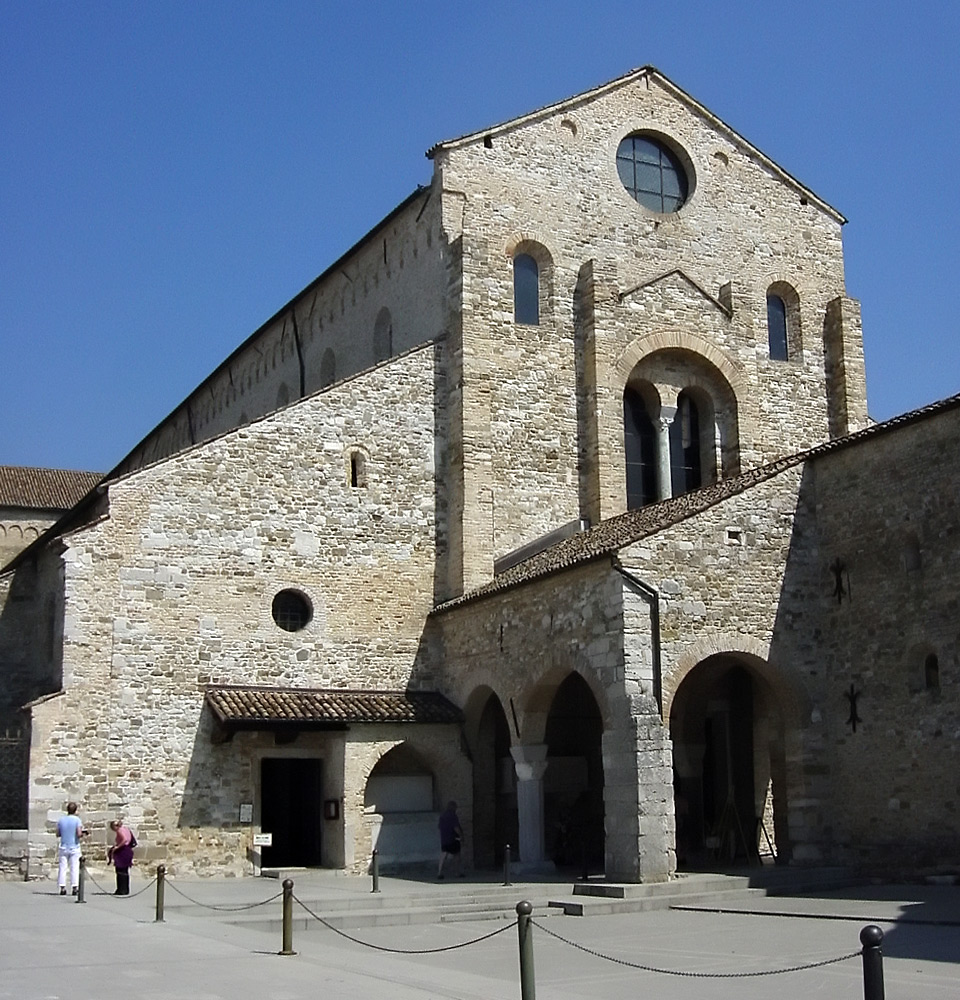
Archaeological Area and the Patriarchal basilica of Aquileia by Giovanni Dall’Orto
Soon after the completion of the main road, which connected the town to Altinum, Aquileia would grow to become a powerful and wealth commercial center. At the peak of its time, the town of Aquileia was home to more than 200,000 Romans. The city was known for its glassmakers.
In This Article
From Roman Power to Hun Destruction
In 452, the town was attacked by Attila the Hun and set ablaze. Many of the glassmakers who had helped make the town prosperous, relocated to the area surrounding the Venetian Lagoon. It is here at the lagoon that some of the most famous glass shops min the entire empire rose.
Archaeological Area, Aquileia, Italy by Zumzum
The town of Aquileia today is a park which is opened to the general public. Many of the ruins in Aquileia such as the forum, necropolis and harbor can be visited by year round by the general public. Many people also take the time to wander through the two neighborhoods in Aquileia that have been recently opened to the public as well. There are two different museums in Aquileia that house the many artifacts that have been uncovered over the years in the archaeological dig sites located throughout Aquileia.
It is important to note that the original Roman basilica which had been built back in the 3rd century was destroyed during the attacks of Attila the Hun. The present day basilica was built on the ruins of the originally by order of the House of Savoy back in 1031.
At its height, Aquileia was the fourth largest city in the Roman Empire, after Rome, Capua, and Mediolanum, with a population estimated at over 200,000. Its position at the convergence of land and sea trade routes made it a vital commercial hub, connecting the Italian peninsula with the Balkans and the Danube region. The city’s port, now buried under silt deposited by the Natissa River over two millennia, once welcomed ships laden with goods from across the Mediterranean. The Roman forum, of which only the foundation remains today, was the civic and commercial heart of the city, surrounded by temples, basilicas, and administrative buildings. The river harbour, visible in excavated sections, gives a sense of the scale of commerce that passed through this now sleepy town.
The Patriarchal basilica and Its Mosaics
The Patriarchal basilica of Aquileia is the town’s crowning glory. Built in the 4th century AD on the orders of Bishop Theodoros, and later reconstructed after the Hun invasion, the basilica is relatively plain from the outside, but the interior is a revelation. The entire floor of the nave is covered by a 760-square-metre mosaic pavement dating from the early 4th century, one of the largest and best-preserved Paleo-Christian mosaics in the Western world. The mosaic features a stunning array of scenes depicting fish, birds, sea creatures, and biblical stories including the story of Jonah and the whale. The level of detail is extraordinary, with individual fish scales, feathers, and waves rendered in tiny coloured tesserae. The mosaic’s symbolism reflects early Christian beliefs about salvation and the soul’s journey. The basilica also features a crypt with 9th-century frescoes and a towering campanile, or bell tower, that offers sweeping views of the surrounding plains. The adjacent Baptistery, with its octagonal font, completes one of the most significant early Christian complexes in Europe.
Exploring the Archaeological Area and Museums
The archaeological area of Aquileia is remarkably open and accessible. Visitors can walk through the excavated forum, where column bases mark the outline of the original structure, and explore the remains of Roman houses with mosaic floors of their own. The river harbour is one of the best-preserved Roman ports in existence, with stone quays and mooring rings still visible. The necropolis, located along the ancient road leading out of town, contains a collection of funerary monuments that offer insight into Roman burial practices. The National Archaeological Museum of Aquileia, one of the most important in Italy, houses an extensive collection of Roman artefacts including statues, inscriptions, glassware, amber, and jewellery. The museum’s displays of Roman glass are particularly noteworthy, showcasing the craftsmanship that made Aquileia famous across the empire. A separate Early Christian Museum, located near the basilica, contains sarcophagi, inscriptions, and architectural fragments from the late Roman and early medieval periods. Together, these sites make Aquileia one of the most important archaeological destinations in northern Italy, yet it remains surprisingly uncrowded compared to better-known Roman sites like Pompeii and Herculaneum.
Would you step back in time to walk the Roman streets of Aquileia?
Explore all our Italy travel guides, from the Dolomites to Sicily.
Explore More
If you enjoyed this article, you might also like:
