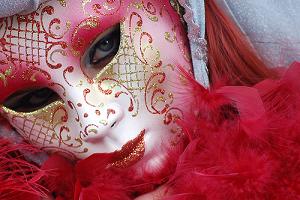
Venice transforms into a theatre of masks and mystery once each year. The Carnival of Venice is one of the most famous celebrations in the world. For two weeks, the city fills with elaborate costumes, masquerade balls, and street performances. The origins of the festival go back centuries, to a time when Venetians hid their identities behind ornate masks to mingle freely across class divisions. Today, the masks remain the star. Hand-painted paper-mache creations in gold, silver, and brilliant colours. The best places to experience the carnival are Saint Mark’s Square and the surrounding canals. Grand parades, floating processions, and costume contests fill every day.
The Carnival of Venice (Carnevale di Venezia) is one of the oldest festivals in Italy (began in the 15th century, but the tradition can be traced back to the beginning of the 14th century) and it is also the most internationally known festival celebrated in Venice.
In This Article
The History and Tradition of Venetian Masks
During the Carnival of Venice there are lots of people from all over the world in Venice, so you need to be prepared for the queues at the refreshment stalls. Right in the heart of Venice, you will not find any benches. They are only in front of the restaurants, where you have to order something. This is why the people sit everywhere. However, not far from the center of Venice, there is a park with benches where you can rest. The park is open till 19:00.
If you walk around Venice, you will meet a mask on every street corner. Some of them are very interesting but also very expensive. Domestic conceived the carnival as their holiday, so you can even meet married couples, who were dressed in festive costumes. There are also many artists who can paint the mask directly on your face and it is really very nice and funny to watch such an artist at work. Also there are many foreigners who come here to show their costumes as well. The traditional Venetian mask has a long history dating back to the 13th century, when mask-wearing was common for much of the year, not just during carnival. The most iconic styles include the Bauta, a full-face mask with a prominent chin; the Moretta, an oval mask worn by women; and the Volto, also known as the Larva, a simple white mask that became the symbol of Venice carnival worldwide.
The Best Events and Locations During Carnival
There is a competition for the best mask. These masks will then walk through the stage. Saint Mark’s Square (Piazza San Marco) is the epicentre of carnival activity, hosting the opening and closing ceremonies, the Volo dell’Angelo (Flight of the Angel) where a costumed performer descends from the Campanile on a wire, and the Best Masked Costume contest. The Grand Canal comes alive with the Water Parade and the Feast of the Marie, a historic pageant that commemorates the rescue of twelve brides abducted by pirates. The Gran Teatro al Piccolo Mondo, a historic venue near Campo Santo Stefano, hosts mask-making workshops, Baroque concerts, and traditional carnival banquets. Across the city, palazzos open their doors for exclusive masquerade balls where guests dance in period costumes beneath crystal chandeliers, with tickets often sold out months in advance. The atmosphere is one of pure theatrical magic, with every canal bridge and cobblestone alley becoming a stage.
Practical Tips for Enjoying the Carnival
In 2011 Carnival of Venice starts on Friday 25.2.2011 (21:30 – 1:00) with Carnival Moon Dancing and finish on 9.3.2011 at 01:00am. Venice receives millions of visitors during the carnival period, so early planning is essential. Accommodation should be booked at least three to four months in advance, particularly for weekends. The best strategy is to stay on the mainland in Mestre or Marghera, where hotels are more affordable and connected to Venice by regular trains and buses. For those attending masquerade balls, formal attire is required and costume rentals are available at several shops near the Rialto Bridge. Street performers, musicians, and impromptu parades fill the smaller squares and alleyways, offering free entertainment for those who prefer to experience carnival without purchasing event tickets. The city is best explored on foot during carnival, as the vaporetto water buses become extremely crowded, but a nighttime gondola ride through quieter canals provides a uniquely romantic perspective on the illuminated costumes and masks reflected in the water.
View Carnival of Venice, Italy – starting 25 February 2011 – 9 March 2011 in a larger map
Would you wear a traditional mask or just watch the parade go by? Share your Venice carnival dreams! 🎭
Explore all our Italy travel guides, from the Dolomites to Sicily.
Explore More
If you enjoyed this article, you might also like:
