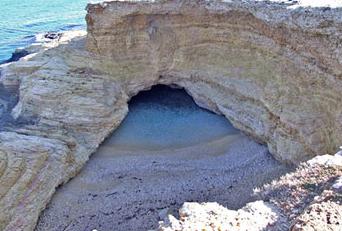
The ferry rounds the rocky outcrop and suddenly the water turns that impossible Aegean blue, so clear that the white sand below is visible twenty metres down. Koufonisia sprawls low against the horizon, a cluster of white cubes and blue domes surrounded by sea so luminous it seems to glow from within. On Pori beach, the sand is soft as flour and the water laps at your feet in warm, gentle waves. Small tavernas serve grilled octopus and cold ouzo under tamarisk trees while cats nap on sun-warmed chairs. There are no grand hotels here, no crowds. Just the cicadas, the salt, and the endless blue.
In This Article
The Three Islands of Koufonisia
Koufonisia are three well-known islands: Kato (Lower) Koufonisi, Pano (upper) Koufonisi, and Keros, in the Aegean Sea belonging to Greece. They are an important historic part of the complex of Small East Cyclades and represent some of the most popular islands in the Aegean Sea, attracting visitors who seek the authentic Greek island experience away from the crowds of Mykonos and Santorini. They are separated by a 200-metre-wide strait that can be crossed by small boat in just a few minutes. The islands are fairly considered the “Jamaica of Europe” because they are full of fantastic beaches of fine and bright sand, with water that ranges from pale turquoise to deep sapphire depending on the depth and the angle of the sun. Koufonisia form one of the eleven island complexes of the Cyclades archipelago. The only inhabited island is mountainous Pano (upper) Koufonisi, where most of the population and facilities are concentrated. According to archaeological findings, the islands have been inhabited since prehistoric times, and excavations have revealed significant findings of Cycladic culture, a Bronze Age civilization that flourished here around 3000 to 2000 BC, leaving behind distinctive marble figurines and pottery. Later the islands were merged with the Minoan civilization, which extended its trade network across the Aegean. In their historical development, Koufonisia followed the path of the whole Cyclades, first attacked by the Venetians and later by the Turks, with residents joining pirate rebels and sailors in defence of their homeland and way of life.
Beaches, Tavernas and Island Life
Pano (upper) Koufonisi island covers an area of 5.7 square kilometres, small enough to explore on foot or by bicycle in a single day. The population of the island does not exceed 400 permanent residents, who live mainly from fishing and sheep farming, maintaining a traditional way of life that has changed little over the centuries. The buildings on the southwest coast of the island are typical examples of the remarkable Cycladic architecture with whitewashed walls, blue domes, and narrow winding streets that keep the village cool even in the height of summer. Pano Koufonisi features the beautiful beach of Pori on the northern coast, offering fine sand and turquoise waters accessible by a 20-minute walk or water taxi from the main village. Chochlaki beach features white pebbles and crystal-clear water that shimmers in shades of blue and green. The island is known for its fresh seafood tavernas where you can dine on grilled octopus, freshly caught fish and traditional Greek mezedes while watching the sunset over the Aegean, with the simple pleasure of good food in a beautiful setting being the main attraction of evening life on the island. Kato (Lower) Koufonisi is smaller, covering an area of 4.4 square kilometres. There was a village once, but today only a few families, especially fishing families, stay here, maintaining a presence on this otherwise deserted island. On this island you can find a small picturesque Virgin Mary’s church, a whitewashed chapel that overlooks the sea. Keros island is uninhabited and covers an area of 10 square kilometres, with its highest point at 432 metres, visible from both of the other islands.
Where to Stay and How to Get There
On the islands you can stay in several quality hotels and guesthouses that cater to the discerning traveller. The most luxurious is Hotel Koufonissia, just 150 metres from the beach, offering comfortable rooms with sea views and traditional Greek hospitality, or Christinas House for a more intimate guesthouse experience. Ferry connections from Naxos and Amorgos operate daily during summer, with crossing times of one to two hours depending on the service, making the islands accessible yet still refreshingly remote. The best time to visit is between June and September, when the weather is warm and the sea is calm for swimming and boat trips between the islands, though May and October also offer pleasant conditions with fewer tourists. Koufonisia offers a rare combination of natural beauty, archaeological significance and authentic Greek island atmosphere that larger, more developed islands cannot match, preserving the charm that made the Cyclades famous in the first place. weather you come for the beaches, the history, or simply the slow pace of island life, Koufonisia will leave you with memories of the Aegean at its most beautiful.
View Koufonisia – the most popular islands in the Aegean Sea Greece in a larger map
Which Greek island has the most beautiful water you have ever seen? 🏝
Explore all our Greece travel guides, from ancient ruins to Aegean beaches.
Explore More
If you enjoyed this article, you might also like:
