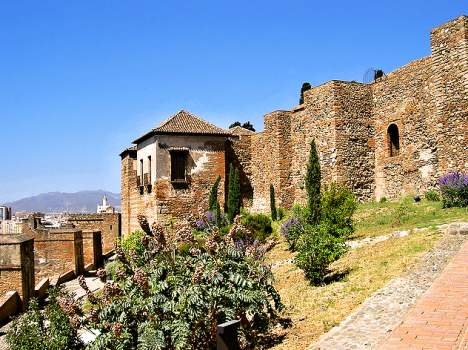
The birthplace of Pablo Picasso carries his creative spirit through every sun-drenched street. Malaga greets you with the scent of fried fish drifting from chiringuitos along the palm-lined promenade, the Mediterranean glittering just beyond. The Alcazaba fortress sits above the city, its Moorish arches framing views of the cathedral locals call La Manquita for its single completed tower.
Malaga is the capital of Costa del Sol and a cultural center of the whole Spanish part of Andalusia. It became known as the birthplace of Pablo Picasso, one of the greatest painters of the 20th century, which was also the founder of the avant-garde artistic movements of Cubism. On the numerous monuments of the city can be seen mingling of different cultures that used to change here. The major dominant of Malaga is the Roman fortress Alcazaba, to which was in the 8th century added the Gibralfaro castle. Together, these buildings create architecturally unique complex with 30 towers and 20 fortified gates.
Photo licensed under the Creative Commons, created by manuelfloresv
Other historical treasures include local Malaga Cathedral of the first half of the 16th century, which combines several artistic styles. You can walk through Paseo Maritimo seaside promenade, but there are also several pedestrian zones criss-crossing the center. You certainly should not miss a tour of the Picasso Museum, housed in a Palacio de Buenavista palace. Establishment of this museum was made thanks to the wife and grandson of painter, Christine and Bernard Ruiz-Picasso, who donated a large portion of images. Currently you can see there more than 200 works, including the paintings, drawings, sculptures or engravings.
View Malaga – birthplace of Pablo Picasso Spain in a larger map
The museum was inaugurated March 27, 2003 with the participation of the Spanish royal family. Besides the permanent exhibition of works by Picasso are also temporary exhibitions.
Roman amphitheatre is one of the oldest monuments in Malaga. It is situated at the foot of the Alcazaba fortress. It dates from the 2nd century after Christ, from the reign of Emperor Augustus. It was discovered only in 1951, during completion of one of the gardens.
View Malaga – birthplace of Pablo Picasso Spain in a larger map
Picasso Museum and the Roman Theatre
The Museo Picasso Malaga, housed in the 16th-century Palacio de Buenavista, holds 285 works donated by the artist’s family and spans every period of his career from the Blue Period through Cubism to his final years. The permanent collection includes the 1903 Portrait of Soler, a Blue Period masterpiece painted when Picasso was just 22, and the 1954 Jacqueline with Flowers from his later years. The museum opened in 2003 with the Spanish royal family in attendance, and its galleries blend Renaissance architecture with contemporary display spaces designed by the architect Richard Gluckman. Entry costs €9.50 (as of 2026), with free admission on Sunday afternoons. Just 100 metres downhill, the Roman Theatre sits at the foot of the Alcazaba hill, discovered in 1951 during the construction of a public garden. Built in the 1st century AD under Emperor Augustus, the theatre seated 2,200 spectators and remained buried for 1,700 years until its accidental rediscovery. The interpretive centre next to the site displays original Roman columns, inscriptions, and a model showing how the theatre appeared in its heyday. Entry to both the theatre and its museum is free.
Atarazanas Market and the Castle of Gibralfaro
The Mercado de Atarazanas occupies a 19th-century iron-and-glass structure built on the site of a 14th-century Nasrid shipyard. Its spectacular stained-glass window, installed in 1879, depicts the city’s key monuments and the port that made Malaga wealthy. Inside, over 150 stalls sell everything from local Iberian ham at €35 per kilo to freshly caught sardines at €4 per portion, which the chiringuito at the market’s edge grills over charcoal while you wait. Try the gambas blancas from the nearby port of Fuengirola and finish with a glass of sweet Malaga wine made from Pedro Ximenez grapes grown in the Axarquia hills. Above both the Alcazaba and the Roman Theatre, the Castillo de Gibralfaro crowns Mount Gibralfaro at 130 metres above sea level. The Phoenicians built the first fortified settlement here around 770 BC, and the current castle walls were added in the 14th century by Yusuf I of Granada. A 20-minute walk up the Cuesta de la Reina from the Alcazaba leads to the ramparts, where panoramic views stretch from the Sierra Nevada on clear days to the Moroccan coast. Combined entry to the Alcazaba and Gibralfaro costs €5.50.
Does the creative spirit of Picasso still linger in the streets of Malaga? 🎨
Explore all our Spain travel guides, from Barcelona Gaudí to Andalusia plazas.
Explore More
If you enjoyed this article, you might also like:
