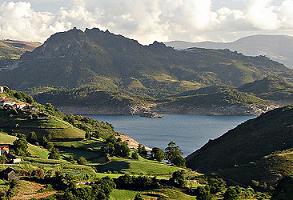
Parque Nacional da Peneda Geres is Portugal only national park, a rugged wilderness of granite mountains, ancient oak forests, and cascading waterfalls along the border with Spain. This protected landscape has been shaped by centuries of human habitation, with traditional stone villages clinging to the hillsides and Roman roads visible beneath the undergrowth. Four mountain massifs define the park: Peneda, Soajo with its iconic granaries, central Geres drawing the most visitors, and wild remote Mourela. Wildlife thrives here, including the Iberian wolf and wild garrano ponies. Thermal springs bubble up in several locations, offering natural bathing pools of outstanding beauty. Hiking trails of every difficulty crisscross the entire park.
In This Article
The Landscape and Wildlife of Peneda-Geres
Peneda-Geres National Park, also known simply as Geres, is the only national park in Portugal, though the nation boasts many natural parks, protected landscapes, and reserves. Spanning 703 square kilometres in the Norte region of northwest Portugal, the park covers the districts of Viana do Castelo, Braga, and Vila Real, with the spa town of Vila do Geres serving as its main base. The park shares 80 kilometres of border with Spain and embraces a corresponding Spanish reserve, the Baixa Limia-Serra do Xures Natural Park.
The park was established on 8 May 1971 due to its national and international scientific interest, with the goal of protecting the soil, water, flora, fauna, and landscape while preserving its value to human and natural resources. It is the most important protected area in Portugal. The peaks reach heights of approximately 1,500 metres, offering breathtaking views over the surrounding countryside. Peneda-Geres is blessed with more rain than anywhere else in Portugal, which sustains its lush forests of oak, pine, and yew, and feeds the numerous streams and waterfalls that cascade through the valleys.
Due to historically difficult living conditions, the area never supported a large population, allowing ecosystems to remain relatively undisturbed. Wolves, eagles, and other predators still roam the higher slopes, while wild garrano ponies, an ancient breed native to the region, can be seen grazing in the upland meadows. Once home to brown bears, the park no longer hosts these animals, but the Iberian wolf remains the undisputed apex predator of this wilderness.
Exploring the Park: Serra de Geres and Serra da Peneda
The Peneda-Geres National Park is divided into two main areas offering distinctly different experiences. The southern part, Serra de Geres, is the most visited and developed section, popular for hiking with well-marked trails that lead through forests, past waterfalls, and along the shores of reservoirs where visitors can swim and cool off after a day of walking. The quieter and wilder hills of the Serra da Peneda to the north receive far fewer tourists, offering a more remote wilderness experience for those willing to venture further from the main centres.
The main starting points for exploring the park are the towns of Mezio, Lamas de Mouro, and Geres, all of which have information centres providing detailed maps, advice on accommodation, and information on sport activities such as horseback riding and mountain biking. The whole area is covered by numerous hiking trails ranging from easy riverside walks to challenging multi-day treks across the high mountains. The PR1 and PR2 trails from Geres to the Portela do Homem border crossing and the Fecha de Barjas waterfall are among the most popular routes, offering spectacular scenery and opportunities to spot wildlife.
Within the park you will find mountains, river valleys, megalithic monuments known as antas, dramatic waterfalls, and traditional stone villages that seem unchanged for centuries. The variety of fauna includes deer, wolves, foxes, wild horses, and eagles, while the flora includes 15 species of rare wild flowers found nowhere else in Portugal. Some areas preserve extraordinary plant communities, including remnants of ancient oak forests that once covered much of the Iberian Peninsula.
Natural Hot Springs, Roman Roads, and Cultural heritage
One of the park’s most appealing features is the presence of natural thermal springs. Several locations offer natural bathing pools of outstanding beauty, where warm mineral water bubbles up from the ground. The most famous are the hot springs at the Termas do Geres, a spa town that has attracted visitors seeking healing waters since Roman times. The Romans built roads through these mountains to reach the springs, and sections of these ancient routes remain visible beneath the undergrowth, a reminder of the long human history that has shaped this landscape.
The park is also dotted with traditional stone villages where granite buildings with characteristic thatched or tiled roofs cling to steep hillsides. The espigueiros, or stone granaries, of Soajo are among the most photographed sights in the park, their distinctive raised structures standing in clusters above the village. These granaries were built on stone pillars with flat mushroom-shaped caps to prevent rodents from climbing up, a traditional solution that has become an iconic symbol of the region.
The park’s cultural landscape also includes Romanesque churches, medieval bridges, and the remnants of ancient pilgrimage routes. The Santuario de Nossa Senhora da Peneda, a striking Baroque sanctuary at the foot of the Serra da Peneda, draws pilgrims and visitors alike with its grand staircase, chapels, and the dramatic mountain setting. The annual pilgrimage in September transforms the sanctuary into a vibrant celebration of faith and tradition. For hikers and nature lovers, Peneda-Geres offers an authentic wilderness experience that is increasingly rare in Western Europe.
View Parque Nacional da Peneda-Gerês – crown jewel of Portugal’s national parks in a larger map
Would you hike through Portugal only national park or soak in its natural thermal springs?
Explore all our Portugal travel guides, from Lisbon hills to the Algarve coast.
Explore More
If you enjoyed this article, you might also like:
