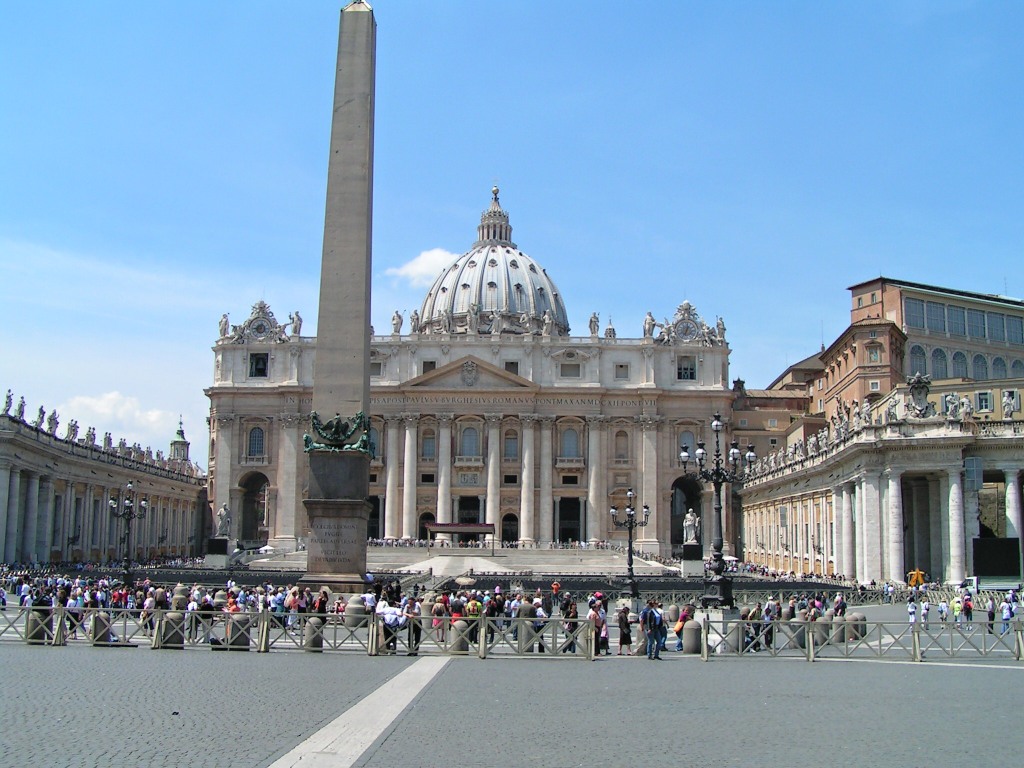
Vatican City is the smallest country in the world and yet its influence stretches across the globe. You cross the border simply by stepping into St Peter Square where Bernini colonnades embrace visitors like open arms. The basilica rises before you in a triumph of Renaissance architecture and the marble floors inside reflect centuries of pilgrim footsteps. Michelangelo dome towers above the altar and a climb to the top rewards you with a view of all of Rome. The Vatican Museums house one of the greatest art collections on Earth with the Sistine Chapel as their crowning jewel.
In This Article
A Brief History of the Vatican City State
It was back in 1929 when the Vatican City was first established within the city of Rome. The walled city, which is also known as the Holy See, consists of only 44 hectares but is nonetheless a fully sovereign nation. With fewer than 600 citizens, Vatican City is the smallest independent state in the world by both area and population, yet its spiritual authority reaches more than 1.3 billion Catholics worldwide.
While Emperor Constantine gave the area to Pope Miltiades back in 313 AD, the establishment of the modern city-state did not occur until 1929 with the signing of the Lateran Treaty between the Holy See and the Kingdom of Italy. The area that today comprises Vatican City has been the home of the popes since 1377, following the end of the Avignon Papacy. The Mediterranean climate means that during the summer months the weather is dry and hot, while in winter there is a regular presence of rain. Because of the immense size of St Peter’s basilica, a hazy mist regularly forms around the city throughout the year.
Situated along the western banks of the Tiber River, the first walls built around Vatican City were constructed by order of Pope Leo IV between 847 and 855. These walls were later expanded in 1534 by Paul III, again in 1559 by Pius IV, and the current fortified walls were built between 1623 and 1644 by order of Urban VIII. Today, a white line runs through the middle of St Peter’s Square, marking the border between Vatican City and Rome.
St Peter’s basilica and the Vatican Museums
St Peter’s basilica, the largest church in Christendom, is free to enter and represents the pinnacle of Renaissance architecture. The dome, designed by Michelangelo, rises 136 metres above the altar, and a climb of 551 steps to the top rewards visitors with panoramic views across Rome. The interior is a breathtaking display of marble, gold, and masterpieces including Michelangelo’s Pietà, Bernini’s baldachin over the papal altar, and countless monuments to popes and saints. The basilica can hold 60,000 worshippers, a testament to the ambition of its builders.
The Vatican Museums house over 70,000 artworks, of which roughly 20,000 are on display across 54 galleries. Entry costs 17 euros, and visitors should allocate at least three to four hours to explore the highlights. The museums include the Gallery of Maps, the Raphael Rooms, the Egyptian Museum, and the Pio-Clementino Museum with its stunning classical sculptures. The sheer scale of the collection is overwhelming, representing the accumulated patronage of centuries of popes who commissioned and collected the finest art from across Europe and beyond.
The Sistine Chapel is the crowning jewel of the Vatican Museums. Michelangelo’s ceiling frescoes, covering over 500 square metres, include the iconic Creation of Adam, the Last Judgment on the altar wall, and scenes from Genesis that have shaped Western art for half a millennium. The chapel serves as the site of the papal conclave, where cardinals gather to elect each new pope, making it both a artistic treasure and the spiritual heart of the Catholic Church.
Visiting Vatican City: Practical Tips
Vatican City covers 44 hectares with a population of approximately 800 residents. The dome climb costs 8 euros with 551 steps to the top, offering those panoramic views across Rome. The Vatican Museums charge 17 euros entry, and advance booking is strongly recommended to avoid queues that can stretch for hours. The Vatican Post Office, with its own postcode 00120, offers collectors the opportunity to mail letters with Vatican stamps from one of the world’s most efficient postal services.
A strict dress code requiring covered shoulders and knees is enforced at St Peter’s basilica and the Vatican Museums. Visitors should dress modestly, avoiding shorts, sleeveless tops, and miniskirts. The best time to visit is early morning or late afternoon, and Wednesday mornings are particularly busy due to the papal audience in St Peter’s Square. Several major basilicas in Rome, including St Mary Major and St Paul Outside the Walls, as well as the papal summer residence at Castel Gandolfo, are designated as part of the Holy See but lie outside Vatican City’s walls, each offering their own treasures of art and architecture.
Have you ever visited the smallest country in the world? What surprised you most about the Vatican?
Explore all our Italy travel guides, from the Dolomites to Sicily.
Explore More
If you enjoyed this article, you might also like:
