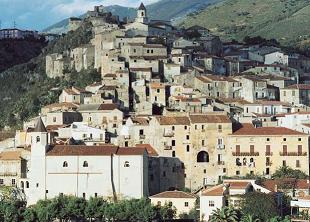
Whitewashed buildings climb the hillside above the Tyrrhenian Sea, their balconies draped with bougainvillea. Scalea stretches along the Calabrian coast, offering long sandy beaches that slope gently into warm, shallow water. The historic centre, known as Scalea Superiore, sits higher on the ridge, a maze of narrow alleys and stone stairways that lead to small squares with views across the gulf. Below, the modern promenade bustles with cafes, gelaterias, and restaurants serving fresh seafood. The mix of old and new, mountain and sea, gives this resort town a relaxed rhythm that makes it easy to settle into. Families return year after year for the gentle pace and the reliable sunshine.
In This Article
Scalea Through the Ages: From Greek Origins to Medieval Fortress
Scalea has been inhabited since ancient times, and its history stretches back more than two thousand years. The name derives from the Greek word skala, meaning staircase or landing place, a reference to the stepped terrain that characterises the old town. During the Roman period the area served as a small port supporting maritime trade along the Tyrrhenian coast, and Roman villas dotted the hillsides above the beach. In the Middle Ages, Scalea became a strategic defensive settlement, its hilltop position providing a natural vantage point against invaders arriving by sea. The Normans built a castle here in the 11th century, and substantial ruins of this structure remain on the highest point of the old town. The Aragonese later reinforced the fortifications with the Torre Talao, a round watchtower built in 1565 at the water’s edge to defend the coast against Ottoman raids. The tower now stands as the symbol of Scalea, its white stone gleaming against the blue of the sea. It offers panoramic views along the coastline in both directions and is particularly beautiful at sunset. In the historic centre, visitors can explore the Church of San Nicola in Plateis, dating from the 8th century with later Baroque additions, the Palazzo dei Principi from the 13th century with its elegant arched courtyard, and the Cimalonga Tower, a 15th-century prison built into the defensive walls. The narrow streets are lined with palazzi that once belonged to local noble families, their stone facades decorated with wrought-iron balconies and carved stone doorways.
The Cedar Riviera: Beaches, Cuisine, and Natural Beauty
Scalea sits at the heart of the Riviera dei Cedri, the Cedar Riviera, named after the citrus trees that grow abundantly along this stretch of the Calabrian coast. The cedro, or citron, is a Protected Geographical Indication product and features prominently in local cuisine. The fruit is candied, preserved in syrup, or grated into desserts and liqueurs. The beaches of Scalea stretch for kilometres, composed of fine golden sand that shelves gently into the Tyrrhenian Sea. The water is clean and clear, earning Blue Flag status for several consecutive years. The beach is divided into public sections and stabilimenti balneari, private beach clubs that rent sunbeds and umbrellas for around 15 euros per day. Along the seafront promenade, restaurants serve simple but excellent Calabrian dishes. The local specialty is grilled swordfish, often served with a squeeze of lemon and a drizzle of local olive oil. Other highlights include anchovies marinated in lemon juice and oregano, trofie pasta with pesto alla calabrese (made with local basil, pecorino cheese, and pine nuts), and melanzane alla parmigiana, layers of fried aubergine baked with tomato sauce and mozzarella. The town’s weekly market, held every Wednesday, spreads through the streets near the train station and sells everything from fresh produce and local cheeses to clothing and household goods. The cedro candito (candied citron peel) sold here makes an excellent gift.
Pollino National Park and Day Trips from Scalea
A short drive inland from Scalea lies the Parco Nazionale del Pollino, Italy’s largest national park, covering nearly 2,000 square kilometres across the regions of Calabria and Basilicata. The park protects the Pollino Massif, a mountain range of limestone peaks, deep gorges, and ancient beech forests. Hiking trails of varying difficulty crisscross the park, with the most popular route leading to the Pino Loricato, a rare pine species that grows only in this region and serves as the park’s emblem. The Raganello Gorge, carved by the Raganello River over millions of years, is one of the deepest canyons in Europe and a popular destination for canyoning and trekking. Guided excursions into the gorge cost approximately 35 euros per person and take about four hours. The Grotta del Romito near the town of Papasidero contains prehistoric cave paintings dating back 10,000 years, including depictions of aurochs and deer scratched into the rock. The site is open to visitors and offers a fascinating glimpse into the lives of the early inhabitants of Calabria. The Argentino River Valley offers natural swimming holes and waterfalls accessible by a short hike from the village of Orsomarso. For a gentler outing, the town of San Nicola Arcella, 10 minutes north of Scalea, features the stunning Arco Magno, a natural stone arch carved by the sea into the cliff, with a small beach on the other side that is accessible only by swimming or by boat.
What makes a perfect beach resort destination for you? 🏖️
Explore all our Italy travel guides, from the Dolomites to Sicily.
Explore More
If you enjoyed this article, you might also like:
