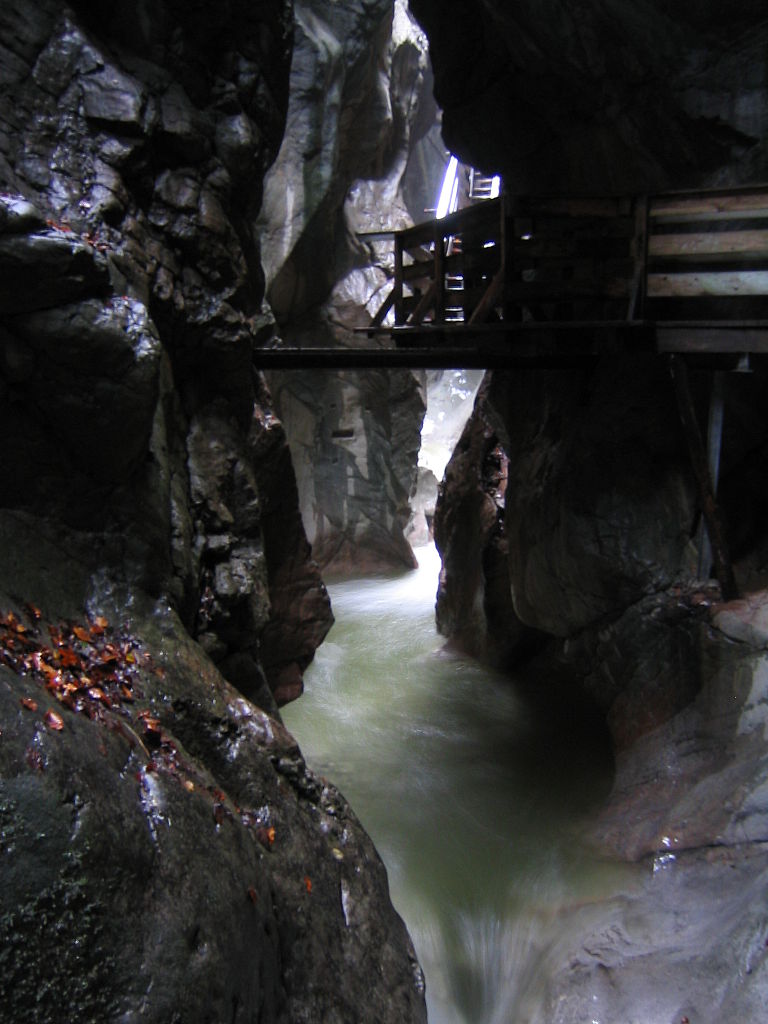
Wooden walkways cling to the damp rock as you venture deeper into the gorge. The roar of the water grows louder with every step, drowning out all other sound. Spray from the cascading falls cools your skin while shafts of sunlight pierce the narrow gap above and illuminate the moss covered walls. The path twists and turns, revealing new waterfalls at every corner. You feel small here, surrounded by the raw power of nature that carved this chasm over millennia. The journey through Seisenberg Gorge engages every sense, leaving you both exhilarated and humbled by the majesty of the Austrian Alps.
Just outside the village of Weissbach in Salzburg, Austria, one will find the 600-metre-long Seisenberg Gorge (Seisenbergklamm). This 50-metre-deep canyon was virtually inaccessible until woodcutters created a pathway through the gorge back in 1831. This was done to make it easier to transport logs through the gorge; today it exists as the only means to access the deep ravine.
Seisenberg Gorge, Austria by Aconcagua
For millennia, the Weissbach stream has been cutting its way through the gorge. Even long before it reaches the ravine, it affords visitors some of the most beautiful scenes of rapids and waterfalls as it meanders through the forest. Due to the fact that the Weissbach stream can be extremely torrential during the spring season as a result of thawing snow, access to the canyon is restricted from October to May. For the rest of the year, the canyon along with the wooden stairways that take you down into the depths of Seisenberg Gorge are open to the public.
Geology and Natural Formation of the Gorge
Seisenberg Gorge formed over millions of years as the Weissbach stream gradually eroded a deep fissure through the limestone bedrock of the Salzburg Alps. The gorge walls rise up to 50 metres on either side, exposing dramatic layers of sedimentary rock that tell the geological story of the region. During the last ice age, glacial meltwater accelerated the carving process, creating the narrow passages and plunging waterfalls visible today. The constant moisture supports a rich ecosystem of mosses, ferns, and lichens that cling to the rock faces. Rare alpine plants find refuge in the cool, shaded environment, and the spray from the waterfalls creates microclimates where humidity levels remain high throughout the year. The interplay of light and water within the gorge creates ever-changing patterns on the limestone walls, making each visit a unique visual experience. In spring, when the snowmelt is at its peak, the volume of water flowing through the gorge increases dramatically, creating a thunderous roar that can be heard from the parking area. The rock formations include fascinating potholes carved by swirling pebbles and debris caught in eddies over centuries.
Practical Tips and Nearby Attractions
It can take more than 30 minutes to walk the length of Seisenberg Gorge, and that is only if you choose not to stop and admire the awe-inspiring beauty of this natural wonder. However, there is no other exit on the other side, so you will have to walk back the way you came. The round trip takes about an hour at a comfortable pace. Sturdy footwear is essential because the wooden walkways can be slippery from constant spray. While visiting the gorge may not consume an entire day, nearby there is also the Vorderkaser Gorge carved out by the Odenbach River, which while not as long is nonetheless deeper. Several lakes near the entrance of the gorge offer opportunities for relaxation and swimming after the hike. Many visitors also take the time to see the famous Lamprecht Cave, considered one of the largest caves in the world that is entirely accessible by foot. The cave extends nearly 50 kilometres underground and features impressive stalactite formations. A good pair of walking shoes is essential because the path through the gorge can be rough and uneven. The best time to visit is between June and September when the weather is most reliable and the water levels are manageable. Admission is approximately 5 euros for adults, with reduced rates for children and families. Parking is available at the entrance for a small additional fee.
Have you ever walked through a gorge with waterfalls spraying all around you? 💦
Explore all our Austria travel guides, from Vienna coffeehouses to Alpine peaks.
Explore More
If you enjoyed this article, you might also like:
