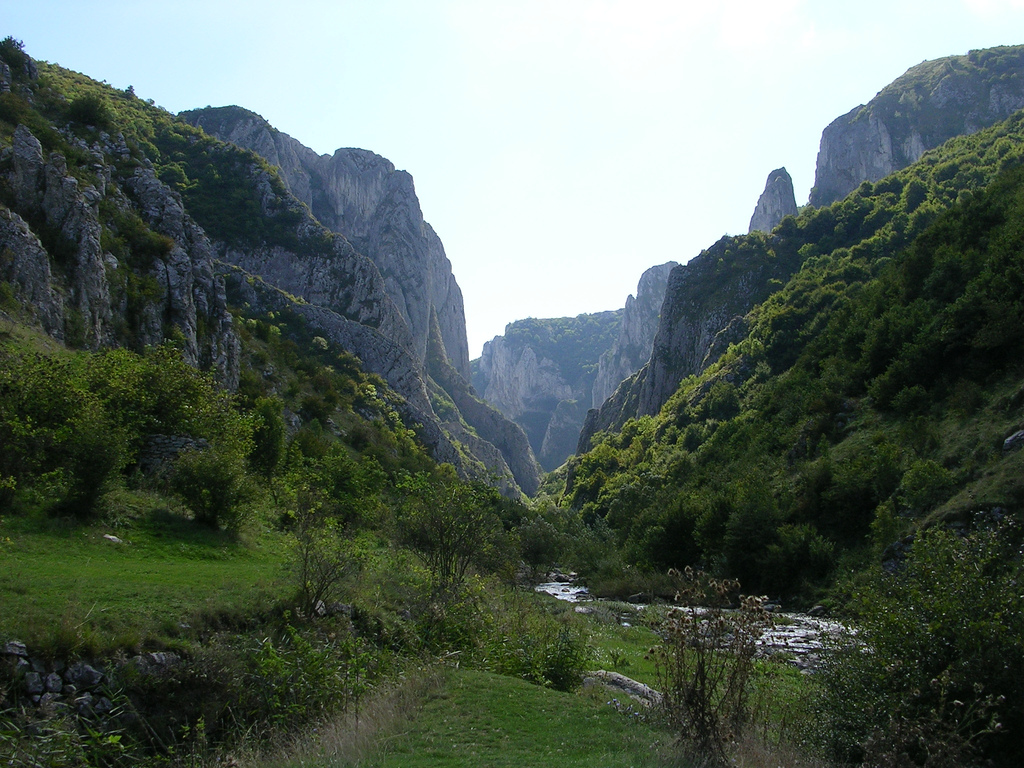
Turda Gorge cuts through the Apuseni Mountains like a knife wound in the earth. Limestone walls rise four hundred metres above the river that carved this passage over millions of years. The gorge stretches for nearly three kilometres and at its narrowest point the walls press so close that daylight dims to a cool green twilight. Hikers follow a trail that switches back and forth across the river on wooden bridges. Rare plants cling to the rock faces finding footholds in cracks and crevices. Climbers test their skills on the vertical walls that draw enthusiasts from across Europe.
Turda Gorge is a large natural reserve located 6 km west of Turda and around 15 km south east of Cluj-Napoca in Transylvania. Formed by years of erosion, the canyon that makes up this reserve is 2,900 metres long. The canyon walls reach an impressive height of around 300 metres. With over 1,000 different species of plants and animals, a few of them endangered, it is an exotic and rugged landscape which attracts many visitors each year.
In This Article
Geology and Natural History
Turda Gorge, known locally as Cheile Turzii, represents one of Romania’s most significant karst landscapes. The limestone walls were formed during the Jurassic period, when this region lay beneath a warm prehistoric sea. Over millions of years, the Hasdate River carved through the sedimentary rock, creating the steep cliffs, rocky dells, and sharp crests that define the gorge today. The entire site has been traced back to the Neolithic period through archaeological findings. So far, 67 species of birds, amphibians, fish, and mammals have been identified in this region. There are also 60 caves throughout the reserve, most of them small, with the largest measuring 120 metres. The complex geology supports a remarkable diversity of plant life, with over 1,000 species including several endemic varieties found nowhere else in Europe.
The constantly evolving nature of the karst landscape means that new caves and rock formations are still being discovered. The area is of great interest to geologists and speleologists who study the erosion patterns and underground water systems. The microclimate within the gorge differs noticeably from the surrounding plateau, with cooler temperatures and higher humidity that support a unique ecosystem of mosses, ferns, and shade-loving plants. Spring is particularly spectacular when wildflowers carpet the gorge floor and the limestone walls are dotted with blooming saxifrage.
Hiking and Climbing in Cheile Turzii
A marked walking trail follows the river through the entire length of the gorge, taking approximately two hours to complete. The trail crosses the river multiple times on sturdy wooden bridges, offering ever-changing perspectives of the towering limestone walls. The path can be slippery after rain and requires sturdy footwear. For more experienced hikers, side trails lead to viewpoints high above the gorge, rewarding those who make the climb with spectacular panoramas across the Apuseni Mountains. The nearby Ciucas waterfall is another beautiful attraction that draws visitors seeking a refreshing natural escape.
When it comes to rock climbing in Romania, Cheile Turzii is by far the most popular destination. The vertical limestone walls offer routes for all skill levels, from beginner slabs to challenging overhangs. The limestone provides excellent friction and features a variety of holds, from tiny crimps to large jugs. Several climbing schools operate in the area, offering equipment rental and guided ascents. The climbing season runs from April to October, with spring and autumn providing the most comfortable conditions. The gorge is also just a few kilometres from other canyons including Cheile Borzesti and Cheile Turului, making it an excellent base for a multi-day climbing trip.
Nearby Attractions and Practical Information
The nearby Turda Salt Mine, a 15-minute drive from the gorge, descends 120 metres underground and features a remarkable underground theme park with a Ferris wheel and boating lake inside the former salt chambers. Entry to the salt mine costs 12 euros and is well worth combining with a visit to the gorge. The town of Turda itself offers accommodation options ranging from guesthouses to hotels, and local restaurants serve traditional Transylvanian cuisine. The city of Cluj-Napoca, just 15 km away, provides additional cultural attractions including museums, galleries, and a vibrant restaurant scene.
Practical tips: arrive early in the morning to avoid crowds and experience the best light for photography. Bring plenty of water, as there are limited facilities within the gorge itself. The trail is accessible to most fitness levels but is not suitable for wheelchairs or pushchairs due to uneven terrain. A map of the area is available at the visitor centre near the gorge entrance. The reserve has basic parking facilities and a small information point. Visiting during weekdays in spring or autumn offers the most peaceful experience, with fewer tourists and milder temperatures.
What is the most dramatic gorge or canyon you have ever walked through? Share your story. 🏞️
Explore all our Romania travel guides, from Transylvania castles to the Danube Delta.
Explore More
If you enjoyed this article, you might also like:
- 5 Historic Wonders of Romania – Romania
- The beauty and mystery of Transylvania | Romania – Romania
- Traditional Crafts of Romania – Romania
