The beauty and mystery of Transylvania | Romania

June 10, 2026 by europeexplored No Comments

Transylvania occupies 100,293 square kilometres of central Romania, surrounded by the Carpathian Mountains on three sides. The name means “the land beyond the forest” and the forest is the first thing you notice: beech and oak in the lower valleys, spruce and fir on the higher slopes, covering 60 percent of the land. The region contains fortified Saxon churches, medieval castles, bear populations, and the most persistent vampire myth in popular culture. Transylvania is not a museum. It is a living region where shepherds still drive their flocks along Roman roads.

Bran Castle: Dracula’s Fortress and the Tourism Machine

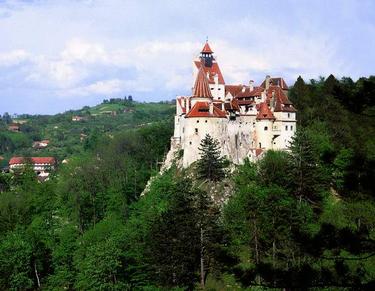
Bran Castle, 28 km southwest of Brasov, sits on a 60-metre-high rock in a narrow mountain pass. The castle was built in 1388 by the Saxons of Brasov as a fortress against the Ottoman Empire. Vlad Tepes, the historical figure who inspired Bram Stoker’s Dracula, may have spent two months imprisoned here in 1462. The connection is thin. Stoker never visited Transylvania and described a castle that resembles no real building. Bran leaned into the Dracula connection in the 1970s and now receives 800,000 visitors a year. Inside, the rooms are furnished with 16th and 17th century pieces collected by Queen Marie of Romania, who lived here after 1920. The ticket price is 60 RON (roughly 12 euros).

The Fortified Saxon Churches

The Transylvanian Saxons, ethnic Germans invited to settle the region in the 12th century by King Geza II of Hungary, built over 300 fortified churches across the region. Seven are UNESCO World heritage sites. The church at Biertan, built between 1490 and 1524, is the largest of the fortified churches. The walls are 12 metres high and the church sits on a hilltop above the village. The church at Viscri, built in the 12th century and expanded in the 16th, was restored by the Mihai Eminescu Trust and popularised by Prince Charles, who owns a property in the village. The church at Prejmer, 18 km north of Brasov, is the strongest, with walls 5 metres thick and a defensive system of 272 rooms built into the inner wall. Entrance to each church is 10-15 RON.

The Carpathian Wildlife and the National Park

The Carpathian Mountains in Transylvania hold the largest population of brown bears in Europe outside Russia, estimated at between 6,000 and 8,000 individuals. Wolves, lynx, and wild boar also roam the forests. The Piatra Craiului National Park has 80 km of marked hiking trails, including the ridge walk at 2,238 metres, the highest point of the limestone ridge. The bear-viewing hides near Zarnesti offer evening observation sessions for 150 RON (30 euros), including a naturalist guide and transport from Brasov.

What image comes to mind when you hear “Transylvania” and did the real place match or overturn it?


Looking for more Romanian travel inspiration? Check out our other guides to Romania and start planning your next European adventure!

Interesting and popular tourist area of Transylvania haven’t become famous worldwide thanks to any historical monuments or natural beauty, but thanks to a well-known novel Dracula written by Bram Stoker. Perhaps everybody read this great book (including me) or at least see some movie about Dracula’s horrific acts, who inhabited his mysterious castle right here in Transylvania. But do not be fooled. Transylvania is not just vampires.

Transylvania is located in the heart of Romania. Originally it was an autonomous region, which was gradually included under the government of Hungary, the Ottoman Empire or Austro-Hungarian Empire. Fortunately much of its history and cultural heritage still preserved.

The city of Cluj-Napoca is considered as the capital city and cultural and industrial center. Here you can find the famous Orthodox cathedral. Several state and private universities have their headquarters here, including the largest university in Romania – Babes Bolyai University. There are lots of museums in Cluj-Napoca. You can visit the Museum of Art, Museum of Pharmacy and Transylvanian Ethnographic Museum with its impressive exterior exposures.

Another medieval city that attracts visitors to Transylvania is Sighisoara. Especially its part called upper Town, which is even included on the UNESCO World heritage Site. Its castle tower with astronomical clock, which now serves as a historical museum has even become a symbol and hallmark of the city. From a wooden walkway at the top of the tower you can enjoy a beautiful view of all the houses and roofs in the neighborhood, including the alleged birthplace of Count Dracula. Even Dracula, or Vlad Tepes, whose tyranny served as an inspiration to the famous theme of the novel, were not born here in fact.

Just in a short distance from Sighisoara, in the middle of the Rocky Mountains, you can find a popular ski resort of Poiana Brasov. But thanks to the spectacular peaks the resort worth visiting also during the summer months. Not far from it you can visit the famous “vampire” Bran Castle. Although here you can virtually meet with Dracula at each step, inside the majestic castle he is not even mentioned. The ruins of the “real” castle, inhabited by the dreaded Vlad Tepes, is located elsewhere, not far from here, but they are hardly accessible and would certainly not impress much more as more attractive Bran.

Romantic wooden churches in the northern part of Transylvania are other of the places that were included on the UNESCO World heritage Site. The narrow, but tall buildings with turrets, complete the true face of the Romanian mountain landscape. It is surprising that this museum of rural life, which belongs to the greatest treasures of Romania is often omitted by many tourists on their trips around Transylvania.

Explore More

If you enjoyed this article, you might also like:

Tags: , , , , , , , , , , , , , , , , , , , , , , , , , ,

Categories: Nature, Romania

Leave a Reply

Your email address will not be published. Required fields are marked *