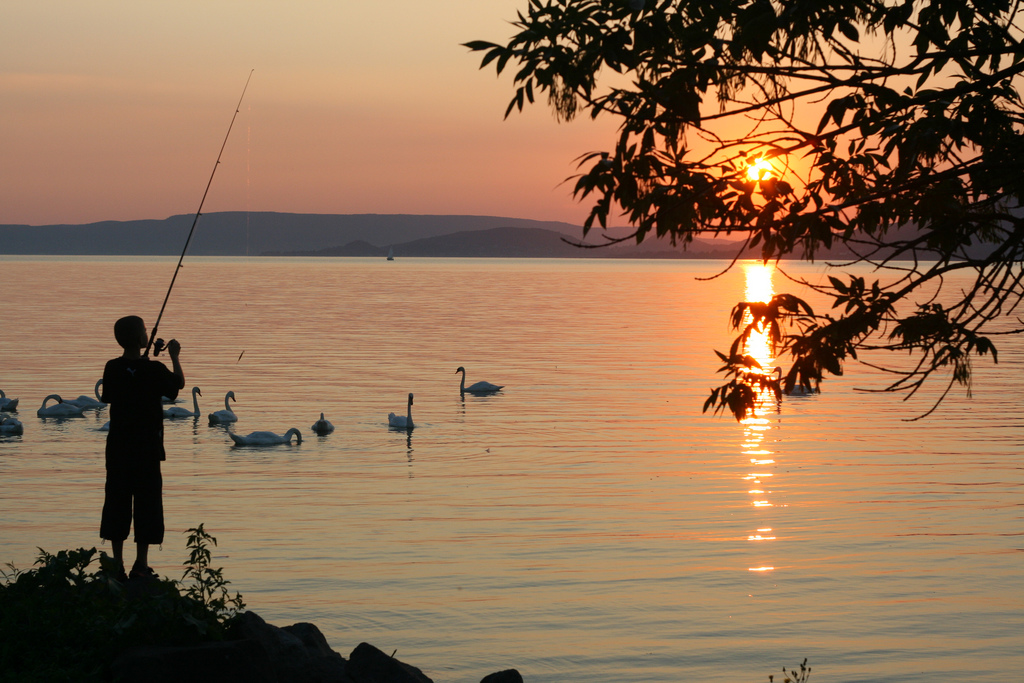
Lake Balaton is the largest freshwater lake in Central Europe, a vast inland sea stretching almost eighty kilometres across Hungary. The locals call it the Hungarian Sea. Its waters are shallow and warm, perfect for swimming and sailing. The northern shore is lined with volcanic hills and vineyards. The southern shore offers long sandy beaches and family resorts. Ancient Roman ruins dot the shoreline. Thermal springs feed spas in nearby towns. The Balaton wine region produces excellent white wines from grapes grown on sunny slopes. Summer here is a non-stop festival of swimming, cycling, and dining. The lake is the soul of Hungary, where the whole country comes to relax.
In This Article
Geography and Natural Features
Lake Balaton is the largest lake in all of Central Europe, located in the Transdanubian region of Hungary. The Zala River feeds into Lake Balaton, and the Sio canal is the sole outflow. The northern shore is surrounded by a mountainous region considered a significant historical natural landmark and a popular wine-growing area. The lake has a significant impact on local precipitation, receiving two to three inches more rainfall than the rest of Hungary, resulting in cloudier days and milder temperatures. The name “Balaton” is derived from the Slavic word meaning “swamp” or “mud,” reflecting the lake’s shallow, warm waters. The average depth is just over three metres, allowing the water to warm quickly in summer to pleasant swimming temperatures of 22-26 degrees Celsius.
The lake’s unique microclimate supports a distinctive ecosystem. The shallow waters are rich in nutrients, supporting abundant fish populations including pike, carp, and catfish. The surrounding reed beds provide habitat for numerous bird species, making the lake an important stopover for migratory waterfowl. The volcanic hills of the northern shore, particularly the Tihany Peninsula, rise dramatically from the water and offer spectacular viewpoints. The Tihany Peninsula itself is a protected nature reserve, featuring rare plant species and a historic abbey that dominates the skyline. The geological history of the region is visible in the layered volcanic rocks that line the northern shore, telling a story of ancient volcanic activity that shaped this landscape millions of years ago.
Northern Shore: Vineyards and Volcanic Hills
The northern shore of Lake Balaton is renowned for its wine region, one of Hungary’s most celebrated. The volcanic soils and south-facing slopes create ideal conditions for white wine grapes, particularly the indigenous Furmint and Olaszrizling varieties. Wine cellars dot the hillsides, many offering tastings and tours throughout the summer months. The town of Badacsony is the heart of the wine region, dominated by the distinctive basalt-capped Badacsony Hill. Visitors can hike to the summit for panoramic views over the lake, stopping at roadside wine cellars along the way. The region also produces excellent red wines and sparkling wines that are gaining international recognition.
Beyond wine, the northern shore offers cultural and historical attractions. The Tihany Abbey, founded in 1055, is one of Hungary’s most important religious sites, and its twin-towered church is visible from across the lake. The abbey houses a museum documenting the region’s history, and the surrounding village retains its traditional character with thatched-roof houses and artisan workshops. Balatonfured, the largest town on the northern shore, is a historic spa destination known for its cardiovascular health centre and elegant 19th-century villas. The town’s Rabindranath Tagore Promenade, named after the Indian poet who recovered here, offers a pleasant lakeside walk lined with chestnut trees and cafes.
Southern Shore: Beaches and Family Resorts
The southern shore of Lake Balaton is known for its long, shallow beaches and family-friendly resorts. The water here is even shallower than the north, making it ideal for children and less confident swimmers. The town of Siofok is the unofficial capital of the southern shore, offering the liveliest nightlife, the longest beaches, and the most extensive range of watersports facilities. Siófok is also the best-connected town, with direct train services from Budapest taking just over an hour. Zamardi and Balatonfured are other major resort towns, each with its own character and attractions. The southern shore is also home to several water parks and adventure centres, making it a popular choice for active families.
Historically, the southern shore became a holiday destination in the late 19th century when wealthy families built summer villas along the lake. Today, the tradition continues with a mix of historic hotels and modern resorts. The area offers excellent cycling infrastructure, with a dedicated bike path running the entire length of the lake. The 200-kilometre Balaton Bike Circuit is one of Hungary’s most popular cycling routes, suitable for all ages and fitness levels. Heviz, located near the western end of the lake, is famous for its thermal lake, the largest biologically active natural thermal lake in the world, offering therapeutic bathing in 33-36 degree Celsius mineral-rich waters year-round.
Northern vineyards or southern beaches: which Balaton shore is yours? 🌊
Explore all our Hungary travel guides, from Budapest baths to the Great Plain.
Explore More
If you enjoyed this article, you might also like:
