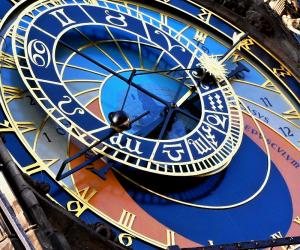
The Czech Republic is the best beer country in the world, the birthplace of Pilsner, the nation with the highest per capita beer consumption on Earth (over 140 litres per person per year), and a land whose brewing tradition stretches back over a thousand years, producing some of the finest and most affordable beer you will ever drink in pubs that are among the most beautiful and atmospheric in Europe. But the Czech Republic is about far more than beer. Prague, “the City of a Hundred Spires”, is one of the most beautiful cities in the world, its medieval Charles Bridge, the hilltop Prague Castle (the largest ancient castle complex on Earth), and the astronomical clock in the Old Town Square drawing more than 8 million visitors a year. Beyond the capital, the country reveals Bohemian Switzerland’s soaring sandstone pillars, the spa towns of Karlovy Vary and Mariánské Lázně (where Europe’s aristocracy came to take the waters), the fairy-tale UNESCO town of Český Krumlov, and the vineyards of South Moravia, a deeply rewarding region that most international visitors never reach. Compact, well-connected, and remarkably affordable compared to Western Europe, the Czech Republic is one of the continent’s great travel bargains, and one of its most beautiful destinations.
Quick Facts: Czech Republic Travel Guide
- Best time to visit: April–June and September–October for pleasant weather and manageable crowds (Prague is busy year-round but peaks in summer); December for the magical Christmas markets in Prague’s Old Town Square and the atmospheric winter beauty of Český Krumlov and the spa towns; July–August is the warmest, excellent for hiking in Bohemian Switzerland and the Krkonoše Mountains, but Prague is extremely crowded; the spring beer festivals (May–June) are a great time to sample Czech brewing culture at its best
- Top attractions in the Czech Republic: Prague, the Charles Bridge (go at dawn to experience it without the crowds), the Prague Castle complex and St. Vitus Cathedral, the Old Town Square and astronomical clock, and the Golden Lane; the fairy-tale town of Český Krumlov (stay overnight, the town’s magic reveals itself after the day-trippers leave) (read our Český Krumlov guide →); Karlovy Vary (Karlsbad), the grandest of the Bohemian spa towns with its colonnades, hot springs, and Moser glass factory; Bohemian Switzerland National Park, the sandstone pillars and the Pravčická brána arch; the Sedlec Ossuary in Kutná Hora, a chapel decorated with the bones of 40,000 people; and Telč, one of the most beautiful Renaissance squares in Europe
- How to get to the Czech Republic: Václav Havel Airport Prague (PRG) is the main hub with flights from across Europe and beyond; excellent rail connections from Berlin (~4.5h), Vienna (~4h), and Budapest (~7h); Student Agency/RegioJet buses are a comfortable and affordable way to travel between Prague and other Central European cities
- Currency: Czech Koruna (CZK), the country is not in the Eurozone, and prices are significantly lower than in Western Europe (a half-litre of excellent beer in a Prague pub: ~CZK 40–60, or around €1.50–2.50)
- Language: Czech, a Slavic language that is challenging to learn; English is widely spoken in Prague and tourist areas, less so in rural areas; learning a few phrases (dobrý den, prosím, děkuji) is appreciated
- Best for: Beer lovers (this is the pilgrimage destination), architecture and history enthusiasts, budget-conscious travellers, hikers and outdoor adventurers, and anyone who loves a country that does not take itself too seriously
The Czech Republic became independent in January 1993 when Czechoslovakia split into two parts (Czech Republic and Slovakia). Before World War II Czechoslovakia was one of 10 most industrially developed states of the world and the only European country that retained its democratic regime until 1938.
Capital city of the Czech Republic, Prague is more than thousand years old, and offers rich architecture of different styles. Therefore, the city became a popular destination not only for tourists but also for many international film makers.
The most important economic sector is still a production, especially production of automobiles (Škoda), machinery, mechanical engineering and construction products. In Moravia, which forms the eastern part of the country, the iron and steel sector is predominant. The main crops grown include corn, sugar beets, potatoes, wheat, barley and rye.
About 95% of the country covering the hills and mountains which are perfect for skiing, horseback and mountain bike tours. In the dense forests you can meet the wild boars and foxes.
World-famous beer is produced in the Czech Republic, for example, Pilsner Urquell. Wine is produced in southern regions of Moravia and in some parts of Bohemia. Thanks to the 900 natural springs the country produces large volumes of mineral water. From traditional meals you should taste dumplings made from potatoes or bread.
Within the list of the famous Czech people you can find e.g. Art Nouveau painter Alphonse Mucha, composers Antonin Dvorak and Bedrich Smetana, marathon runner Antonin Zatopek, as well as the writers Franz Kafka and Milan Kundera.
View Czech republic – the best beer all over the world in a larger map
Have you raised a Pilsner in a Prague pub, explored Český Krumlov’s castle, or hiked Bohemian Switzerland’s sandstone pillars? Share your Czech discoveries in the comments! 🇨🇿
Explore all our Czech Republic travel guides, from Prague spires to Moravian wine country.
Explore More
If you enjoyed this article, you might also like:
