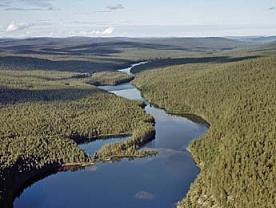
Lemmenjoki National Park is Finland’s largest national park and one of the most extensive wilderness areas in Europe, a 2,850 km² expanse of pristine boreal forest, vast open fells, and the wild Lemmenjoki River valley in Finnish Lapland that has been home to Sámi reindeer herders for centuries and remains one of the best places in Europe to experience genuine Arctic wilderness. Together with the adjacent Øvre Anárjohka National Park in Norway, Lemmenjoki forms one of the largest contiguous protected areas on the continent, a roadless kingdom where brown bears, wolverines, golden eagles, and the Sámi reindeer culture continue largely as they have for millennia.
In This Article
Exploring the Lemmenjoki River Valley
The Lemmenjoki River is the lifeline of the park, carving a deep valley through the fells and providing one of the most memorable ways to experience this vast wilderness. Riverboat tours operate during the summer months, taking visitors upstream to the historic gold-panning area at Ravadas Falls. These trips offer a unique perspective on the landscape, gliding through pristine boreal forest with the towering fells as a backdrop. The river valley is also home to some of the park’s richest wildlife habitats, where moose come to drink at dawn and golden eagles soar overhead. Gold prospecting remains an active part of the park’s cultural heritage, and visitors can try their hand at panning in designated areas, continuing a tradition that dates back to the 1940s gold rush in this remote corner of Lapland. The river itself is fed by countless small streams and snowmelt from the surrounding fells, creating clear, cold waters that support healthy populations of Arctic char and brown trout. For those who prefer to explore on foot, a network of trails follows the river valley for many kilometres, offering frequent viewpoints over the water and the forested slopes beyond. The combination of river and trail access makes this area the most popular entry point into the park’s vast interior.
Hiking Trails and Wilderness Huts
Lemmenjoki offers an extensive network of marked trails that range from short day hikes to multi-day expeditions into the heart of the Arctic wilderness. The most popular route is the trail from the park’s main entrance at Njávdán (Njuljujärvi) to the Kultahamina gold village, a distance of roughly 15 kilometres through varied terrain of pine forests and open mires. For those seeking longer adventures, the park’s wilderness hut system provides basic overnight shelter at regular intervals along the main trails. These free-to-use huts, maintained by Metsähallitus (Finland’s forest service), range from simple lean-tos to heated cabins with bunk beds and wood-burning stoves. Campfire sites are also available throughout the basic zone, making it possible to hike for days while carrying minimal equipment. The autumn ruska season, when the fells explode into shades of red and gold, is particularly spectacular and draws photographers from across the world. Winter hiking on snowshoes or cross-country skis opens up an entirely different experience, with frozen rivers serving as natural highways through the silent, snow-covered landscape. The park’s marked trails cover over 100 kilometres in total, and detailed maps are available from the visitor centre at Njávdán.
Wildlife and Sámi Culture in the Park
The park’s protected status has made it a stronghold for many of Finland’s most charismatic species. Brown bears roam the remote interior, though sightings require patience and often a guided excursion. Wolverines, one of Europe’s rarest predators, maintain a healthy population here, as do lynx and the Arctic fox. Birdwatchers flock to Lemmenjoki for its golden eagles, rough-legged buzzards, and the chance to see the majestic whooper swan, Finland’s national bird, on the park’s many lakes and mires. Equally important is the park’s role as part of the Sámi homeland. The Sámi people have herded reindeer across these fells for centuries, and their traditional knowledge of the land runs deep. Visitors may encounter reindeer herds grazing freely, as well as Sámi cultural sites and remnants of ancient settlements. The Sámi Museum Siida in nearby Inari provides excellent context for understanding the indigenous culture that has shaped this landscape over millennia. The museum’s outdoor section features traditional Sámi dwellings and offers insight into how this remarkable culture has adapted to one of the harshest environments on the continent.
Quick Facts: Lemmenjoki National Park
- Best time to visit: June–September for hiking and river boating under the midnight sun; September for the autumn colours (ruska); March–April for cross-country skiing and aurora viewing
- Size: 2,850 km², Finland’s largest national park
- How to get there: ~4 hours from Rovaniemi by car; the park entrance is near the village of Inari/Njávdán; accessible by bus from Rovaniemi to Inari
- Best experience: A riverboat trip up the Lemmenjoki River to the Ravadas Falls gold-panning area, or a multi-day hike on the marked trails through the fells
View Lemmenjoki National Park – the biggest national park of Finland and one of the largest in Europe in a larger map
Have you experienced the wilderness of Lemmenjoki or discovered Sámi Lapland? Share your Arctic adventures in the comments! 🦌
Explore all our Finland travel guides, from Helsinki design to Lapland wilderness.
Explore More
If you enjoyed this article, you might also like:
