The rolling hills of Chianti stretch out in every direction, a patchwork of vineyards, olive groves, and cypress-lined lanes that has remained largely unchanged for centuries. This is the landscape that produces one of the world’s most famous wines, a ruby-red DOCG that has been crafted here since the 13th century. But Chianti is more than just wine. It is a way of life, a region where the rhythm of the seasons dictates the pace of work in the fields, where medieval hilltop villages guard their traditions with quiet pride, and where every meal is an occasion to be savoured with a glass of the local vintage.
The Wines of Chianti
Chianti Classico, the most renowned wine of the region, is produced from at least 80 percent Sangiovese grapes, a variety that thrives in the region’s unique combination of altitude, soil, and climate. The black rooster seal, or Gallo Nero, is the symbol of the Chianti Classico consortium and appears on every bottle that meets the strict production standards. The wine is aged for a minimum of 12 months, with the Gran Selezione designation requiring at least 30 months of ageing. The tasting notes typically include cherry, violet, and earthy undertones, with a characteristic acidity that pairs beautifully with the local cuisine. Many of the region’s wineries offer tours and tastings, from the grand estates of Castello di Verrazzano and Rocca di Montegrossi to the smaller family-run vineyards that dot the countryside.
The Hilltop Towns of Chianti
The region is dotted with medieval villages that seem frozen in time. Greve in Chianti is the main commercial centre, with its triangular piazza lined with butcher shops, bakeries, and wine bars. The weekly market on Saturday morning is a lively affair where locals stock up on cheese, salami, and seasonal produce. Radda in Chianti sits on a hilltop with panoramic views over the surrounding vineyards, its 15th-century walls still largely intact. Castellina in Chianti is known for its Via delle Volte, a covered walkway that once served as a defensive passage, now lined with artisan workshops. The smallest of the main towns, Gaiole in Chianti, is the gateway to the Castello di Brolio, the historic home of the Ricasoli family who have been producing wine here since the 12th century.
Planning Your Visit
The best time to visit Chianti is during the spring when the vineyards are in full growth, or in autumn for the grape harvest and the changing colours of the leaves. September and October are particularly atmospheric, with the vendemmia, or grape harvest, in full swing and the annual wine festivals celebrating the new vintage. The region is best explored by car, as the public transport connections between the smaller villages are limited. The scenic route SS222, known as the Chiantigiana, connects Florence with Siena and passes through the heart of the wine region, offering some of the most beautiful driving roads in Tuscany. Accommodation ranges from luxury agriturismo estates to modest bed and breakfasts, many of which offer wine tastings and cooking classes to their guests.
Have you toured the vineyards of Chianti and tasted the famous Chianti Classico? Which winery left the strongest impression on you?
Chianti – the region of unique wine | Tuscany, Italy
In Tuscany, Italy, you will find the area that is known simply as Chianti. Every year, countless people from all over the globe make their way to Chianti, one of the most well-known wine regions of Italy. Chianti extends across the Siena and Florence provinces and includes all of the cities as far to the west as Val d’Elsa and even includes Montepulciano, Arezzo and Pistoia.
When you see on a bottle of wine, a reference to Sienese Chianti then you know that the wine comes from province of Siena. At the same time Florentine Chianti comes from the province of Florence. However, all of them belong to the Chianti wine region.
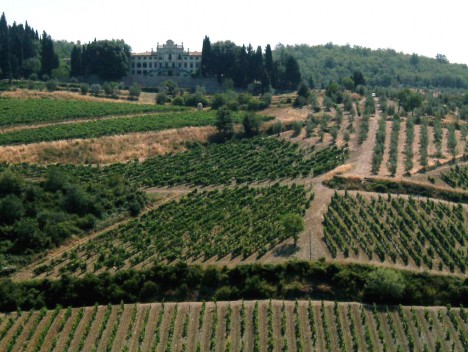
Chianti, Italy by H. Hoffmeister
The entire region features gently rolling hills that are covered in large vineyards, small olive groves and many countryside villages. The homes and villages throughout the countryside are all made of stone and bring to mind the many pictures that one sees of the wine regions of Italy. The region is so beautiful, that they have inspired postcards, photographs and calendars which are distributed throughout the world today.
Every year, the many vineyards throughout the Chianti region annual produce more than eight million cases of some of the finest wines in Italy. The region is known to produce the largest volume of wines that are available throughout Italy.
There are several popular destinations throughout the Chianti region to stay. From these you can join any number of guided tours throughout the countryside. You will be able to stop and visit some of the finest wineries in Italy and even be able to taste a glass or too as you go. While it is great to visit Rome, the crowds can just be too much. For a more restful Italian get-away, millions of people over the years have opted to visit the Chianti region instead.