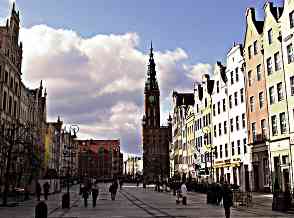

Gdańsk is Poland’s principal seaport and the capital of the Pomeranian province, a city of immense historical significance where the echoes of medieval Hanseatic trade, World War II, and the Solidarity movement resonate through beautifully reconstructed streets. Located on the Baltic coast at the southern edge of Gdańsk Bay, this remarkable city has risen from the ashes of war to become one of Central Europe’s most compelling destinations, blending maritime heritage, Gothic architecture, and a spirit of resilience that changed the course of European history.
In This Article
Gdańsk’s Historical Significance: From Hanseatic Power to Solidarity
Gdańsk has been a crucial Baltic port since the Middle Ages. As a leading member of the Hanseatic League, the city grew wealthy on trade in grain, amber, and timber, attracting merchants from across Europe. The main industry in the city remains shipbuilding and shipping, and Gdańsk remains an important industrial centre of Poland. The city’s complex history saw it pass between Polish, Prussian, and German control, each era leaving its mark on the architecture and character of the city.
The city suffered devastating destruction during World War II, with approximately 90 percent of its historic centre reduced to rubble. The post-war reconstruction was a monumental effort undertaken with extraordinary attention to historical accuracy, using pre-war photographs, architectural drawings, and even paintings to restore the medieval streets to their former glory. Today, Gdańsk’s Old Town stands as a testament to Polish determination and pride.
Most significantly, Gdańsk was the birthplace of the Solidarity movement, which under the leadership of Lech Wałęsa played a major role in bringing an end to Communist rule across Central Europe. The Gdańsk Shipyard, where the movement began in 1980, is now a historic site where visitors can see the monument to the fallen shipyard workers and learn about this pivotal chapter in modern European history at European Solidarity Centre.
What to See in Gdańsk: The Royal Road and historic Landmarks
Most tourist attractions in Gdańsk are located along or near Ulica Długa (Long Street) and Długi Targ (Long Market), a section sometimes referred to as the Royal Road as it was the former processional path for visiting kings. This magnificent route begins at the Upland Gate and passes through the Torture House and Prison Tower before reaching the Golden Gate. Along this grand avenue visitors can admire the Uphagen House, the Main Town Hall, and the Artus Court, culminating at the Neptune Fountain and the Golden House near the Green Gate.
Gdańsk is also home to several remarkable historical churches. St Mary’s Church, a municipal church built during the 15th century, is the largest brick church in the world and dominates the city skyline. Its vast interior contains a stunning astronomical clock, a 15th-century pietà, and a breathtaking Gothic vaulted ceiling that soars 30 metres above the nave. Other notable churches include St Catherine’s with its carillon, St John’s, St Bridget’s, St Nicholas’, and the Church of the Holy Trinity, each offering a glimpse into the city’s rich religious and artistic heritage.
The city’s amber heritage is celebrated at the Amber Museum, housed in the Prison Tower, where visitors can see stunning examples of Baltic gold, including pieces containing prehistoric insects. The National Museum, the Maritime Museum on the Motława River, and the Museum of the Second World War offer deeper explorations of Gdańsk’s multifaceted history.
Modern Gdańsk: Culture, Cuisine, and Coastal Charms
Today’s Gdańsk is a vibrant cultural hub with a lively café culture, excellent restaurants serving fresh Baltic seafood and traditional Polish cuisine, and a calendar filled with festivals and events. The nearby seaside resort of Sopot offers sandy beaches and Europe’s longest wooden pier, while the historic port of Gdynia showcases modernist architecture and a world-class aquarium. Together, Gdańsk, Sopot, and Gdynia form the Tricity metropolitan area, offering visitors the perfect combination of history, culture, and coastal relaxation.
The city’s culinary scene is rich and varied. Traditional dishes include pierogi, bigos, and fresh Baltic herring, while the local amber-infused vodka and craft beer scene are growing rapidly. The riverside restaurants along the Motława offer alfresco dining with views of the medieval crane and the colourful facades of the old granaries. Gdańsk’s main railway station provides excellent connections to Warsaw, Kraków, and Berlin, making it an accessible and rewarding destination for any European itinerary.
View Gdańsk – A port with great historical significance Poland in a larger map
Have you explored Gdańsk’s Royal Road or traced the footsteps of the Solidarity movement? Share your Polish Baltic coast experiences in the comments below!
Explore all our Poland travel guides, from Kraków square to the Tatra Mountains.
Explore More
If you enjoyed this article, you might also like:
