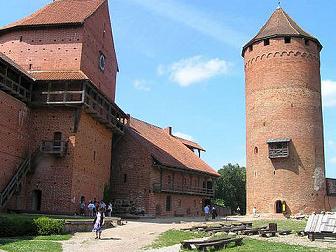
The Gauja River has carved a valley so deep and green through the Latvian sandstone that locals call this corner of the country their Switzerland. Sigulda sits above the river, where the ruins of Turaida Castle rise from a forested ridge like a fairy tale forgotten by time. In autumn, the deciduous trees ignite in amber and crimson, their reflections doubling the splendour in the still water below. A cable car glides over the treetops, carrying passengers across the valley to where wooden trails lead through caves carved by ancient floods. The air cools as the sun drops behind the pines, and the only sound is the river moving below.
In This Article
Exploring Gauja National Park
Gauja National Park, established in 1973, is the largest and oldest national park in Latvia, covering an impressive area of 917 square kilometres of protected natural landscape. The park protects the ancient Gauja River valley, a landscape shaped by glacial meltwater over thousands of years into dramatic cliffs and winding waterways. Sandstone cliffs rise dramatically from the riverbanks, pocked with caves that have sheltered travellers and hermits for centuries of human habitation. The most famous of these is the Gutmanis Cave, the widest and deepest cave in the Baltic region, where inscriptions carved into the sandstone walls by visitors date back to the 17th century and earlier. The park offers an extensive network of hiking trails, cycling routes, and canoeing opportunities for outdoor enthusiasts of all levels. In winter, the same trails transform into cross-country skiing tracks that attract visitors from across Latvia and beyond. Wildlife is abundant throughout the park, with beavers, deer, wild boar, and over 150 species of birds calling this protected area home. The Turaida Museum Reserve, a 42-hectare open-air museum centred on the red-brick Turaida Castle, provides fascinating insights into medieval life in the region through reconstructed buildings and live demonstrations.
Sigulda as a Year-Round Destination
Sigulda’s appeal extends well beyond its summer greenery and autumn colours. The town has developed into Latvia’s premier winter sports destination, with a small but well-maintained ski resort featuring slopes suitable for beginners and intermediate skiers alike. The Sigulda bobsleigh and luge track, built for international competition and used during the 2014 Winter Olympics qualification events, offers thrill-seekers a chance to experience the rush of a bobsleigh ride guided by professional drivers at speeds that will take your breath away. Summer brings a different kind of excitement with the Sigulda Adventure Park, where zip lines traverse the forest canopy and climbing routes challenge visitors of all ages and abilities. The town’s annual opera festival, held in the open-air stage within the castle ruins, draws performers and audiences from across Europe for performances under the summer sky. Accommodation options range from spa hotels with wellness facilities to rustic guesthouses with traditional Latvian hospitality, and the train journey from Riga, taking just over an hour through scenic countryside, offers beautiful views of the Gauja valley throughout the changing seasons of the year.
The Castles of Sigulda Valley
The Sigulda valley is home to three significant castles, each telling a different chapter of the region’s turbulent and fascinating history. The Sigulda Medieval Castle, also known as Segewald Castle, was built by the Livonian Order in the early 13th century at a strategically important position overlooking the river below. Today it stands as atmospheric ruins that invite exploration and imagination of medieval life. A short walk across the nearby cable car brings you to Turaida Castle, a stunning red-brick fortress built in 1214 that houses a comprehensive museum of local history with exhibits spanning from prehistoric times through the medieval period. The third castle, Krimulda Castle, is a 19th-century neo-Gothic manor house that now operates as a rehabilitation centre, its beautiful parkland open to the public for walks. The cable car connecting the two sides of the valley is itself a major attraction, offering panoramic views of the river, forests, and castle ruins spread out below during the five-minute ride across the valley floor.
Which small European town surprised you with its unexpected natural beauty 🏛️
Explore all our Latvia travel guides, from Riga Art Nouveau to Baltic beaches.
Explore More
If you enjoyed this article, you might also like:
