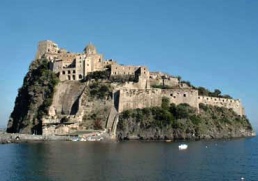
Ischia and Procida are the two often-overlooked gems of the Bay of Naples, Ischia, the thermal spa island of volcanic origins with its dramatic Aragonese Castle rising from the sea, and Procida, a tiny, impossibly colourful fishing island that was Italy’s Capital of Culture in 2022 and remains one of the most authentically beautiful places on the Italian coast. Together, these two islands offer a quieter, more local, and considerably more affordable alternative to the celebrity-glazed Isle of Capri, with Ischia’s thermal gardens and healing waters dating back 2,000 years to the Romans, and Procida’s Marina Corricella ranking among the most photogenic harbours in the Mediterranean.
In This Article
Quick Facts: Ischia & Procida, Italy
- Best time to visit: May-June and September for warm weather with manageable crowds; July-August is busy (these are popular Italian holiday islands) but still less chaotic than Capri; April and October for peaceful exploration, many thermal parks remain open
- How to get there: Ferries and hydrofoils from Naples (Napoli Mergellina or Molo Beverello), ~40 min to Procida, ~60 min to Ischia; also connections from Pozzuoli and Sorrento (summer only)
- Top experiences on Ischia: Castello Aragonese (a medieval castle on a volcanic islet connected by a stone bridge), the Poseidon Thermal Gardens (the largest thermal park on the island with 22 pools), and the beach village of Sant’Angelo
- Top experiences on Procida: Marina Corricella (the pastel-coloured harbour), Terra Murata (the medieval fortified village at the island’s highest point), and the black sand beach at Chiaiolella
- Best for: Couples, wellness seekers, photographers, and anyone looking for the Amalfi Coast’s beauty at a fraction of the price
Exploring Ischia: Thermal Springs and Medieval Castles
Ischia is the largest island in the Gulf of Naples. It is situated at the west of Napoli and north from island of Capri. Ischia offers holiday resorts, thermal springs, healing sands and cheap hotels. It is almost as popular as its famous neighbouring island of Capri. The Ferry docked in Ischia Porto, which is a port in the modern part of the island’s capital – Ischia. The historical part – Ischia Ponte – lies a few minutes walk away. While the northern and western coastline teeming with life, the southern tip of the island’s quietest. Here lies the village of Sant’Angelo, dominated by an extinct volcano Monte Epomeo. From its peak at a height of 788 meters you can find a fantastic view of the Gulf and Naples.
The island’s thermal heritage is its greatest draw. The volcanic activity that created Ischia also created an extraordinary system of natural hot springs, with over 100 thermal springs and 70 thermal parks scattered across the island. The most famous is the Poseidon Thermal Gardens in Forio, a sprawling complex of 22 thermal pools cascading down a hillside towards the sea, each at a different temperature ranging from 28 to 40 degrees Celsius. Other notable thermal parks include Negombo in Sant’Angelo, with its volcanic sand beach and rock saunas, and the more intimate Aphrodite Apollon Gardens. The Romans knew of Ischia’s healing waters two millennia ago, and the island’s thermal tourism tradition continues uninterrupted. Many hotels offer their own thermal pools, making Ischia a year-round wellness destination. The volcanic geology also produces mineral-rich mud used in spa treatments for skin conditions and rheumatism. Beyond the spas, Ischia’s interior is crisscrossed with hiking trails through chestnut forests and vineyards that produce the local Biancolella and Forastera wines.
Discovering Procida: Italy’s Colourful Secret
In the shadow of Ischia and Capri is small, only 2.5 km long and fewer tourists visited island of Procida. However Chiaiolella offers good swimming and, like Ischia, also cheap accommodation. In a neglected town of Procida is the main ferry port, Marina Grande.
Procida is the smallest of the three main islands in the Bay of Naples, but it packs an extraordinary amount of charm into its compact dimensions. Its most famous sight is Marina Corricella, a pastel-coloured fishing harbour that has been used as a filming location for movies including Il Postino and The Talented Mr. Ripley. The houses are a riot of pinks, yellows, oranges, and blues, stacked up the hillside in a cascade of Mediterranean colour. Above the harbour sits Terra Murata, the medieval fortified village that crowns the island’s highest point. The viewpoint from Terra Murata offers a breathtaking panorama of the entire bay, with the Procida Channel stretching towards Monte di Procida on the mainland. The Abbey of San Michele Arcangelo, a Baroque church, dominates the village square with its painted wooden ceiling and collection of ex-voto offerings left by sailors. The southern side of the island offers the black volcanic sand beach of Chiaiolella and the Marina di Chiaiolella harbour, lined with seafood restaurants serving the catch of the day. Procida was named Italian Capital of Culture for 2022, bringing new attention to its authentic character without sacrificing the unhurried pace that makes it so special. Cycling is the best way to explore the island, as the compact size and quiet roads make it easy to reach every corner in a single day.
View Ischia and Procida – two gems of the bay of Napoli in Italy in a larger map
Have you soaked in Ischia’s thermal waters or discovered Procida’s candy-coloured harbour? Share your Bay of Naples island discoveries in the comments! 🌋
Explore all our Italy travel guides, from the Dolomites to Sicily.
Explore More
If you enjoyed this article, you might also like:
