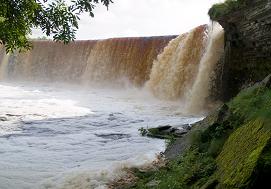
Jägala Falls is Estonia’s widest and most powerful waterfall, a dramatic 8-metre-high, 50-metre-wide curtain of water thundering over a limestone escarpment just 25 kilometres east of Tallinn. While Valaste Waterfall may be taller, Jägala is arguably the more impressive spectacle, particularly during the spring snowmelt and after heavy rain when the falls transform from a gentle cascade into a roaring, brown-tinged torrent that fully earns its nickname: ‘the Niagara of the Baltics’.
In This Article
Quick Facts: Jägala Waterfall, Estonia
- Best time to visit Jägala Falls: Spring (April-May) for maximum water flow from snowmelt; midwinter (January-February) for the frozen ice formations; autumn for golden foliage along the Jägala River
- height and width: 8 metres high / 50+ metres wide, the widest natural waterfall in Estonia
- How to get there: ~30 minutes from Tallinn by car (E20 east); accessible by public bus from Tallinn to Jägala-Joa (40 min); well-signposted from the parking area with a 200m walk
- Entry fee: Free
- Accessibility: Easy, viewing platform and riverbank paths suitable for most visitors
The Geology of the Baltic Klint and Surrounding Nature Reserve
The Jägala River tumbles over the Baltic Klint, a monumental limestone escarpment that stretches for over 1,000 kilometres along the southern shore of the Gulf of Finland, from Sweden through Estonia to Russia. This geological formation was created during the Cambrian and Ordovician periods, roughly 500 million years ago, when the area was covered by a shallow tropical sea. The limestone bedrock is composed of compressed marine fossils, including trilobites and brachiopods, which are occasionally visible in the rock layers around the falls.
The klint itself was shaped by glacial activity during the last Ice Age, when Scandinavian ice sheets carved out the landscape and then retreated, leaving behind the dramatic cliff edge that today creates Jägala Falls. The waterfall is actively eroding the limestone shelf, retreating upstream at a rate of roughly one metre per century. This slow but constant change means that Jägala Falls looked different a thousand years ago and will look different a thousand years from now, a living geological process rather than a static monument.
The area around the falls is part of a protected landscape that encompasses several distinct habitats, from the river gorge with its steep wooded slopes to the floodplain meadows downstream. The Jägala River itself is one of Estonia’s most important salmon and sea trout spawning rivers, and the stretch below the falls is a popular spot for fishing enthusiasts during the spring and autumn runs. Birdwatchers will find plenty to interest them here as well: the mixed forest along the riverbanks is home to white-tailed eagles, black storks, and various woodpecker species. A network of walking trails extends from the parking area both upstream and downstream, leading through the gorge where spray from the falls nurtures a lush growth of ferns and wildflowers during the summer months.
Photography and Seasonal Highlights
- Spring floods: The falls are at their most powerful, the water turns a distinctive brownish-gold colour from the organic matter carried downstream from Estonia’s bogs and forests.
- Winter ice kingdom: In deep winter, the entire waterfall freezes into a spectacular ice wall with columns, curtains, and icicles. A tunnel sometimes forms behind the frozen falls, a photographer’s dream but exercise extreme caution on icy surfaces.
- Autumn colours: The forested banks of the Jägala River explode in gold and amber, reflected in the pool below the falls.
- Combine with: Continue east along the coast to the Viru Bog Trail in Lahemaa National Park, one of Estonia’s most beautiful accessible bog walks with a viewing tower overlooking pristine wetlands.
Jägala Falls are the largest waterfalls in Estonia. They are located approximately 30 km east of the capital city of Estonia – Tallinn, at the village Jägala Joa. These beautiful waterfalls are called Niagara Falls of the Baltic.
Jägala Falls are about 8 meters high. The water of Jägala River cuts into the limestone and formed here about 300 feet long valley. It flows into the nearby water reservoir Linnamäe Veehoidla and then to the Baltic Sea. Jägala Falls partially freeze in winter and get a nice icy backdrop.
The oldest known written record of a water mill in Estonia (from the early 13th century) dates from here.
View Jägala Falls – the biggest waterfall in Estonia in a larger map
Have you visited Jägala Falls or explored Estonia’s natural wonders? Share your waterfall photos and Baltic travel tips in the comments! 🌊
Explore all our Estonia travel guides, from Tallinn old town to Baltic islands.
Explore More
If you enjoyed this article, you might also like:
