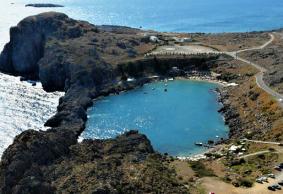
Rhodes is one of the most spectacular Greek islands, a sun-drenched island in the southeastern Aegean where a magnificent UNESCO-listed medieval Old Town (the largest and best-preserved walled city in Europe), stunning beaches, and the legacy of the Knights Hospitaller combine to create one of the Mediterranean’s most rewarding island destinations. Known as the Island of the Knights and blessed with over 300 days of sunshine per year, Rhodes delivers history, beach life, and natural beauty in equal measure.
In This Article
Quick Facts: Rhodes, Greece
- Best time to visit: May–June and September–October for warm weather without peak crowds; July–August is high season; the island enjoys one of Europe’s longest tourist seasons (April–November)
- Top attractions: The Palace of the Grand Master, the Street of the Knights, Lindos Acropolis, and Anthony Quinn Bay
- How to get there: Rhodes International Airport (RHO) with flights from across Europe; ~17 hours by ferry from Piraeus (Athens)
- Beaches: Tsambika, Faliraki, Prasonisi (where the Aegean meets the Mediterranean in a unique windsurfing paradise)
Exploring the Medieval Old Town of Rhodes
The Old Town of Rhodes is one of the most extraordinary medieval urban ensembles in the world, recognized by UNESCO in 1988 for its remarkable state of preservation. Built by the Knights Hospitaller between 1309 and 1522, the walled city is divided into two distinct areas: the Collachium, where the knights lived and worked, and the Bourgu, the residential quarter for the local Greek population. The Street of the Knights, a perfectly preserved cobblestone lane lined with inns representing each of the seven langues (national divisions) of the Order, is the centrepiece of the Collachium. Each inn is adorned with the coat of arms of its langue, with the Inn of France being the most ornate. At the top of the street stands the Palace of the Grand Master, a magnificent fortress-palace rebuilt by the Italians in the 1930s as a summer residence for King Victor Emmanuel III and Mussolini. The palace features stunning mosaic floors imported from Kos, ancient Greek and Roman statues, and halls decorated with period furniture. Wander deeper into the Bourgu to discover hidden Byzantine churches, Turkish baths, and quiet squares where laundry dries in the Mediterranean sun just as it has for centuries.
Beyond the City Walls: Beaches and Natural Beauty
Rhodes is blessed with some of the most varied beaches in the Greek islands. On the east coast, the long sandy stretches of Tsambika, Stegna, and Agathi offer shallow, crystalline waters perfect for families, with Tsambika being one of the most photographed beaches on the island thanks to its golden sand and surrounding green hills. The west coast, facing the open Aegean, has stronger winds and is dominated by the famous Prasonisi Beach at the southern tip of the island, where the Aegean Sea meets the Mediterranean. This unique sandbar creates a natural windsurfing and kitesurfing paradise in the summer months, with consistent winds from May to October. For those seeking seclusion, Anthony Quinn Bay, named after the actor who fell in love with the island while filming The Guns of Navarone, is a small pebble cove with impossibly clear turquoise water surrounded by pine-covered cliffs. The interior of Rhodes offers its own rewards: the Valley of the Butterflies, a lush green park where thousands of Jersey tiger moths gather from June to September, and the ancient city of Kamiros, a beautifully preserved Hellenistic settlement with foundations, streets, and cisterns still visible above ground.
A Journey Through Rhodian History
Rhodes has been shaped by successive civilisations for over 3,000 years. The island most famous ancient monument, the Colossus of Rhodes, was a 33-metre bronze statue of the sun god Helios erected in 280 BC at the entrance of Mandraki Harbour. One of the Seven Wonders of the Ancient World, it stood for only 54 years before being toppled by an earthquake in 226 BC. Its ruins remained on the ground for nearly 900 years before being sold for scrap metal. The acropolis of Lindos, perched dramatically on a 116-metre rock, offers the most complete picture of ancient Rhodian life, with its 4th-century BC Temple of Athena Lindia, Hellenistic stoas, and a Roman-era naval monument carved into the rock face. climb the 300 steps past the Hellenistic relief of a Rhodian warship, and you are rewarded with one of the most spectacular views in the Dodecanese. Below the acropolis, the medieval Castle of Lindos was built by the Knights on the foundations of the ancient fortifications, and the whitewashed streets of Lindos village are among the most picturesque in Greece, lined with boutiques, tavernas, and traditional houses with pebble-mosaic courtyards.
Rhodes is the largest island of the Dodecanese islands and the fourth largest Greek island. It has an area of 1404 km2 and about 100,000 inhabitants. The island, which is always full of sun is very popular destination and according to several Travel sites it is the best travel destination in Europe. You can spend your holiday on the beautiful beaches, admiring the picturesque scenery and see many historical monuments from different eras. In fact, Rhodes island offers everything that a tourist can imagine. One of the most famous site in Rhodes is Valley of the Butterflies.
Historically, Rhodes was famous worldwide for the Colossus of Rhodes, one of the Seven Wonders of the Ancient World. The medieval Old Town of the City of Rhodes has been declared a World heritage Site.
View Rhodes island – one of the best tourist destinations in Europe Greece in a larger map
Have you explored Rhodes Old Town or discovered the island’s best beaches? Share your Greek island experiences in the comments! 🏛️
Explore all our Greece travel guides, from ancient ruins to Aegean beaches.
Explore More
If you enjoyed this article, you might also like:
