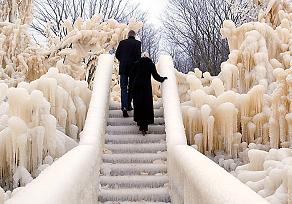
Valaste Waterfall plunges 30.5 metres off the Baltic Klint escarpment on Estonia’s north coast, the highest single-drop waterfall in the country and one of its most spectacular natural landmarks. What makes Valaste truly magical is its dramatic seasonal transformation: in summer it’s a thundering cascade framed by lush greenery, while in winter it freezes into a fairy-tale ice kingdom, a photographer’s dream and a beloved national symbol of Estonia’s raw natural beauty.
In This Article
Quick Facts: Valaste Waterfall
- Best time to visit: Spring (April–May) for maximum water flow from snowmelt; midwinter (January–February) for the frozen ice formations
- height: 30.5 metres (100 feet)
- How to get there: ~1.5 hours from Tallinn by car (E20 highway); nearest town is Kohtla-Järve (20km); parking available right off the road
- Entry fee: Free
- Accessibility: Viewing platform with stairs and a tunnel leading to the prospect point; suitable for most fitness levels
- Status: Declared a cultural heritage site and national symbol of Estonia (since 1996)
The Geology of Valaste Waterfall and the Baltic Klint
Valaste Waterfall is part of the remarkable Baltic Klint (also known as the North Estonian Klint), a limestone and sandstone escarpment that stretches for over 1,200 kilometres from Sweden through Estonia and on to Russia. This geological formation was created approximately 450 million years ago during the Ordovician period, when the region was covered by a shallow tropical sea. The klint represents the ancient coastline of this sea, and its layered rocks contain a rich fossil record of trilobites, brachiopods, and other marine organisms that lived in those warm Palaeozoic waters.
At Valaste, the klint reaches a height of 30.5 metres, the highest single-drop point along the entire Estonian section of the escarpment. The waterfall is formed by the Valaste stream, a small watercourse that drains the surrounding forested plateau before plunging over the edge of the klint. The contrast between the soft Cambrian sandstone at the base of the cliff and the harder Ordovician limestone at the top has created the characteristic overhang of the falls, as the softer rock erodes more quickly, undercutting the harder capstone above. This process continues to slowly shape the waterfall’s profile, making it an active geological laboratory that attracts geologists and nature enthusiasts from across the Baltic region.
Seasonal Beauty: Valaste in Summer, Winter, and Spring
The dramatic seasonal transformations of Valaste Waterfall are one of its most compelling features. In spring, the melting of snow across the surrounding plateau feeds the Valaste stream with maximum water volume, creating a thundering cascade that can be heard from a considerable distance. The surrounding forest awakens with fresh green growth, and the waterfall is framed by budding trees and wildflowers that carpet the klint edge. This is the prime season for photographers seeking to capture the falls at their most powerful.
In summer, Valaste settles into a steady flow that is still impressive but more accessible for visitors. The lush greenery of the trees and shrubs that cling to the cliff face provides a vibrant frame for the white water, and the viewing platform offers the best vantage point for photography. In winter, Valaste undergoes its most spectacular transformation, freezing into a fairy-tale ice kingdom. The spray from the falls coats the surrounding trees, rocks, and railings in layers of ice, creating intricate ice formations that resemble chandeliers, icicles, and frozen curtains. On sunny winter days, the ice catches the low northern light and glows with an ethereal blue and white radiance that makes the waterfall a truly magical destination.
Visiting Valaste Waterfall and Exploring the North Estonian Coast
Valaste Waterfall is easily accessible from the E20 highway that connects Tallinn with Narva and the Russian border. A dedicated parking area is located just off the road, from which a short path leads to a viewing platform that offers spectacular views of the falls and the surrounding landscape. A spiral staircase and a short tunnel lead to a lower prospect point that brings visitors closer to the base of the falls, where the full scale and power of the cascade can be appreciated. The site is free to visit and suitable for visitors of most fitness levels, though care should be taken on the stairs in winter when ice may form on the steps.
Valaste is just one of many waterfalls along the North Estonian klint that are worth exploring. Nearby Jägala Waterfall is the widest in Estonia and sits closer to Tallinn, while Keila Waterfall in the grounds of Keila-Joa Manor offers a picturesque park setting. Further east, the Narva Waterfall on the Russian border is the most voluminous in Estonia, though its flow is partially regulated by a hydroelectric dam. Combined with a visit to the historic town of Rakvere, the coastal cliffs at Ontika, and the charming fishing villages of the northern coast, Valaste Waterfall makes an excellent centrepiece for a road trip through one of Estonia’s most scenic and geologically fascinating regions.
View Valaste Waterfall – the highest waterfall in Estonia in a larger map
Picture taken from Dailymail.co.uk
Have you seen Valaste Waterfall, especially frozen in winter? I’d love to hear about your Estonia travels and favourite Baltic natural wonders in the comments! ❄️
Explore all our Estonia travel guides, from Tallinn old town to Baltic islands.
Explore More
If you enjoyed this article, you might also like:
- Haapsalu – seaside spa resort in Estonia – Estonia
- Tartu – the oldest city in Estonia – Estonia
- Jägala Falls – the biggest waterfall in Estonia – Estonia
