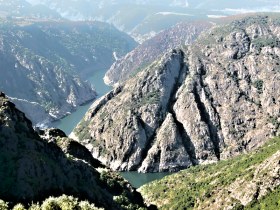
The Sil Canyon (Cañón del Sil) is one of the most spectacular river canyons in Spain, a deep, dramatic gorge carved by the Río Sil through the Ribeira Sacra wine region of Galicia in northwestern Spain, where the river’s vertical limestone walls rise up to 500 metres above the water and are terraced with ancient vineyards that produce some of Spain’s finest Mencía and Godello wines. Often compared to the Douro Valley in neighbouring Portugal, the Sil Canyon offers a magnificent combination of dramatic geology, thousand-year-old monasteries, and one of Europe’s most beautiful catamaran boat trips, through a landscape that is a strong candidate for UNESCO World heritage status.
In This Article
Quick Facts: Sil Canyon, Spain
- Best time to visit: May, October; September for the grape harvest and the most beautiful light on the canyon walls; spring for wildflowers on the riverbanks
- Top experience: The catamaran tour on the Río Sil departing from the Santo Estevo embankment near Nogueira de Ramuín, a 1.5-hour journey through the most dramatic section of the gorge
- How to get there: ~2.5 hours from Santiago de Compostela by car; ~1.5 hours from Ourense; the Ribeira Sacra region is a designated wine route with excellent tasting opportunities
- Combine with: The Monastery of Santo Estevo de Ribas de Sil (a magnificent Romanesque and Baroque complex now a Parador hotel), and the Balcones de Madrid viewpoint for the most spectacular canyon panorama
The Catamaran Journey Through the Gorge
The most popular way to experience the Sil Canyon is by catamaran, a one-and-a-half-hour journey that takes you through the most dramatic section of the gorge. The boats depart from the Santo Estevo embankment near Nogueira de Ramuín and glide silently through the deep green waters of the Río Sil, flanked by vertical limestone walls that rise up to 500 metres on either side. The canyon walls are terraced with ancient vineyards that cling to impossibly steep slopes, their stone terraces a testament to centuries of winemaking tradition. As the catamaran navigates the twists and turns of the gorge, passengers are treated to ever-changing views of the cliffs, the vineyards, and the occasional glimpse of a centuries-old monastery perched on the canyon rim. The commentary on board provides fascinating insights into the geology, history, and culture of the Ribeira Sacra region. The best time for the boat trip is in the late afternoon, when the low sun casts golden light on the canyon walls and the shadows deepen, creating a dramatic effect that photographers love. In autumn, the vineyards turn shades of red and gold, adding another layer of beauty to an already stunning landscape.
Monasteries, Vineyards and Ancient Traditions
The Ribeira Sacra region is named for its extraordinary concentration of monasteries, with more than twenty monastic foundations dating from the 6th to the 17th centuries. The most impressive is the Monastery of Santo Estevo de Ribas de Sil, a magnificent complex that combines Romanesque, Gothic, and Baroque architecture. Founded in the 6th century, it was one of the most important religious centres in Galicia for over a thousand years. Today it has been beautifully restored and operates as a Parador hotel, offering visitors the chance to stay in a building where monks once lived and prayed. The monastery’s three cloisters, each built in a different architectural style, are a highlight of any visit. The other two monasteries in the immediate area, Santa Cristina and San Pedro de Rocas, are also well worth exploring, each with its own unique character and history. The vineyards that terrace the canyon slopes produce some of Spain’s most distinctive wines. The red Mencía grape, which thrives in the schist and granite soils of the canyon, produces elegant, aromatic red wines with notes of red fruit and flowers. The white Godello grape, meanwhile, makes rich, mineral-driven white wines that are considered among the best in Spain. Many of the wineries offer tastings and tours, providing a perfect complement to the scenic boat trip.
Walking Trails and Viewpoints
For those who prefer to experience the canyon on foot, there is an excellent network of walking trails along the canyon rim. The most famous route is the 14-kilometre trail from the village of Loureiro to Parada do Sil, which follows the very edge of the canyon and offers breathtaking views at every turn. This trail is moderate in difficulty and takes approximately four to five hours to complete, making it a rewarding day hike. Along the way, walkers pass through oak and pine forests, past abandoned stone cottages, and across ancient stone bridges. The wildlife in the canyon includes wild boar, roe deer, and a variety of bird species including griffon vultures and golden eagles. The most spectacular viewpoint is the Balcones de Madrid, a dramatic balcony-like viewpoint that juts out over the canyon and offers a panoramic view of the most impressive meander in the gorge. Another excellent viewpoint is at the Monastery of Santa Cristina, five kilometres north of Parada do Sil, where the view encompasses the confluence of the Sil and its tributaries. For photographers, sunrise and sunset at these viewpoints provide extraordinary light and colour, with the red and orange hues of the canyon walls reflecting in the dark green water far below.
Have you cruised the Sil Canyon or discovered Galicia’s Ribeira Sacra wine region? Share your Spanish canyon adventures in the comments! 🍷
Explore all our Spain travel guides, from Barcelona Gaudí to Andalusia plazas.
Explore More
If you enjoyed this article, you might also like:

Thanks for this — I have been researching Canyon del Sil for an upcoming trip and this has answered several questions I had not thought to ask. The practical tips about transport and timing are particularly useful.