Sevilla is a capital and largest city of Andalusia, which is one of 17 autonomous communities in Spain. It is said that Sevilla is the most Spanish city of all cities in Spain. The city had a great history, therefore it has much to offer to visitors. In addition, the southernmost region of Spain – Andalusia is very interesting in many aspects.
Today Sevilla has about 700 000 inhabitants. Like the most of the country, also Sevilla was for a long time – the whole 500 years – under the rule of Muslim Moors, who left indelible traces here. The name Andalusia comes from the Arabic “Al Andalus”, which was an Arabic name given to a nation in Iberian Peninsula under Arab domination. This term was derived from the Vandals, who inhabited the area at the turn of the 4th and 5th century.
When the Muslims were defeated in 1248 by King Ferdinand III. and 300 000 of them were driven, perfect Moorish architects and builders were still employed by the Christians. The city thanks them e.g. for the symbol of the city, minaret Giralda, Alcazar – romantic castle from the 14th century, but also for many other oriental buildings and beautiful gardens in the Arab style.
In This Article
Seville Cathedral and La Giralda: Monuments of Faith
Seville Cathedral, the largest Gothic cathedral in the world and the third-largest church of any kind in Europe, is a monument to the city’s wealth and devotion during the Age of Exploration. Construction began in 1401 on the site of a former Almohad mosque, with the builders famously declaring: “Let us build a church so great that those who see it will take us for madmen.” It took more than a century to complete, and the result is a staggering fusion of Gothic architecture with Renaissance, Baroque, and Plateresque elements. The cathedral’s interior is vast, with five naves, 80 side chapels, and a breathtaking altarpiece, the largest in the Christian world, carved from more than 1,000 kilogrammes of gold leaf imported from the Americas. The remains of Christopher Columbus rest here, borne aloft by four allegorical figures representing the kingdoms of Spain. The cathedral’s centrepiece is the Capilla Mayor, a riot of gilded woodcarving and religious imagery. Rising beside the cathedral is La Giralda, the former minaret of the Almohad mosque, which was converted into a bell tower after the Christian reconquest. At 104 metres tall, it was once the tallest tower in the world and remains the most iconic symbol of Seville. Instead of stairs, a series of 35 gently sloping ramps, designed so that horsemen could ride to the top, leads to the belfry, where panoramic views across the city and the Guadalquivir River await.
The Alcazar and the Moorish heritage of Seville
The Royal Alcazar of Seville is a living palace complex that has been continuously occupied and modified for more than a thousand years. Originally built as a fort for the Almohad governors in the 10th century, it was expanded and transformed after the Christian conquest into a royal residence that blends Mudejar, Gothic, Renaissance, and Baroque styles in a harmonious ensemble. The Mudejar Palace, built by King Pedro I in the 14th century, is the highlight, with its intricately carved stucco, geometric tilework, and horseshoe arches that reflect the enduring influence of Islamic craftsmanship. The Patio de las Doncellas, or Courtyard of the Maidens, features a sunken garden with orange trees and a central pool that mirrors the arcaded galleries above. The gardens of the Alcazar extend over several hectares, with manicured hedges, fountains, and pavilions that blend Islamic paradise garden concepts with European Renaissance design. The Alcazar’s upper floors remain the official residence of the Spanish royal family when they visit Seville, adding a layer of living tradition to this UNESCO World heritage site. Beyond the Alcazar, the Moorish influence pervades Seville’s old Jewish quarter, the Barrio de Santa Cruz, where narrow, winding streets open into hidden plazas shaded by orange trees and draped with bougainvillaea.
Flamenco, Festivals, and Modern Seville
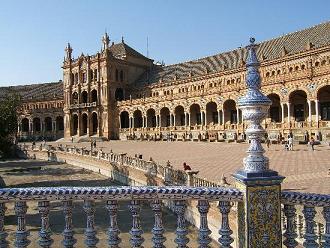
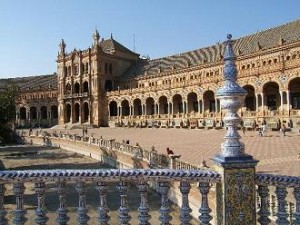
Seville is the undisputed heart of flamenco, the passionate art form that combines singing, guitar, dance, and rhythmic handclapping. Although flamenco originated from the fusion of Gypsy, Jewish, Arab, and Andalusian musical traditions, it found its most expressive voice in the tablaos and penas of Seville. The city’s Triana neighbourhood, across the river, is particularly famous for its flamenco heritage, producing some of the greatest dancers and singers in the art’s history. Visitors can experience authentic flamenco performances in venues throughout the city, from intimate cave-like tablaos to grand theatrical productions. Seville is also the stage for two of Spain’s most famous festivals. Semana Santa, the week leading up to Easter, transforms the city into a solemn procession of elaborately decorated floats, hooded penitents, and haunting saetas sung from balconies. Two weeks later, the Feria de Abril explodes into a riot of colour with hundreds of casetas, traditional tents, where Sevillanos dance sevillanas, drink sherry, and celebrate through the night. The bullring of La Maestranza, one of the oldest and most prestigious in Spain, stands on the banks of the Guadalquivir, its sanded ring the stage for the controversial but deeply traditional corrida. For those who prefer less intense entertainment, the Plaza de Espana, built for the 1929 Ibero-American Exposition, offers a semi-circular palace of azulejo tiles, canals, and bridges that represent each province of Spain.
Bullfighting is characteristic for the city of Sevilla. The first bullfight match took place in Sevilla around the year 1750. Later there was built one of the grandest arenas here, called Plaza Toros de la Maestranza, which can host around 12,500 visitors. Another favourite entertainment is Flamenco, typical Andalusian music and dance.
So if you want to see the bullfights and flamenco, the best time for your visit would be during some of ceremonies or festivals. Sevilla offers a number of interesting museums and other attractions, like the old Jewish quarter with non-Jewish name Barrio de Santa Cruz, Plazza de Espana square with arcades and malls, and more. Perhaps everyone comes into his own here.
View Sevilla – heart of Andalusia Spain in a larger map
Explore all our Spain travel guides, from Barcelona Gaudí to Andalusia plazas.
Explore More
If you enjoyed this article, you might also like:
