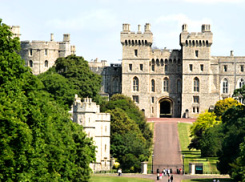
Windsor Castle is the medieval castle and the oldest royal residence in Great Britain. It is located in the southeastern part of the country, about 10km west of London. Windsor Castle dates from the 11th century. Originally it was built of wood by William the Conqueror in 1070, as the protection of western routes into London. Over time, Windsor Castle has been rebuilt several times. Most buildings were built during the reign of King Henry II and Edward III. In the 20th of the 19th century King Henry IV adjusted some of the buildings. In 1992, Windsor Castle suffered a devastating fire which broke out during the maintenance work in the ceremonial chambers. Today, the area is restored again.
Windsor Castle has, just like any major office, its own guards, that change regularly, which is also very popular attraction. The visitors are also attracted by the beautiful adjacent park suitable for relaxation after a demanding tour of the castle.
In This Article
St George’s Chapel and the Round Tower
Probably the biggest gem of Windsor Castle is St George’s Chapel, built between 1475 and 1528, in which are the remains of 10 kings. St George’s Chapel is one of the finest examples of late Gothic style in England. The chapel features magnificent fan-vaulted ceilings, intricate stone carvings, and stunning stained glass windows depicting scenes from English history. It is the spiritual home of the Order of the Garter, the oldest order of chivalry in the United Kingdom, established by Edward III in 1348. Every June, the monarch and the Knights of the Garter process through the castle grounds in full ceremonial regalia, a spectacle that draws thousands of visitors to Windsor. The chapel also contains the tombs of Henry VIII, Charles I, and the Queen’s father George VI, making it one of the most historically significant religious buildings in the country.
The oldest building in the castle is the Round Tower, originally built of wood by William the Conqueror in 1170 and later rebuilt in stone. The Round Tower stands on a man-made mound in the centre of the castle’s Middle Ward, rising 30 metres above the ground. When the monarch is in residence, the Royal Standard flies from the tower’s flagpole; when the monarch is absent, the Union Flag takes its place. Inside the Round Tower, the royal archive and photographic collection preserves centuries of documents and photographs spanning the history of the British monarchy. Visitors can climb the 200 steps to the top for panoramic views across Windsor, the River Thames, and the surrounding Berkshire countryside.
The State Apartments and the 1992 Fire Restoration
The State Apartments at Windsor Castle are among the most lavishly decorated rooms in Europe, featuring ceilings painted by Verrio, carvings by Grinling Gibbons, and priceless artworks from the Royal Collection including works by Rembrandt, Rubens, and Canaletto. The Grand Reception Room, the Waterloo Chamber, and the King’s Drawing Room each represent a different period of British decorative arts, from Baroque to Rococo to Gothic Revival. The Queen’s presence in the castle is announced by the raising of the Royal Standard, and during her stays, the State Apartments are closed to the public while the private apartments are in use. The Semi-State Rooms, created by George IV in the 1820s, are among the most opulent interiors in the castle and are open to visitors from October to March each year.
The devastating fire of November 1992 destroyed or damaged more than 100 rooms, including St George’s Hall and the Grand Reception Room. The fire started in the Queen’s private chapel when a spotlight ignited a curtain. The restoration project, completed in 1997, became one of the largest building conservation efforts in European history. Craftspeople used traditional techniques wherever possible, including hand-carved stonework, gold leaf application, and lime plastering. St George’s Hall was restored using green oak beams sourced from Windsor Great Park, a nod to medieval building practices. The restored rooms now feature a blend of original salvaged elements and modern fire safety systems hidden within the historic fabric.
Planning Your Visit to Windsor Castle
Windsor Castle is now the main residence of the Queen and her family, but it is also open to the public and is a very popular tourist destination. The length of the guided tours in interiors depends on the presence of the royal family in the castle. For safety, all the visitors have to pass the inspection. Windsor Castle offers tours every hour, but most visitors prefer viewing the site separately with audio-visual guides available for free. Plan to spend at least two to three hours exploring the castle, longer if you want to see the Changing of the Guard ceremony at 11:00 AM. Arriving early, shortly after the 10:00 AM opening, helps you avoid the largest crowds, especially during summer months. The castle is accessible by train from London Waterloo to Windsor in about 50 minutes. Combined tickets with nearby attractions such as Frogmore House and the Savill Garden offer good value for full-day visitors. The beautiful adjacent park is suitable for relaxation after a demanding tour, with mature trees, sweeping lawns, and the Long Walk stretching nearly five kilometres from the castle gates into the parkland beyond.
Have you ever visited a working royal residence where history still lives and breathes today? 👑
Explore all our United Kingdom travel guides, from London landmarks to the Scottish Highlands.
Explore More
If you enjoyed this article, you might also like:

You cannot visit the UK without seeing Windsor Castle. We took a day trip from London and it was surprisingly easy to get to. The State Apartments are magnificent and the Changing of the Guard is a proper ceremony, not just a tourist show. St George Chapel is breathtaking too.