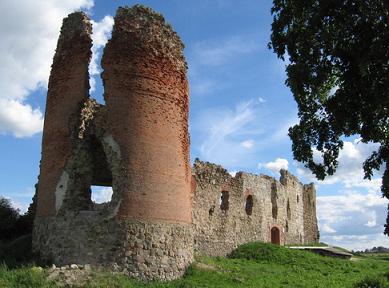
Vastseliina Castle Ruins are one of Estonia’s most atmospheric medieval sites, the remains of a 14th-century Livonian Order bishop’s castle in southeastern Estonia that was once one of the most important pilgrimage destinations in the Baltic region, famous for a miraculous white cross that was said to have healing powers. Built in 1342, the castle guarded the border between Livonia and the Russian lands; today its restored tower offers visitors the opportunity to walk through a faithfully recreated medieval castle environment and explore Estonia’s crusader-era heritage.
In This Article
Quick Facts: Vastseliina Castle
- Best time to visit: May, September; summer for the best weather for exploring the ruins; the visitor centre is open year-round
- How to get there: ~3 hours from Tallinn by car; ~1 hour from Tartu; the castle is near the Latvian border near Võru
In southeastern Estonia, on a steep hill above the river Pisa you can find impressive Vastseliina castle ruins. It is situated on the outskirts of the village Vahtseliina and about 4 km from the town Vastseliina. This area due to its location on the trade route Riga, Pskov was the scene of many battles.
Vastseliina castle was founded in the 14th century by German knights. It became the border point between the territories of the Teutonic Knights and the Russian area. until the mid-19th century the area prospered. The castle is situated right on the road to Meremäe.
When you go to the castle away from the former Norman pub, on the left in the valley you will see Vastseliina Park, where a nice 15 km long circular hiking trail starts. This lead along the river up to the north to Suumremetse. Near the ruins there is a map with walking and cycling trails.
To Vastseliina castle you can get a regular bus connection from the metropolis Võru, which goes several times a day. Some buses then continue to the town of Missa.
History of the Castle and Pilgrimage
The history of Vastseliina Castle begins in 1342 when the Livonian Order, a branch of the Teutonic Knights, constructed a fortress to guard the border between their territory and the Russian lands. The castle’s strategic location on the trade route between Riga and Pskov made it an important military and economic centre. However, it was a miraculous event that truly put Vastseliina on the map. According to local tradition, a white cross appeared on the castle wall, and word of its healing powers spread throughout the Baltic region. Pilgrims began travelling from as far away as Finland and Poland to visit the site, and the castle became one of the most significant pilgrimage destinations in the medieval Baltic world. The cross was said to cure various ailments, and small offerings left by grateful pilgrims were collected in a special chest. This religious significance brought considerable wealth to the castle and helped maintain its importance even as its military role diminished over the centuries.
Exploring the Ruins Today
Today, the ruins of Vastseliina Castle have been carefully restored and transformed into a fascinating heritage attraction. The centrepiece of the site is the restored tower, which visitors can climb for panoramic views of the surrounding landscape. Inside, a modern exhibition tells the story of the castle’s history through interactive displays, historical artefacts, and multimedia presentations. The restored tower room recreates the atmosphere of a medieval interior, complete with period furniture and decorations that bring the Crusader era to life. The castle grounds are open for exploration, and information boards in Estonian, English, and Russian explain the function of each part of the fortress. The nearby Vastseliina Park offers a pleasant 15-kilometre circular hiking trail that follows the Piisa River through forest and meadow. The trail is well marked and suitable for walkers and cyclists alike, with several picnic spots and viewpoints along the way.
Practical Information for Visitors
Vastseliina Castle is located in southeastern Estonia, approximately 4 kilometres from the town of Vastseliina and about one hour by car from the university city of Tartu. Regular bus services connect Tartu and Võru to the area, with several daily departures making the journey manageable without a car. The site is open from May to September for the best weather conditions, though the visitor centre operates year-round with reduced hours in winter. Admission fees are modest, and guided tours in English can be arranged in advance. The castle is situated on a steep hill above the Piisa River, and the approach offers beautiful views of the surrounding countryside. Walking shoes are recommended as the terrain around the ruins can be uneven. The nearby village of Vahtseliina has basic amenities including a small shop and cafe, but visitors should bring supplies for longer explorations of the area.
View Vastseliina Castle Ruins in Estonia in a larger map
Have you explored Vastseliina or discovered Estonia’s medieval crusader castles? Share your Baltic castle adventures in the comments! 🏰
Explore all our Estonia travel guides, from Tallinn old town to Baltic islands.
Explore More
If you enjoyed this article, you might also like:
- 4 Things to Do in Estonia – Estonia
- Keila Waterfall – a beautiful natural phenomena in Estonia – Estonia
- Pärnu – Estonia’s Summer Capital – Estonia