\n
\n
\n \n
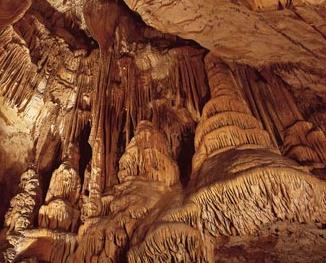
Jasovská cave (or Jasovská jaskyňa in Slovak) is located in the Slovak Karst, near the village Jasov, in the south-eastern part of the Slovak Republic. The cave has been known since time immemorial. There were found artifacts from the Paleolithic, Neolithic and Hallstatt periods. The stalactite cave was first open to the public partially in 1846 by monks from the nearby Jasov monastery. Between 1922 – 1924 the lower parts of the cave were discovered and already in 1924 Jasovská cave was officially opened.
\n
There were built routes and electric lighting. The total length of cave is 2811 meters, of which about 550 meters are available to the public. Jasovská cave has a rich sinter decoration. You can admire Virgin stalactites and waterfalls. At the top floor there is also interesting sign written in black letters in 1452 and which talks about the victory of the Hussites in Lučenec.
\n
The cave is a home to 19 species of bats, which live in the cave especially during winter. Since 1995 Jasovská cave is included in the UNESCO World heritage list as a part of the Caves of Aggtelek Karst and Slovak Karst site.
\n
The air temperature ranges between 8.8°C to 9.4°C, relative humidity from 90% to 98%. The cave is open daily – except of Mondays – from April 1 to October 30. Basic admission fee is €5.
\n
See pictures of Jasovská Cave on flickr.com
\n
For further information you can visit official website of Slovak caves www.ssj.sk.
\n
View Jasovská cave – national natural monument of Slovakia in a larger map
\n\n\n
The Geology and Stalactite Formations of Jasovská Cave
\n
Jasovská Cave is formed in the pale grey limestones of the Silica Nappe, a geological unit that dates from the Middle Triassic period approximately 240 million years ago. The cave system was created by the gradual dissolution of limestone by carbonic acid in groundwater, a process that carved passages, chambers, and deep vertical shafts over thousands of millennia. The total surveyed length of the cave is 2,811 metres, with a vertical range of 56 metres, making it one of the larger show caves in the Slovak Karst region. The visitor route covers approximately 550 metres of underground passages, traversed by metal walkways and illuminated by electric lighting that highlights the variety of speleothems. The cave boasts an extraordinary range of sinter formations, including stalactites that hang like icicles from the ceiling, stalagmites that rise from the cave floor, and soda straws so thin that they are translucent when backlit. One of the most remarkable features is the Virgin stalactites, pure white formations that continue to grow at a rate of approximately one centimetre per century, fed by water that has not been contaminated by human activity. The Great Hall, the largest chamber in the cave, measures 40 metres in length, 20 metres in width, and 12 metres in height, with flowstone cascades covering the walls in elegant drapes of cream and ochre.
\n\n
Historical Significance and Bat Colonies of Jasovská Cave
\n
Jasovská Cave has served as a shelter and refuge for humans for over 25,000 years. Archaeological excavations have uncovered artifacts from the Paleolithic period, including stone tools, bone implements, and charcoal from ancient hearths. Neolithic and Hallstatt period finds include pottery fragments, bronze ornaments, and evidence of early metalworking. The most intriguing historical feature is an inscription from 1452, written in black letters on the cave wall, which records the victory of the Hussite army at the Battle of Lucenec. This inscription is one of the oldest surviving written records in any Slovak show cave. The cave gained its first tourist infrastructure in 1846, when monks from the nearby Premonstratensian monastery of Jasov constructed wooden walkways and installed basic lighting, making it one of the earliest show caves in Central Europe. The lower sections were discovered and opened to the public in 1924, and electric lighting was installed at the same time. The cave is also an important hibernation site for 19 species of bats, including the greater horseshoe bat, the lesser horseshoe bat, and Geoffroy bat. Bat counts conducted each winter record several hundred individuals, making Jasovská Cave one of the most important bat roosts in the Slovak Karst. Visitors may glimpse hibernating bats during the winter months, though the bats are protected and should not be disturbed. The stable cave climate, with temperatures between 8.8 and 9.4 degrees Celsius and humidity above 90 per cent, creates ideal conditions for both speleothem formation and bat hibernation.
\n\n
\n\n
Explore all our Slovakia travel guides, from the High Tatras to Bratislava charm.
Explore More
If you enjoyed this article, you might also like:
