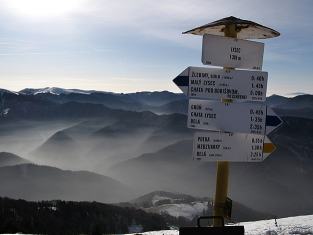
Beech forests stretch across rolling hills as far as the eye can see. Trails wind through valleys where wild streams tumble over mossy rocks, and the air is filled with the scent of damp earth and pine. Ve\u013ek\u00e1 Fatra National Park in Slovakia is a paradise for hikers who prefer their mountains uncrowded and their trails unspoiled. The park encompasses diverse terrain from limestone cliffs to alpine meadows, with wooden chalets offering refuge at the end of a long day’s walk. Wildlife thrives here; you might spot deer, lynx, or even a golden eagle soaring above the ridgeline.
In This Article
Quick Facts: Ve\u013ek\u00e1 Fatra National Park, Slovakia
- Best time to visit: May to October for hiking; June to August for the best alpine flower displays; December to March for winter hiking and cross-country skiing on groomed trails
- Top attractions: The Harmanec Cave (the only cave open to the public), the UNESCO-listed folk village of Vlkol\u00ednec, the ridge-top hiking trails of H\u00f4lna Fatra, and the dramatic limestone terrain of Braln\u00e1 Fatra
- How to get there: The main access points are the towns Martin, Ru\u017eomberok, and Tur\u010dianske Teplice, all within 3 hours of Bratislava by car or train; the ski resort Donovaly is another popular entry point
- Park size: 403 km\u00b2, established as a national park on 1 April 2002
- Best for: Hikers, trekkers, wildlife enthusiasts, and anyone seeking uncrowded mountain trails in pristine Carpathian forest
A Landscape Carved by Time
Ve\u013ek\u00e1 Fatra National Park lies in central Slovakia, in the \u017dilina and Bansk\u00e1 Bystrica regions. The national park was declared on 1 April 2002 as an upgrade of the Protected Landscape Area to protect a mountain range with a high percentage of well-preserved Carpathian forests. European beech dominates, covering 90 per cent of the area in combination with ridge-top cattle pastures dating back to the 15th to 17th centuries, from the times of the so-called Walachian colonization.
The geology of the park is remarkably varied. The core of the range is built of granite which reaches the surface only in places. More common are various slates creating gently modelled ridges and summits of the so-called H\u00f4lna Fatra, and limestone and dolomite rocks creating a rough and picturesque terrain known as Braln\u00e1 Fatra. This geological diversity creates a landscape of sharp contrasts: gentle, grassy ridgelines give way suddenly to dramatic limestone cliffs and deep, forested valleys.
In places there are also relict Scots pine forests, and the Harmanec valley is notable as the richest Irish yew tree location in Central and probably all Europe. The park is also an important reservoir of fresh water thanks to high rainfall and low evaporation in the area. There are many caves, but the only one open to the public is Harmanec Cave, a stunning limestone cave system with remarkable stalactite formations.
Hiking Trails and Mountain Huts
Ve\u013ek\u00e1 Fatra is crossed by a network of well-marked hiking trails totalling hundreds of kilometres. The most popular routes follow the main ridges, offering panoramic views across the surrounding landscape. The trail from the ski resort of Malinn\u00e9 to the summit of Kr\u00ed\u017ena (1,574 metres) is a classic day hike, passing through beech forests, alpine meadows, and offering spectacular viewpoints along the way.
What makes hiking in Ve\u013ek\u00e1 Fatra special is the network of mountain huts (chaty) that provide shelter and basic accommodation. These wooden chalets, often with traditional Slovak cuisine on offer, make multi-day treks possible without carrying a tent. The atmosphere in these huts is wonderfully authentic: sharing a bench with fellow hikers over a bowl of bryndzov\u00e9 halu\u0161ky (sheep cheese dumplings) while the evening mist settles over the valleys outside.
Various rocks and therefore various soils, diverse type of terrain with gentle upland meadows and pastures, sharp cliffs and deep valleys provide for extremely rich flora and fauna. All species of big Central European carnivores live abundantly there: brown bear, gray wolf and Eurasian lynx.
The area is popular for hikers and trekkers. The UNESCO World heritage village of folk architecture reserve Vlkol\u00ednec lies nearby. The best starting points for hiking are the towns Martin, Ru\u017eomberok, Tur\u010dianske Teplice, ski resorts Donovaly, Malinn\u00e9 and Vlkol\u00ednec.
View Ve\u013ek\u00e1 Fatra National Park in Slovakia – popular tourist destination for hikers and trekkers in a larger map
Do you seek out well known hiking trails or prefer hidden paths off the beaten track? \uD83E\uDD4C
Explore all our Slovakia travel guides, from the High Tatras to Bratislava charm.
Explore More
If you enjoyed this article, you might also like:
