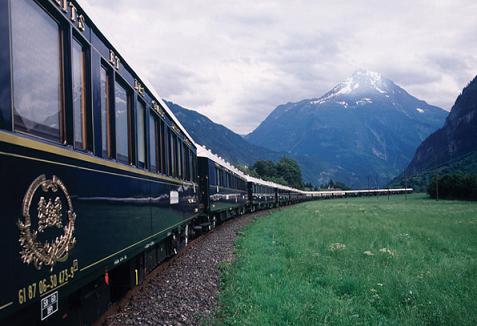
The whistle blows across the platform at Paris Gare de lEst and the train begins to move. You settle into a compartment of polished wood, velvet upholstery, and brass fittings that has not changed its appearance in a century. The Orient Express is not the fastest way to cross Europe. It is the most memorable. From Paris to Istanbul, the journey covers 2,700 kilometres and passes through Strasbourg, Munich, Vienna, Budapest, Bucharest, and Varna before reaching the shores of the Bosphorus. Agatha Christie wrote her most famous novel aboard this train. Real spies, diplomats, and royalty have occupied these same seats. The experience is a rolling museum of railway history.
Do you want to spend your vacation in different way than you used to in the past? Or do you plan your holidays and would like to travel there by some special train? Without wasting your time, energy and effort at airports, or on traffic jam? Then you should consider Orient-Express! Orient-Express Hotels is limited company that operates special train in Europe.
This is the legendary Venice Simplon-Orient-Express train, which offers a completely different travel than any other trains in Europe. Come aboard and get better, more elegant way to travel around Europe.
Romantic adventure, comfort and history are closely linked with the journeys that lead through Europe. Discover the amazing scenery on your way to the most attractive cities in Europe. Enjoy beautiful vintage cabins, gourmet cuisine and live entertainment on board of the iconic train and experience one of the world’s best travel moments.
Something from its history… The first such train left on 4 October 1883 from Gare de Strasbourg station in Paris through Romania, towards Constantinople (former name of Istanbul, Turkey). It had a small but elegant locomotive, as well as a baggage car, two very luxurious and large sleeping cars, a beautiful dining car with a smoking lounge and a car for personnel. It was called the “Orient Express” and drove about 40 passengers.
However at that time passengers had to travel by train, ferry, a local Romanian train and then by a boat to get to Constantinople. Few years later the new railways and bridges have been built in Romania, which allowed direct access from Paris through Budapest, Belgrade and Sofia to Constantinople. It was 2,900km long way and took 3 days and 3 nights.
Now you can still enjoy similar atmosphere and thoughts of those travellers on several main routes:
- London – Paris – Innsbruck – Venice – Rome
- London – Dresden – Krakow – Venice
- Istanbul – Bucharest – Budapest – Venice
- London – Paris – Frankfurt – Prague – Venice
Enjoy your journey like no other with Orient-Express! For further details see the official website of Orient-Express.
In This Article
The History of the Route and Its Operators
The original Orient Express service was launched on 5 June 1883 by the Compagnie Internationale des Wagons-Lits, running from Paris to Vienna via Munich. The route was extended to Istanbul, then Constantinople, in 1889, with passengers crossing the Danube by ferry until the Giurgiu-Ruse bridge was completed in 1954. The service was suspended during both world wars and resumed each time with its pre-war standards intact. The golden age of the Orient Express was the interwar period, when the train ran daily in both directions carrying aristocrats, financiers, and celebrities. The decline of the service began in the 1960s with the rise of air travel, and the last direct Paris-to-Istanbul service ran on 19 May 1977. The Venice Simplon-Orient-Express, a private luxury train operated by Belmond, revived the experience in 1982 using restored original carriages from the 1920s and 1930s. The Belmond service runs from London to Venice via Paris, with occasional special services to Istanbul, Vienna, and other European cities. The modern nightjet services operated by the Austrian Railways connect many of the same cities at a fraction of the luxury price, with sleeper compartments available from 60 euros per person for the Vienna to Budapest leg. The original route is still possible using regular trains, though it requires multiple changes and a willingness to travel without the historic carriages.
What to Expect on the Venice Simplon-Orient-Express
The Belmond Venice Simplon-Orient-Express comprises 17 restored carriages dating from 1926 to 1949, each with its own colour scheme and decorative motif. The blue and gold liveried sleeping cars contain compartments that convert from seating to a bed, with a washbasin hidden in a wooden cabinet. There are no en-suite bathrooms in the standard compartments; shower and toilet facilities are at the ends of each carriage. The three restaurant cars, named Cote dAzur, Etoile du Nord, and LOriental, are decorated with Lalique glass panels, marquetry, and polished brass. The dress code requires black tie for dinner on some departures. The London to Venice journey costs between 2,500 and 6,000 euros per person depending on the cabin category and season. The journey takes approximately 32 hours, with dinner served in two sittings and afternoon tea in the bar car. The train includes a bar car where a pianist plays through the evening. Meals are prepared in the train galley kitchen, and the menu changes with each departure, featuring European cuisine paired with wines from the regions the train passes through. The service crew of 12 stewards and stewardesses attends to each of the 108 passengers, maintaining the ratio that has been standard since the 1920s.
Budget Alternatives to the Orient Express
Experiencing the romance of European rail travel does not require the Belmond price tag. The Austrian Nightjet network connects Amsterdam, Zurich, Vienna, and Rome with modern sleeper compartments, couchettes, and seated carriages. A Vienna to Budapest ticket in a sleeper compartment costs approximately 90 euros, while a Zurich to Prague journey in a couchette costs around 70 euros. The Hungarian MAV train from Budapest to Brasov in Romania follows part of the original Orient Express route through the Carpathian Mountains. The Polish TLK trains between Warsaw and Krakow offer first-class compartments at 15 euros with complimentary coffee. The Caledonian Sleeper in Scotland connects London to the Scottish Highlands overnight, with en-suite rooms starting at 200 euros. These cheaper options provide the same experience of watching the European landscape change through a train window while sleeping through the transit between cities. The key is to book well in advance, as the best-value sleeper berths sell out months ahead, especially on the Nightjet and Scandinavian routes.
Would you choose a luxurious long train journey across Europe or a quick flight to your destination? Which appeals to you more?
Explore all our Europe travel guides, discover the best of the continent.
Explore More
If you enjoyed this article, you might also like:
- How to find the cheapest airlines on your trip around Europe – Travelling Tips
- European Travel tips – The money belt – Travelling Tips
- Top Al Fresco Dining Options to Have a Unique Dining Experience in London | United Kingdom – Travelling Tips

We took the Orient Express from Paris to Istanbul and it was the most memorable travel experience of my life. The polished wood, the fine dining, the changing landscapes outside the window — it feels like stepping back in time to the golden age of travel. Not cheap, but absolutely worth it for the experience.