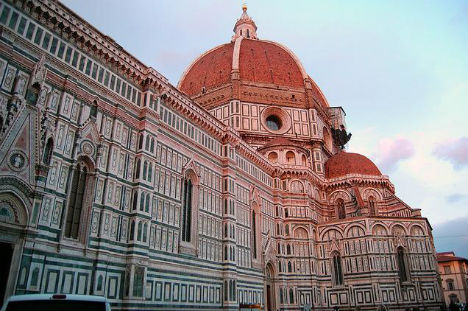
The red-tiled dome of Florence Cathedral dominates the skyline of the Tuscan capital, a masterpiece of Renaissance engineering that has inspired architects and artists for over 500 years. The cathedral, formally named the basilica di Santa Maria del Fiore, was begun in 1296 by Arnolfo di Cambio and completed structurally in 1436 with the topping of Brunelleschi’s magnificent dome. The exterior is clad in panels of green, pink, and white marble, creating a geometric pattern that is both harmonious and visually striking. But it is the dome, the largest masonry dome ever built at the time of its construction, that remains the cathedral’s most extraordinary feature.
In This Article
Brunelleschi’s Dome: An Engineering Marvel
Filippo Brunelleschi’s solution to the problem of spanning the vast crossing of the cathedral, 42 metres in diameter, was revolutionary. He designed a double-shell dome, with an inner and outer layer connected by a system of ribs and rings, that could be built without the need for a wooden centering frame. The bricks were laid in a herringbone pattern that distributed the weight evenly, and the dome’s pointed profile reduced lateral thrust. Construction took 16 years, from 1420 to 1436, and required the invention of new hoisting machines to lift the 37,000 tons of materials into place. The result is a structure that has stood for nearly 600 years and remains the largest brick dome in the world. Visitors can climb the 463 steps to the top of the dome for a close-up view of the construction techniques and a panoramic vista of Florence.
The Interior and the Baptistery
The interior of the cathedral is more restrained than the colourful exterior, with a vast, empty nave that emphasises the scale of the space. The dome’s interior is decorated with Giorgio Vasari’s fresco of the Last Judgement, painted in the 1570s, a swirling composition of figures that is best viewed from the base of the dome or from the terrace of the nearby Campanile. The cathedral’s baptistery, dedicated to Saint John the Baptist, predates the cathedral itself, with origins in the 4th century. Its stunning bronze doors, known as the Gates of Paradise by Lorenzo Ghiberti, are masterpieces of early Renaissance sculpture. The originals were moved to the Museo dell’Opera del Duomo for conservation, with copies now in place on the baptistery.
Practical Information
Florence Cathedral is located in the Piazza del Duomo at the heart of the historic city centre. The cathedral is open to visitors free of charge, but access to the dome, the baptistery, the campanile, and the museum requires a combined ticket, known as the Brunelleschi Pass, which costs approximately 30 euros for adults and is valid for 72 hours. The queue for the dome can be long, especially in summer, so booking in advance is recommended. The best time to climb the dome is early morning or late afternoon, when the light is soft and the crowds are thinner. Allow at least half a day to explore the entire cathedral complex. The Museo dell’Opera del Duomo houses the original works of art from the cathedral, including Ghiberti’s Gates of Paradise panels and Donatello’s haunting Magdalene.
Have you climbed to the top of Brunelleschi’s dome and looked out over the rooftops of Florence? What was your impression of this Renaissance masterpiece?
>
The Fourth Largest Cathedral in Europe
Florence Cathedral, officially the basilica di Santa Maria del Fiore, is the fourth largest church in Europe. Construction began in 1296 under the direction of Arnolfo di Cambio, who was tasked with creating a cathedral grand enough to reflect Florence growing political and economic power. The ambition was clear: this church was meant to overshadow the cathedrals of rival cities like Siena and Pisa, and it succeeded magnificently.
The building took nearly 150 years to complete. Arnolfo di Cambio designed the original facade, but only a quarter of it was finished before work halted. The current neo-Gothic facade dates from 1887, designed to harmonise with the medieval baptistery and Giotto adjacent campanile. The entire complex forms one of the most magnificent architectural ensembles in Europe, recognised as a UNESCO World heritage site.
Brunelleschi Dome: A Renaissance Marvel
The cathedral crowning glory is Filippo Brunelleschi dome, the largest masonry dome ever built at the time of its completion in 1436. Brunelleschi ingeniously designed a double-shell structure using a herringbone brick pattern that required no internal scaffolding. The dome rises 106 metres above the pavement and remains a landmark of Renaissance engineering that still inspires architects today.
Visitors can climb the 463 steps to the top of the dome for an unforgettable view of Florence red rooftops and the surrounding hills of Tuscany. The narrow staircase passes between the inner and outer shells of the dome, where you can see Brunelleschi construction techniques up close. The climb is strenuous but the panoramic reward at the top is absolutely worth every step.
Art Treasures Inside the Cathedral
While the exterior is strikingly ornate, the interior of the cathedral feels surprisingly austere at first glance. This simplicity was intentional, directing the visitor focus toward the few but significant artworks within. The vast dome interior is decorated with Giorgio Vasari fresco of the Last Judgement, painted in the 1570s, depicting a dramatic vision of heaven and hell that covers the entire inner surface.
The cathedral also houses the remains of Santa Reparata, the earlier church that stood on this site. Visitors can descend into the crypt to see the excavated foundations and floor mosaics of the original 5th-century basilica. Other treasures include the two sacristies, the Sacrestia Nuova by Michelozzo featuring Luca della Robbia terracotta roundels, and the Sacrestia Vecchia with similar decorative work in blue and white.
Practical Information for Your Visit
The cathedral is located in Piazza del Duomo at the heart of Florence historic centre. Entry to the cathedral itself is free, but tickets are required to climb the dome, visit the baptistery, and explore the Museo dell Opera del Duomo which houses the cathedral original artworks. The museum contains Ghiberti original Gates of Paradise panels from the baptistery, considered one of the greatest masterpieces of Renaissance bronze work.
Tickets can be purchased online in advance, which is recommended as queues can be long, especially during peak tourist season from April to October. Consider visiting early in the morning or late in the afternoon to avoid the busiest crowds. The surrounding Piazza del Duomo is also home to the Baptistery of Saint John and Giotto Campanile, both included in combination tickets.
Are you ready to stand beneath Brunelleschi dome and experience the artistic soul of Florence for yourself?
Explore all our Italy travel guides, from the Dolomites to Sicily.
Explore More
If you enjoyed this article, you might also like:

I visited Florence Cathedral last summer and it exceeded every expectation. The atmosphere, the scenery, the whole experience was unforgettable. Already planning a return trip.