The ferry from Doolin takes 40 minutes across Galway Bay. The Atlantic swell is constant. The Cliffs of Moher slide past on the left, 214 metres of vertical sandstone, and then the three islands appear: Inishmore, Inishmaan, and Inisheer. The Aran Islands spread across 47 square kilometres and contain the highest concentration of archaeological sites in Ireland. The landscape is limestone, patterned by ancient stone walls that divide the fields into a grid visible from space. The population across all three islands is roughly 1,200. The Irish language is still the first language here.
In This Article
Dun Aonghasa: The Fort on the Edge of the World
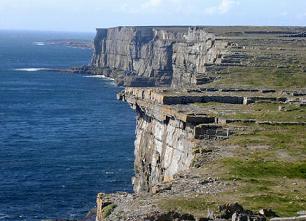
Dun Aonghasa on Inishmore is a semi-circular stone fort perched on a cliff 100 metres above the Atlantic. The fort dates from 1100 BC, predating the Celts. The inner enclosure covers 1,800 square metres, protected by three concentric walls of dry limestone. The outer wall, the “cheval de frise”, is a field of sharp limestone slabs set vertically into the ground to slow attacking forces. The drop from the edge is sheer and unfenced. On a clear day, you can see the coast of Connemara 30 km to the north. The entrance fee is 5 euros. Dun Aonghasa receives 80,000 visitors per year. The site is managed by the Office of Public Works.
The Language and the Culture
The Aran Islands are part of the Gaeltacht, the Irish-speaking regions where the government recognises Irish as the primary language. Roughly 70 percent of the islanders speak Irish fluently, though all also speak English. The island’s cultural export, the Aran jumper, is knitted from unwashed wool in cream, white, and grey patterns unique to each family. The stitch patterns are believed to have originated in the 19th century. The traditional boat, the currach, is a canvas-covered vessel rowed by two or four oarsmen. Currach racing is held annually in June during the Currach Festival on Inishmore. The islands are referenced in the writings of John Millington Synge, who spent five summers here between 1898 and 1902, producing “The Aran Islands” and the play “Riders to the Sea”.
Getting Around: Bikes, Vans, and the Cliffs
The most practical way to see Inishmore is by bicycle, rented from the pier for 10 euros per day. The island has 14 km of roads, mostly single lane, and the terrain is flat enough for easy cycling. Minibus tours run from the pier for 15 euros per person and stop at Dun Aonghasa, the Seven Churches monastery ruins, and the Worm Hole, a rectangular natural pool carved into the limestone. The Seven Churches, a 7th century monastic site, contains two churches, a round tower, and 11th century high crosses. The worm hole on Inishmore, 25 metres long and 10 metres wide, fills with seawater at high tide and is a popular swimming spot for those who do not mind cold water.
What is the strongest memory you carry from an island visit, Aran or otherwise, and what made it stay with you?
Explore all our Ireland travel guides, from Dublin pubs to the Wild Atlantic Way.
Explore More
If you enjoyed this article, you might also like:
