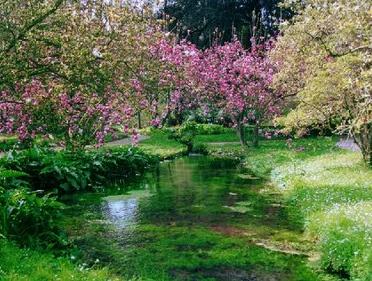
The Gardens of Ninfa (Giardino di Ninfa) are widely considered the most romantic garden in the world, a hauntingly beautiful English-style landscape garden created among the atmospheric ruins of a medieval ghost town in the Lazio countryside, just south of Rome. Declared a Natural Monument of the Italian Republic and described by The New York Times as “the most beautiful garden in the world,” Ninfa is a place where Gothic church walls are draped in climbing roses, crystal-clear spring waters flow through ancient stone channels, and over 1,300 plant species from around the globe thrive in a unique microclimate that feels almost impossibly lush.
In This Article
Quick Facts: Gardens of Ninfa, Italy
- Best time to visit: The gardens open only on specific dates (typically April–November, weekends and public holidays); booking in advance is essential; spring for the blossom and wisteria; autumn for spectacular foliage
- Top attraction: The rose-draped ruins of the medieval church of Santa Maria Maggiore and the Castle of Ninfa reflected in the River Ninfa
- How to get there: ~1.5 hours from Rome by car (SS7 south to Cisterna di Latina); nearest train station is Cisterna di Latina (~15 min taxi)
- Entry fee: ~€15 (adult); guided tour only, independent wandering is not permitted
- Key rule: Visits are strictly by guided tour and must be booked well in advance, the gardens protect their fragile ecosystem by limiting visitor numbers
The Story of Ninfa
Ninfa was a prosperous medieval town of around 2,000 inhabitants until the 14th century, when a combination of malaria, warfare, and political decline led to its abandonment. By the 17th century, it was a ghost town, overgrown ruins slowly being swallowed by the marshland. In the 1920s, the aristocratic Caetani family began transforming the ruins into a garden, channelling the abundant spring water from the nearby Monti Lepini, planting species brought back from their global travels, and creating one of the most extraordinary garden landscapes in Europe.
Today, the garden contains over 1,300 plant species including Japanese maples, Himalayan bamboo, South American ornamental cherries, and climbing roses from every corner of the globe, all thriving in the nitrogen-rich soil enriched by the River Ninfa’s spring waters that maintain a constant 10°C year-round.
The Gardens of Ninfa is a natural monument in central Italy located in the territory of Cisterna di Latina, near Sermoneta and Norma. This is a typical English garden and includes the remains of the ancient town of Ninfa.
The Gardens of Ninfa are open to the public only on certain dates set and the entrance is allowed only through guided tours, in order to preserve its delicate environmental balance.
View Beautiful Gardens of Ninfa in Italy in a larger map
The tour lasts about one hour. At the end you can visit the Hortus conclusus, an Italian garden dating from the 17th century, featuring citrus and ponds with swans.
The garden is open to the public from April to October and the basic admission fee is €10.
View Beautiful Gardens of Ninfa in Italy in a larger map
Garden Highlights and Design
The Garden of Ninfa unfolds as a series of interlinked garden rooms, each with its own character and plant palette. The English landscape style, applied by the Caetani family in the 1920s, allows climbing roses, wisteria, and jasmine to scramble freely over the medieval ruins. The River Ninfa flows through the centre, its waters originating from springs in the nearby Lepini Mountains. The water temperature remains a constant 10 degrees Celsius year-round, supporting moisture-loving plants including giant gunnera, bamboo groves, and Japanese irises. The rose collection includes over 300 varieties. The garden reaches its peak in May when the wisteria and roses are in full bloom.
The Ruins of Medieval Ninfa
The medieval ghost town of Ninfa was once a prosperous settlement of approximately 2,000 inhabitants. The ruins visible today include the Church of Santa Maria Maggiore, whose Gothic arches are now draped in climbing plants. The Palazzo Caetani stands at the garden’s highest point. Ninfa’s decline began in the 14th century when malaria from the surrounding marshland made the town uninhabitable. By the 17th century, the town was completely abandoned and swallowed by the wilderness. The guided tour takes approximately one hour with English audio guides provided.
Have you visited the Gardens of Ninfa or explored Italy’s hidden garden treasures? Share your favourite Italian garden discoveries in the comments! 🌸
Explore all our Italy travel guides, from the Dolomites to Sicily.
Explore More
If you enjoyed this article, you might also like:
