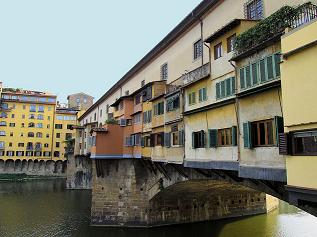
The Ponte Vecchio is the only Florentine bridge to survive the Second World War intact. On August 4, 1944, as the German army retreated across the Arno, they dynamited every bridge in the city. Ponte Vecchio was spared. Instead, the mines blew up the buildings at both ends, blocking access, but the bridge itself stood. It has stood here since 1345, when Taddeo Gaddi built the current stone arch structure after a flood destroyed the Roman bridge. It is the oldest bridge in Florence and the oldest segmental arch bridge in Europe.
In This Article
The Shops: Butchers to Goldsmiths
The shops on the Ponte Vecchio were originally occupied by butchers, who used the river to dispose of waste. In 1593, Grand Duke Ferdinando I de’ Medici, offended by the smell as he walked from the Palazzo Vecchio to the Pitti Palace via the Corridoio Vasariano, ordered that only goldsmiths and jewellers could operate on the bridge. The decree is still in effect. Today, 44 jewellery shops line both sides of the bridge. Each shop is roughly 3 metres wide and 6 metres deep. The rent is the highest per square metre in Florence. The shops are typically open from 9.30am to 7pm, closed on Mondays in winter.
The Corridoio Vasariano: The Medici Secret Passage
Giorgio Vasari built the covered corridor above the shops in 1565 in five months, connecting the Palazzo Vecchio to the Palazzo Pitti. The corridor is 1 km long and passes through the church of Santa Felicita on the south side. The Medici family used it to move between palaces without setting foot among the common Florentines. The corridor holds over 1,000 paintings from the Uffizi collection, including 16th and 17th century self-portraits. The corridor was closed for restoration in 2016 and was scheduled to reopen in 2024, though the date has slipped. The corridor offered the best elevated view of the bridge and the river.
The View of the Arno from the Bridge
The Ponte Vecchio has three segmental arches spanning 30 metres each. The central arch is slightly wider, at 32 metres. The balustrades on both sides are lined with lovers’ padlocks, a tradition that began in the 2000s and is now forbidden by the city council, which removes them monthly. The best view of the bridge is from the Ponte Santa Trinita, 200 metres downstream, built in 1569 by Bartolomeo Ammannati and also reconstructed after the war. The sunset view from the Ponte Santa Trinita, with the Ponte Vecchio’s shops lit against the Arno, is the definitive Florentine panorama.
Did you buy something from the jewellers on the bridge or did you just watch the evening light hit the gold through the shop windows?
Explore all our Italy travel guides, from the Dolomites to Sicily.
Explore More
If you enjoyed this article, you might also like:
