Nesebar is one of Europe’s oldest continuously inhabited towns, a UNESCO World heritage jewel perched on a tiny rocky peninsula on Bulgaria’s Black Sea coast, where 3,000 years of Thracian, Greek, Roman, Byzantine, and Bulgarian history are layered into every cobblestone, church ruin, and timber-framed house. Often called the “Pearl of the Black Sea,” Nesebar’s Old Town is a living museum of Orthodox church architecture, with more churches per square metre than almost anywhere else in the world.
In This Article
Quick Facts: Nesebar, Bulgaria
- Best time to visit Nesebar: May–June and September for pleasant weather without peak crowds; July–August is high season for the beach resort adjacent to the Old Town
- Top attractions: The Old Town peninsula, the Church of St. Stephen (11th century), the Church of Christ Pantocrator, and the Archaeological Museum
- How to get there: ~30 minutes from Burgas Airport (BOJ) by car or bus; Nesebar is connected to the mainland resort of Sunny Beach by a narrow isthmus
- Entry fee for churches: Some charge ~€3-5; the Old Town itself is free to explore
- Best for: History lovers, architecture photographers, and those seeking authentic Bulgarian culture alongside beach relaxation
The Layered History of Ancient Nesebar
Founded as the Thracian settlement of Mesembria in the 2nd millennium BC, Nesebar became a Greek colony in the 6th century BC and flourished as a major trading port on the Black Sea for over a thousand years. During the Byzantine period, the town reached its spiritual peak, at one point over 40 churches served a population of just a few thousand. The Bulgarian Empire and later the Ottoman period added further layers to the town’s rich architectural heritage.
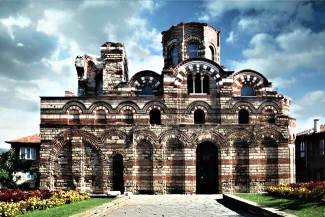
Today, visitors wandering the narrow cobblestone lanes encounter well-preserved medieval churches at every turn, the 11th-century Church of St. Stephen, with its superb 16th-century frescoes; the striking striped brick-and-stone façade of the Church of Christ Pantocrator (13th–14th century); and the atmospheric ruins of the 5th-century Old Metropolitan Church, the oldest surviving structure in Nesebar.
Pro tip: Visit early in the morning (before 10am) or late afternoon to explore the Old Town without the day-tripper crowds from Sunny Beach. Stay for sunset when the golden light on the peninsula is magical.
Nesebar – Pearl of the Black Sea – is the ancient town and a major seaside resort on the coast of the Black Sea in Bulgaria. You can get to Nesebar by bus or boat from the coastal resorts such as Pomorie, or by plane or train to Burgas and then by bus.
Nesebar is situated on a rocky peninsula. Since 1983 it is registered in the list of World heritage Sites of UNESCO due to its ancient center, which is among the oldest in Europe. There are wooden houses and many churches.
Admission is free to lots of sites in the town. Interesting tourist destinations in the neighborhood are Primorsko or Pomorie.
View Nesebar – one of the oldest ancient centers in Europe in Bulgaria in a larger map
The Churches of Nesebar
Nesebar’s extraordinary concentration of churches reflects its importance as a spiritual centre during the Byzantine and medieval Bulgarian periods. The Church of St. Stephen from the 11th century contains the best-preserved frescoes in the town. The Church of Christ Pantocrator from the 13th century is recognisable for its striking decorative brickwork, with alternating bands of stone and red brick creating geometric patterns. The Church of St. John Aliturgetos, built in the 14th century and partially destroyed, remains an evocative ruin. The Church of St. Paraskevi, with its unusual octagonal dome, demonstrates Byzantine influence on Bulgarian ecclesiastical architecture.
Old Town Architecture and Nearby Attractions
The Nesebar Old Town is a delight to explore on foot, with narrow cobblestone lanes winding between traditional Bulgarian Revival houses from the 18th and 19th centuries. These timber-framed houses, with their distinctive stone ground floors and wooden upper storeys, create a charming maze of shaded passageways. Many houses now function as small galleries, craft shops, and tavernas. The Archaeology Museum displays artefacts from Nesebar’s Thracian, Greek, and Roman periods. The nearby town of Pomorie is known for its salt pans and therapeutic mud baths. Boat trips from Nesebar harbour offer views of the old town from the sea.
Have you explored the ancient churches of Nesebar or discovered Bulgaria’s Black Sea treasures? Share your experiences in the comments! 🏛️
Explore all our Bulgaria travel guides, from the Black Sea to the Rila Mountains.
Explore More
If you enjoyed this article, you might also like:

Pro tip for anyone visiting Nesebar: try to arrive on a weekday if possible. We went on a quiet day and had the place almost to ourselves. Made the whole experience so much more intimate and enjoyable.