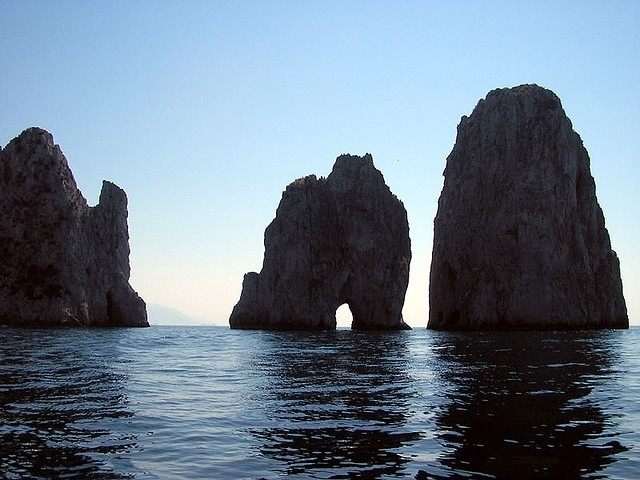
The ferry approaches the island and the first thing you see are the Faraglioni, three limestone stacks rising from the turquoise sea like ancient sentinels. Capri has long been synonymous with luxury, drawing visitors from Roman emperors to Hollywood stars. Yet beyond the designer boutiques and glamorous cafes lies an island of stunning natural beauty. The Gardens of Augustus overflow with vibrant bougainvillea and offer views that stop you in your tracks. Hike to Villa Jovis where Emperor Tiberius once ruled his empire, or take the chairlift to Monte Solaro for a panorama of the Bay of Naples stretching to the horizon.
\n\n
The picturesque island of Capri lies in the Tyrrhenian Sea in the Gulf of Naples. Unlike the many islands in the vicinity, Capri was not created by volcanic activity but was separated from the Sorrento peninsula. The Blue Island, as Capri is often called, covers an area of about 10 square kilometers. The island is composed of two parts: Capri and Anacapri, which is located in the upper part of the island.
\n\n
In This Article
The Blue Grotto and Natural Wonders of Capri
\n
The Blue Grotto, known locally as Grotta Azzurra, is Capri most famous natural attraction. This sea cave was rediscovered in the 19th century and has captivated visitors ever since. Sunlight enters through an underwater opening and refracts through the water, casting an ethereal blue glow that illuminates the entire cavern. Small rowboats carry visitors through a narrow entrance barely one meter high, requiring everyone to lie down as the boat passes through. Once inside, the cave opens into a chamber approximately 60 meters long and 25 meters wide. The water appears to glow from within, creating a supernatural atmosphere. The best time to visit is mid-morning when sunlight is at the perfect angle for the most vivid blue effect. Tours depart regularly from Marina Grande, the main port, and last about one hour.
\n
Beyond the Blue Grotto, Capri offers numerous other natural attractions. The Arco Naturale is a dramatic limestone arch carved by wind and sea erosion. The coastal views along the Pizzolungo trail are among the most spectacular in the Mediterranean, with sheer cliffs dropping into crystal-clear waters and the Faraglioni rocks framing every photograph. Boat tours around the island allow visitors to see hidden coves and sea caves up close, often passing through the natural arch of the middle stack for good luck.
\n\n
Villa Jovis and the Roman History of Capri
\n
Emperor Tiberius chose Capri as his primary residence from 27 to 37 AD, and the ruins of Villa Jovis remain the most significant Roman archaeological site on the island. Perched on the eastern cliff at 334 meters above sea level, the villa originally covered over 7,000 square meters and included residential quarters, administrative offices, thermal baths, and cisterns. Tiberius ruled the Roman Empire from this remote outpost, using its strategic position to monitor ship traffic in the Bay of Naples. The ruins offer a fascinating glimpse into imperial Roman life, with well-preserved mosaic floors, vaulted ceilings, and massive cisterns. The climb to Villa Jovis takes approximately 45 minutes along the Via Tiberio, and the views from the top are breathtaking, encompassing the Gulf of Salerno and the Amalfi Coast on clear days.
\n
Other Roman sites include the Villa of Augustus and remains of several imperial villas scattered across the landscape. The island also features Greek settlement remains, indicating its importance as a trading post long before the Roman era.
\n\n
Anacapri and Monte Solaro
\n
The upper town of Anacapri offers a quieter atmosphere than its bustling counterpart below. The chairlift to Monte Solaro, the highest point on the island at 589 meters, ascends through fragrant Mediterranean vegetation. At the summit, a panoramic terrace provides a 360-degree view of the Bay of Naples, including Vesuvius, the Sorrento Peninsula, and the Amalfi Coast. The Villa San Michele, built by Swedish writer Axel Munthe, is another highlight of Anacapri. Its gardens feature ancient artifacts and spectacular views. The villa is now a museum showcasing Munthe collection of Roman sculptures and Egyptian antiquities.
\n
\nPhoto licensed under the Creative Commons, created by Paul Resh
\n
The island has been and still is the seat of high society and artists. Swedish writer Axel Munthe spent part of his life here. In Capri you can find villas and residences on every corner. One of the most famous, Villa Jovis, was built by Emperor Tiberius as his summer residence.
\n
From the higher part of the island you can find a picturesque view of the entire panorama, including the Augustus Gardens and the magnificent white cliffs of the Faraglioni. Near Anacapri is the highest peak of the island, Monte Solaro.
\n
\nPhoto licensed under the Creative Commons, created by Nenita Casuga
\n
Capri uniqueness lies in the Blue Grotto, the sea cave that is a magnet for tourists. When the lights switch off in the dark cave and you see the azure blue sea, you stop breathing and enjoy a unique experience. The trip costs around 16 euros but is well worth your visit. Tourists can reach the cave by bus or taxi from Anacapri or by boat from Marina Grande. In the picturesque square in Capri town you find many shops and boutiques. Lovers of sea activities can visit the beach at Marina Piccola or take an island boat tour for about 9 euros.
\n
View Capri island the centre of luxury Italy in a larger map
\n
\n
Would you visit Capri for the natural landscapes or the luxury shopping experience? 💎
\n
Explore all our Italy travel guides, from the Dolomites to Sicily.
Explore More
If you enjoyed this article, you might also like:
