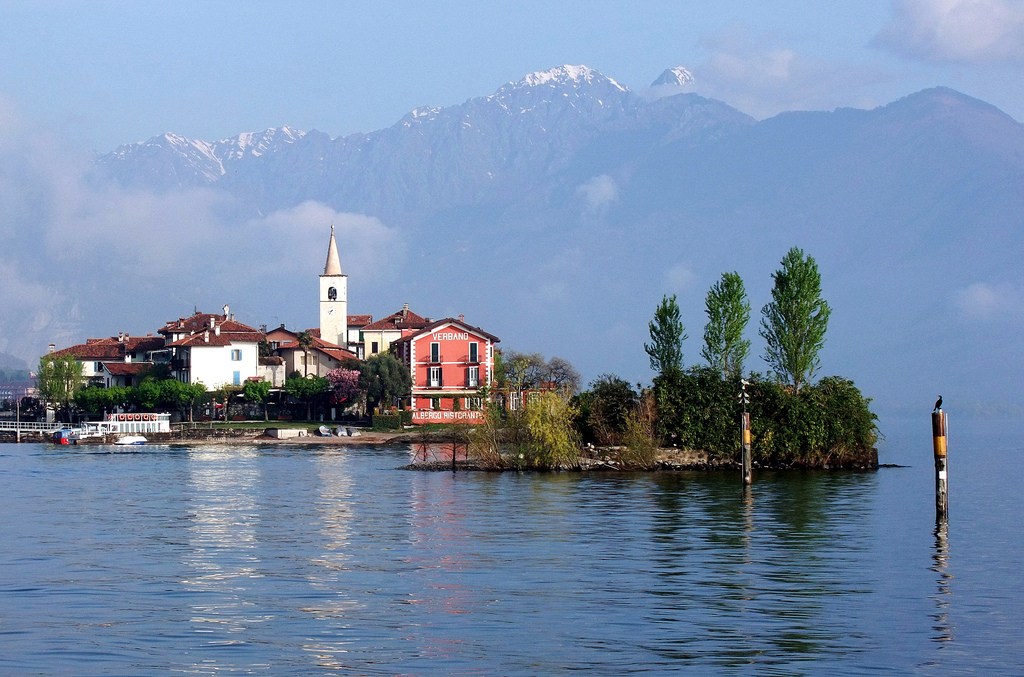
Lake Maggiore stretches across the border between Italy and Switzerland and its western shore holds some of the most beautiful gardens in Europe. The Borromean Islands float on the lake surface like green ships anchored in blue water. Isola Bella carries a palace and terraced gardens that cascade down to the lake in a series of white peacock adorned levels. Isola dei Pescatori remains a working fishing village frozen in time. Small towns line the shore each with its own character and lakefront promenade. The Alps rise in the distance their peaks dusted with snow even in late spring.
In This Article
The Towns and Villages of Lake Maggiore
The shores of Lake Maggiore are dotted with charming towns and villages, each offering its own distinct character. Stresa is the most famous resort town on the lake, known for its elegant lakeside promenade, grand hotels, and stunning views of the Borromean Islands. The town became a popular destination for European aristocracy in the 19th century, and the historic hotels along the waterfront still retain their old-world charm. The Villa Pallavicino park in Stresa is home to a small zoo and botanical gardens, making it a popular attraction for families.
Baveno, just north of Stresa, is a quieter alternative with a beautiful lakefront square and a Romanesque church dating from the 11th century. The town is known for its granite quarries, which supplied stone for the Milan Cathedral and other important buildings. The nearby Lake Mergozzo offers a quieter swimming experience with crystal-clear waters.
On the Swiss side of the lake, Locarno is a vibrant town with a Mediterranean atmosphere, known for its annual film festival and its beautiful Old Town with arcaded streets and piazzas. The Madonna del Sasso sanctuary, perched on a hillside above the town, offers panoramic views of the lake and the surrounding mountains. Cannobio, further south, is a picturesque fishing village with a lively weekly market and a historic centre that has retained its medieval character.
Gardens, Villas and Natural Beauty
Lake Maggiore is famous for its gardens, which benefit from the mild climate created by the lake’s waters. The Villa Taranto Botanical Gardens are among the finest in Europe. Established in 1931 by Scottish captain Neil McEacharn, these gardens cover 20 hectares and contain more than 20,000 plant species from around the world. The gardens are arranged in thematic sections, including a Japanese garden, a water garden, and a valley of giant rhododendrons. The best time to visit is from April to June, when the azaleas and rhododendrons are in full bloom.
The lake’s villas offer a glimpse into the lives of the wealthy families who built summer residences here in the 19th and early 20th centuries. Villa del Sasso, Villa San Giovanni, and Villa Carlotta are among the most impressive, each with its own history and architectural style. Many of these villas have been converted into museums or hotels, allowing visitors to experience their grandeur first-hand. The gardens surrounding these villas are often open to the public and provide peaceful retreats from the busier tourist areas.
Beyond the formal gardens, the natural landscape of Lake Maggiore offers abundant opportunities for outdoor activities. The lake is popular for sailing, windsurfing, and kayaking, with several rental outlets operating from the main towns. The surrounding mountains offer hiking trails that range from gentle lakeside walks to more challenging ascents. The Mottarone mountain, accessible by cable car from Stresa, provides spectacular views of the lake and seven surrounding peaks on clear days.
Getting Around and Practical Information
The best way to explore Lake Maggiore is by ferry. The public ferry network connects all the main towns and islands, with services running throughout the day from March to October. A day pass allows unlimited travel and is excellent value for visitors who want to explore multiple locations. The ferries range from small waterbuses to larger car ferries, and the journey itself is one of the highlights of any visit, with constantly changing views of the lake and mountains.
The lake is well connected by rail, with mainline stations at Stresa and Verbania providing direct services to Milan and other Italian cities. Milan Malpensa Airport is about 40 minutes from Stresa by car, making Lake Maggiore an easy destination to reach from abroad. During the summer months, additional ferry services operate, and many hotels offer shuttle services to and from the airports and railway stations.
Accommodation options range from luxury five-star hotels to family-run guesthouses and self-catering apartments. The lake region is also known for its cuisine, which combines Italian and Swiss influences. Local specialities include risotto with perch from the lake, polenta with local cheeses, and the wines of the surrounding hillsides. The weekly markets in Stresa, Baveno, and Cannobio are excellent places to sample local produce and crafts.
Which Italian lake would you most like to visit or have you already visited? Tell us your favourite. 🏞
Explore all our Italy travel guides, from the Dolomites to Sicily.
Explore More
If you enjoyed this article, you might also like:
