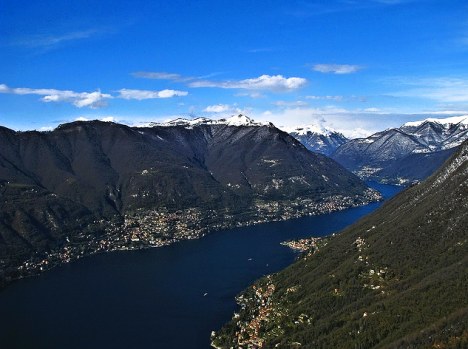
Dark green water laps against the bases of villas that have hosted poets, composers, and film stars for two centuries. Lake Como curves through the Lombard foothills like an inverted Y, its banks lined with gardens that bloom from March through October. Bellagio sits at the junction of the three branches, its alleyways climbing steeply from the ferry dock. Varenna is quieter, a single strip of colour along the water. You can take a ferry from village to village, sipping espresso on the deck while the mountains slide past. The light changes every hour.
In This Article
The Towns and Villages of Lake Como
Lake Como is shaped like an inverted Y, with three distinct branches that each offer a different experience. Bellagio, often called the pearl of the lake, sits at the junction where the three branches meet. Its steep alleyways, known as salite, climb from the shore through a maze of stone stairs, arches, and small piazzas. The Villa Melzi gardens are a highlight, with neoclassical statues, a Japanese-style pond, and spectacular views across the lake to the Alps. Bellagio is the most popular destination on the lake, and its beauty justifies every word of praise written about it.
Varenna, on the eastern shore, offers a quieter alternative. This small fishing village has a single main street that runs along the water, lined with brightly coloured houses and restaurants with outdoor terraces. The Villa Monastero, a former Cistercian convent turned botanical garden, is one of the most beautiful spots on the lake. Its terraced gardens extend along the shoreline for nearly two kilometres, with rare plants, fountains, and statues set against the backdrop of the lake. The nearby Castello di Vezio, a medieval fortress perched on a hill above the village, offers panoramic views and hosts regular falconry demonstrations.
Como, the largest town on the lake, is a bustling city with a well-preserved historic centre. Its Gothic cathedral, the Duomo, took nearly four centuries to complete and features an impressive marble facade and intricate carving. The Broletto, the medieval town hall dating from the 13th century, stands adjacent to the cathedral. The city’s port, Sant’Agostino, is the departure point for ferries to all parts of the lake, including the only island on Lake Como, the small Isola Comacina.
Activities and Attractions on the Lake
Ferry travel is the quintessential Lake Como experience. The public ferry network connects all the main towns and villages, with services running frequently throughout the day. The journey from Como to Bellagio takes about two hours on a slow ferry, passing grand villas, terraced gardens, and forested hillsides along the way. A day pass is excellent value and allows unlimited hopping between stops. For a more exclusive experience, private boat hire is available, allowing visitors to explore hidden coves and smaller villages that the public ferries do not reach.
Hiking is a popular activity on Lake Como, with trails ranging from gentle lakeside promenades to challenging mountain ascents. The Greenway del Lago di Como is a 10-kilometre walking route that follows the western shore from Colonno to Cadenabbia, passing through medieval villages, olive groves, and past historic villas. The more adventurous can hike up Monte Grona, which rewards climbers with spectacular views of the lake and the surrounding Alps. The Sentiero del Viandante, an ancient mule track, runs along the eastern shore and offers a longer, multi-day hiking option.
The lake is also a destination for water sports, including swimming, sailing, and windsurfing. During the summer months, the water temperature is comfortable for swimming, and several lidos and public beaches offer access to the lake. Scuba diving is possible in certain areas, with clear waters and interesting underwater geology. For those who prefer to stay dry, the region is also known for its golf courses, cycling routes, and cooking schools that teach the art of Italian cuisine using local ingredients.
The History and Architecture of Como City
The city of Como has a history stretching back to Roman times, when it was founded as Novum Comum by Julius Caesar in 59 BC. The city’s grid layout still reflects its Roman origins, and fragments of the original Roman walls can be seen in various locations. The city flourished during the medieval period as a centre for wool production and trade, and its wealthy merchants built the impressive buildings that still define the historic centre today.
The Duomo of Como is the centrepiece of the city. Construction began in 1396 and continued for almost 400 years, resulting in a stunning blend of Gothic, Renaissance, and Baroque styles. The facade is decorated with intricate carvings and statues, including figures of Pliny the Elder and Pliny the Younger, both of whom were born in Como. Inside, the cathedral houses important artworks, including tapestries from the 16th century and paintings by local artists.
The city’s other notable churches include San Fedele, a Romanesque church dating from the 12th century, and Sant’Abbondio, a Lombard Romanesque basilica with 14th-century frescoes. The Tempio Voltiano, a neoclassical building overlooking the lake, is a museum dedicated to Alessandro Volta, the inventor of the electric battery who was born in Como in 1745. The museum displays Volta’s original instruments and explains his contributions to the study of electricity. The city’s medieval walls and the Porta Torre, a 12th-century gate, complete the picture of a city that has preserved its history while embracing its role as one of Italy’s most beautiful destinations.
Which Italian lake would you choose for a romantic escape? 💕
Explore all our Italy travel guides, from the Dolomites to Sicily.
Explore More
If you enjoyed this article, you might also like:
