Naples is a city that does not pause. It pulses with energy from dawn until late into the night, sprawled beneath the threatening shadow of Mount Vesuvius. The historic centre is a UNESCO World heritage site, a dense grid of narrow streets filled with churches, palaces, and street food stalls. Pizza was born here, and the pizzerias of Naples still make the finest in the world. The National Archaeological Museum holds treasures from Pompeii and Herculaneum. The Castel Nuovo guards the harbour. Chaos and beauty exist here in equal measure. The people of Naples are loud, warm, and fiercely proud of their city. Vesuvius looms above it all, a constant reminder of nature’s power.
Naples (or Napoli in Italian), with more than a million inhabitants, is the capital of Campania and lies in the Gulf of Naples. It is the third most populous city in Italy, the entire area has over three million inhabitants.
Napoli has quite a long and interesting history. The town Neapolis arose in the 8th century BC and was originally the Greek settlement, then it was settled by the Roman emperors, then by the Byzantines, Normans, Spaniards, Napoleon Bonaparte and finally in 1860 Giuseppe Garibaldi joined Napoli to the Italian Kingdom.
It is quite significant that in 1973 erupted epidemics of cholera due to bad sanitary conditions in the city, during which 30 people died.
Unique architecture and history led Napoli in 1995 on the UNESCO World heritage Site.
What to See in Napoli: The historic Centre
What to see in Napoli
Cathedral of San Gennaro, the Jesuit church of Gesù Nuovo (on the same-name square) with an unusual facade composed of the large stones. Just Opposite stands the Gothic church of Santa Chiara.
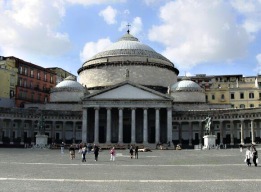
Piazza Municipio and Piazza del Plebiscito with the Church of San Francisco di Paola with unusual colonnades. Opposite there is the Royal Palace (Palazzo Reale), home library (Biblioteca Nazionale). There is also beautiful monumental passage of the 19th century – Galleria Umberto I.
The historic centre of Naples is a UNESCO World heritage site covering over 1,700 hectares, making it one of the largest such sites in Europe. Its layout dates back to the original Greek grid plan of Neapolis, with the three main decumani (east-west streets) still forming the backbone of the old city. The Duomo di San Gennaro, Naples’ cathedral, dates from the 13th century and houses the blood of the city’s patron saint in two vials. The blood is said to liquefy three times a year, a miracle that draws thousands of worshippers. Nearby, the Cappella Sansevero contains one of the most remarkable sculptures in the world: the Veiled Christ by Giuseppe Sanmartino, a marble figure so finely carved that the transparent veil appears to float over Christ’s body. The historic centre is also the heart of Neapolitan street food culture. Fried pizza, cuoppo (paper cones of fried seafood), and sfogliatella (a shell-shaped pastry filled with ricotta) are sold from small shops on almost every corner. The Piazza del Gesù Nuovo and Piazza San Domenico Maggiore are the main squares, surrounded by historic buildings and bustling with activity late into the evening.
Castles, Museums, and Day Trips
If you have more time, look at the Castel Nuovo (new castle by the sea) and Castel dell’Ovo (castle of golden eggs).
You should see also Teatro di San Carlo, that is operating since 1737, and today it is the oldest active opera in Europe and one of the largest theaters in the world.
Naples has more historic castles than any other city in Italy. Castel Nuovo, also known as Maschio Angioino, was built by Charles I of Anjou in the 13th century and features a striking triumphal arch added in the 15th century to celebrate Alfonso of Aragon’s entry into the city. The castle houses the Civic Museum with frescoes and sculptures from the Renaissance period. Castel dell’Ovo, whose name means Castle of the Egg, stands on the small island of Megaride and is the oldest fortification in Naples, with origins dating back to the 1st century BC. Legend says that the Roman poet Virgil placed a magical egg in its foundations, and if the egg breaks, the castle will fall and Naples will suffer disaster. The castle offers one of the best sunset views over the Gulf of Naples. The National Archaeological Museum, located in the northern part of the historic centre, is one of the most important archaeology museums in the world. Its Farnese collection includes monumental Roman sculptures, while the Secret Cabinet houses an extraordinary collection of erotic art from Pompeii. The Pompeii and Herculaneum sections contain mosaics, frescoes, and everyday objects that bring the Roman cities vividly to life.
You can go on a trip to three famous islands: Procida, Ischia and Capri. To get to Pompeii and Mount Vesuvio you can take the train or bus.
There is also beautiful Amalfi Coast (Costiera Amalfitana) at the south from Napoli, with clear blue sea and imposing rocks.
View Napoli – busy city under Mount Vesuvius in Italy in a larger map
Would you climb Vesuvius or eat your way through Naples first? 🍕
Explore all our Italy travel guides, from the Dolomites to Sicily.
Explore More
If you enjoyed this article, you might also like:
