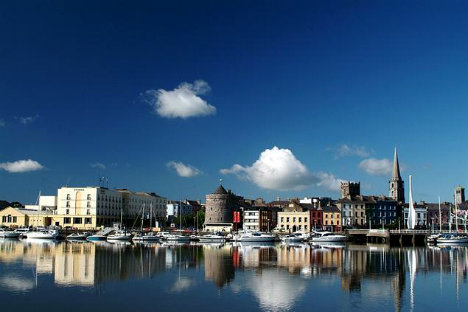
The oldest city in Ireland wears its Viking heritage like a badge of honour. Waterford was founded by the Vikings in 914 AD, and its triangular medieval quarter still follows the street pattern laid down by Norse settlers. The Waterford Crystal factory continues a tradition of glassmaking that began in 1783, producing the world-renowned cut crystal. Reginald’s Tower, a circular stone fortress built by the Anglo-Normans in the 13th century, guards the riverfront. The city’s museums tell stories of Viking longships and Georgian elegance side by side. Waterford sits on the River Suir, where the broad estuary meets the Celtic Sea. It is a city of bridges, spires, and a deep connection to the sea.
\n\n
Waterford is the largest urban settlement in the southeast of Ireland. The history of the town dates back to 914 AD when it was founded by the Vikings. It is the oldest city of Ireland. Today it is a busy port, with a strong industrial background, including the world-famous Waterford Crystal glassmaking industry. Many people stop here on the journey from Dublin to Cork or to Rosslare.
\n
\nPhoto licensed under the Creative Commons, created by mark6mauno
\n
In This Article
Viking Waterford: Reginald’s Tower and the Medieval Quarter
\n
The best place to begin exploring Waterford is Reginald’s Tower, the city’s most iconic landmark. Built between 1253 and 1280 on the site of an earlier Viking fortification, the tower stands 25 metres tall with walls three metres thick. It is the oldest surviving civic building in Ireland and houses the Viking Museum, which displays artefacts recovered from excavations in the city centre. The exhibits include Viking weaponry, jewellery, and the famous Waterford Kite Brooch, a masterpiece of 9th-century metalwork. The tower takes its name from the Norse king Ragnall, though the current stone structure dates from the Anglo-Norman period. From the top of the tower, you can see the entire medieval quarter laid out below. The narrow streets of the Viking Triangle, as the area is known, follow the original Norse settlement pattern. Walking tours depart regularly from the tower, guiding visitors past the 13th-century French Church, the Choristers Hall, and the Georgian cathedral. The Bishop’s Palace, restored to its 18th-century splendour, displays the city’s collection of silver, glass, and furniture from the Georgian period.
\n
Waterford Crystal: A Tradition of Light and Craftsmanship
\n
The Waterford Crystal factory on the outskirts of the city offers guided tours that reveal the secrets of this famous craft. The glassmaking process begins with raw materials: silica sand, lead oxide, and potash, heated together in furnaces at 1,400 degrees Celsius. Master blowers shape the molten glass into forms, while skilled cutters use diamond-tipped wheels to engrave the intricate patterns that distinguish Waterford crystal. Each piece is inspected by hand, and any with imperfections is destroyed. The factory store sells seconds at reduced prices. The history of Waterford Crystal is one of resilience: the original factory closed in 1851 due to high taxes on glass, but a new company revived the tradition in 1947. Today Waterford Crystal produces everything from wine glasses to chandeliers, and its pieces are presented as diplomatic gifts by the Irish government. The factory museum displays historic pieces including the crystal bowl presented to the US President each year at the White House Christmas tree lighting.
\n
Exploring Waterford: Food, Culture, and Nearby Attractions
\n
Waterford’s culinary scene has flourished in recent years, with a focus on fresh seafood from the nearby coast. The city’s restaurants serve locally caught fish, oysters from the Copper Coast, and Irish beef from the surrounding farms. The weekly farmers market in the city centre offers artisan cheeses, breads, and preserves. The Theatre Royal, a beautifully restored Victorian venue, hosts plays, concerts, and comedy shows throughout the year. For those with extra time, the Copper Coast Geopark, a UNESCO-listed stretch of coastline with dramatic cliffs and coves, lies just 20 minutes south of the city. The Waterford Greenway, a 46-kilometre cycling and walking trail along a former railway line, connects the city to the seaside town of Dungarvan. Waterford is well connected by rail and road, with regular trains from Dublin Heuston taking about two hours. Many people stop here on the journey from Dublin to Cork or to Rosslare, and the city rewards those who pause with its rich Viking heritage and warm hospitality.
\n
View Waterford – one of the oldest cities in Ireland in a larger map
\n
\n
Have you ever visited Waterford? What impressed you most? 🏰
\n
Explore all our Ireland travel guides, from Dublin pubs to the Wild Atlantic Way.
Explore More
If you enjoyed this article, you might also like:
