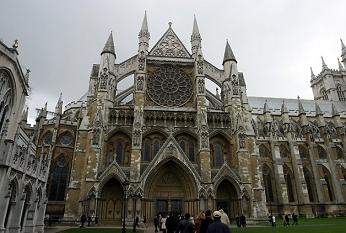
Sunlight filters through stained glass at Westminster Abbey, casting jewel-toned patterns across stone floors where monarchs have walked for a thousand years. This magnificent Gothic church in London has witnessed coronations, royal weddings, and farewells to the nation’s greatest figures. Poets’ Corner honours literary giants like Chaucer and Dickens, while the tombs of kings and queens line the aisles. The soaring vaulted ceiling draws your eyes upward, inviting contemplation of something greater than yourself. To step inside Westminster Abbey is to walk through a living history book, where every stone tells a story and every corner holds a piece of British heritage.
In This Article
A Thousand Years of Royal History
One of the sights of London that is sure to receive many more visitors than usual over the next year is Westminster Abbey. Millions around the world watched on television on April 29 when Kate Middleton made her way from The Goring to the Abbey to marry Prince William, a ceremony that captured the imagination of people across the globe. That historic day increased interest in visiting the building significantly, with visitor numbers reaching new heights in the months that followed. Westminster Abbey has in fact been used for coronations and other royal occasions for centuries, so William and Kate were continuing a rich tradition that stretches back nearly a millennium. Every coronation of an English and later British monarch since William the Conqueror in 1066 has taken place within these walls, making it one of the most historically significant royal venues in the world, a living link between the medieval past and the modern British monarchy. The Coronation Chair, made in 1300 by order of King Edward I, still stands in the Abbey and has been used for the investiture of every monarch since Edward II, its ancient wood bearing the marks of centuries of ceremonial use. Royal weddings, too, have become a cherished Abbey tradition, from Henry I to Prince William and Catherine Middleton, each ceremony adding another layer to the building’s extraordinary story and cementing its place in the hearts of the British people.
Architecture and Survival Through the Centuries
Westminster Abbey was founded some time before AD 624, and housed a community of Benedictine monks for its first few centuries of existence. The present church was built in 1245 by King Henry III, who was later buried there in a magnificent tomb near the high altar. The Abbey stood to be destroyed during the reign of Henry VIII, for that fate befell most abbeys in his time as the Dissolution of the Monasteries swept across England. But he decided to grant it cathedral status, sparing it from being pulled down and preserving its architectural treasures for future generations. Again in the 17th century it came under threat when it suffered damage at the hands of Puritans who objected to its ornate decoration, but it survived mostly intact thanks to the efforts of those who recognised its unique value. Around 100 years later, the Abbey’s two western towers were built to a Gothic Revival design that harmonised beautifully with the medieval structure, completing the silhouette that is now recognised around the world. The architecture is a masterpiece of English Gothic style, with pointed arches, flying buttresses, and a spectacular fan-vaulted ceiling in the Henry VII Chapel that represents the pinnacle of medieval English craftsmanship. The Abbey’s history is what makes it so unique and special, a physical embodiment of English history that has witnessed some of the most important events in the nation’s story. It is an important religious building, also known as the Collegiate Church of St Peter at Westminster, which saw parts of the King James Bible and the New Testament translated within its walls, as well as, more recently, the New English Bible.
Burial Place of Kings, Poets and National heroes
Westminster Abbey has been used for the weddings of most of the royal family in recent times, the exception being Prince Charles and Lady Diana Spencer in 1981, who chose St Paul’s Cathedral instead. Queen Elizabeth II, then Princess Elizabeth, married the Duke of Edinburgh at the Abbey in 1947, in a ceremony that offered a moment of hope and celebration in the austere post-war years. And it was only appropriate that Prince William, now the Duke of Cambridge, chose the Abbey to host his wedding to Catherine Middleton. Westminster Abbey has also been known as one of the sights of London for its use as the burial place of most of the Kings and Queens of England, with royal tombs lining the chapels and aisles in a chronological procession through the centuries. Besides royalty, many of England’s finest poets are buried here in Poets’ Corner, including William Blake, Lord Byron, Samuel Taylor Coleridge, John Keats, John Milton and Alfred Lord Tennyson, their memorials creating a literary pantheon unmatched anywhere in the world. Geoffrey Chaucer was the first poet buried here, and his tomb began a tradition that has honoured the literary heritage of Britain for over six centuries, with new memorials continuing to be added. Scientists like Isaac Newton and Charles Darwin are also interred within the Abbey, alongside statesmen, musicians, soldiers and national heroes whose contributions have shaped British history. The Princess of Wales’ funeral was held there on September 6, 1997, watched by a huge television audience around the world in a moment of collective mourning. To walk through Westminster Abbey is to pass among the greatest figures in British history, a journey through time that leaves every visitor with a profound sense of connection to the past.
View Westminster Abbey – a large, mainly Gothic church, in London United Kingdom in a larger map
Which famous figure buried in Westminster Abbey would you most want to pay respects to? ⛪
Explore all our United Kingdom travel guides, from London landmarks to the Scottish Highlands.
Explore More
If you enjoyed this article, you might also like:
