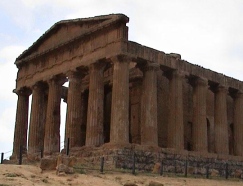
The Valley of the Temples at Agrigento is one of the most important archaeological sites in the world, the richest and best-preserved group of ancient Greek temples outside Greece, standing in golden sandstone splendour on a ridge overlooking the Mediterranean in southern Sicily. A UNESCO World heritage site and the crown jewel of Magna Graecia, Agrigento’s Doric temples, particularly the near-intact Temple of Concordia, rank alongside the Parthenon in Athens as the finest surviving examples of classical Greek temple architecture on the planet.
In This Article
Quick Facts: Valley of the Temples, Agrigento, Sicily
- Best time to visit: Spring (March–May) and autumn (September–October) for pleasant temperatures; visit early morning or late afternoon for the best light and to avoid the midday heat
- Top attraction: The Temple of Concordia, one of the best-preserved Greek temples in the world, converted into a Christian basilica in the 6th century
- How to get there: ~2 hours from Palermo by car; ~2 hours from Catania; Agrigento Centrale train station is a short bus ride from the archaeological park
- Entry fee: ~€12 (adult); combined ticket with the Archaeological Museum ~€18
- Best for: History lovers, archaeology enthusiasts, photographers, and anyone captivated by ancient civilisations
The Temples of the Valley: A Closer Look
The Valley of the Temples is a ridge with seven major temples spanning nearly a century of Greek architecture. The Temple of Concordia, from 430 BC, is the best-preserved Doric temple after the Parthenon, saved by its conversion into a Christian basilica in the 6th century. The Temple of Hercules, from 510 BC, has eight re-erected columns giving a sense of original scale. The Temple of Olympian Zeus was the largest Doric temple ever built at 113 by 56 metres, but was never completed; its massive columns now lie in fallen drums. The colossal 7.5-metre telamons that supported the roof lie scattered on the ground. The Temple of Castor and Pollux, with only four columns remaining, has become the symbol of Agrigento.
The Archaeological Museum and Ancient Akragas
The Museo Archeologico Regionale Pietro Griffo houses one of the finest collections of ancient Greek artefacts in Italy. The museum traces Akragas from prehistoric times through the Greek period to the early Christian era. The highlight is the Ephebe of Agrigento, a bronze statue of a young athlete from the 5th century BC discovered in the sea near the ancient port. The collection of Attic pottery includes pieces by the Berlin Painter. A telamon from the Temple of Olympian Zeus is displayed in a specially constructed hall. The model of ancient Akragas reconstructs the city at its 5th-century BC peak. Allow 1.5 hours for a thorough visit to gain context before walking the temple ridge.
Practical Tips for Visiting Agrigento
The archaeological park covers 1,300 hectares. Arrive at opening time, 08:30, when light is golden and temperatures manageable. The ticket of 12 EUR includes entry to the temples and Kolymbetra Garden. Summer evening openings until 22:00 provide a deeply atmospheric experience with illuminated temples. Wear comfortable shoes, bring a hat, sunscreen, and at least one litre of water per person. For lunch, head to the San Leone district, 5 kilometres away, where seafood restaurants serve fresh catch. The Scala dei Turchi, a white marl cliff formation 30 minutes west, makes an excellent afternoon addition.
A Greek City in Sicily
Founded as Akragas by Greek colonists from Gela and Rhodes around 580 BC, the city became one of the largest and wealthiest in the Greek world, the philosopher Empedocles was born here, and the poet Pindar described it as “the most beautiful city of mortals.” At its height in the 5th century BC, Akragas had a population of up to 200,000 and was famed for its monumental Doric temples built along a dramatic ridge facing the sea.
The archaeological park contains the remains of seven major temples erected between 510 and 430 BC, plus numerous smaller sanctuaries, necropolises, and fragments of the ancient city walls. The Temple of Hercules, the oldest of the group, dates to around 510 BC. The Temple of Olympian Zeus, the largest Doric temple ever built (113m × 56m), was never completed before the Carthaginian sack of 406 BC and now lies in ruins, with its colossal 7.5-metre telamons (stone giants) scattered on the ground.
Archaeological Area of Agrigento is located in Sicily, Italy. It lies on the southern coast, near the city of Agrigento. The place is also called Valley of the Temples (Valle dei Templi). This is the most impressive ancient Greek site outside of Greece.
Agrigento Greek colony was founded in the 6th century BC but already in 406 BC the town was destroyed by the Carthaginians. until now there are still well-preserved ruins of ancient town.
The local archaeological area of Agrigento is the richest group of well-preserved Greek temples in the world. You can find here the remains of buildings from the later Hellenistic and Roman periods.
Since 1997, the archaeological area of Agrigento is registered on the UNESCO World Cultural heritage.
View Agrigento – the richest group of well-preserved Greek temples in the world Sicily, Italy in a larger map
Have you walked through the Valley of the Temples at sunset or explored Sicily’s Greek heritage? Share your favourite ancient sites in the comments! 🏛️
Explore all our Italy travel guides, from the Dolomites to Sicily.
Explore More
If you enjoyed this article, you might also like:
